
Joshua Katcher (The Discerning Brute, Brave Gentleman, Rind) has been taking on the whole industry since 2008, back when The Discerning Brute was the first and only vegan lifestyle blog geared towards a masculine audience, at a time when veganism was still seen as a fringe – possibly even feminine – movement and as such, a danger to traditional male identity.
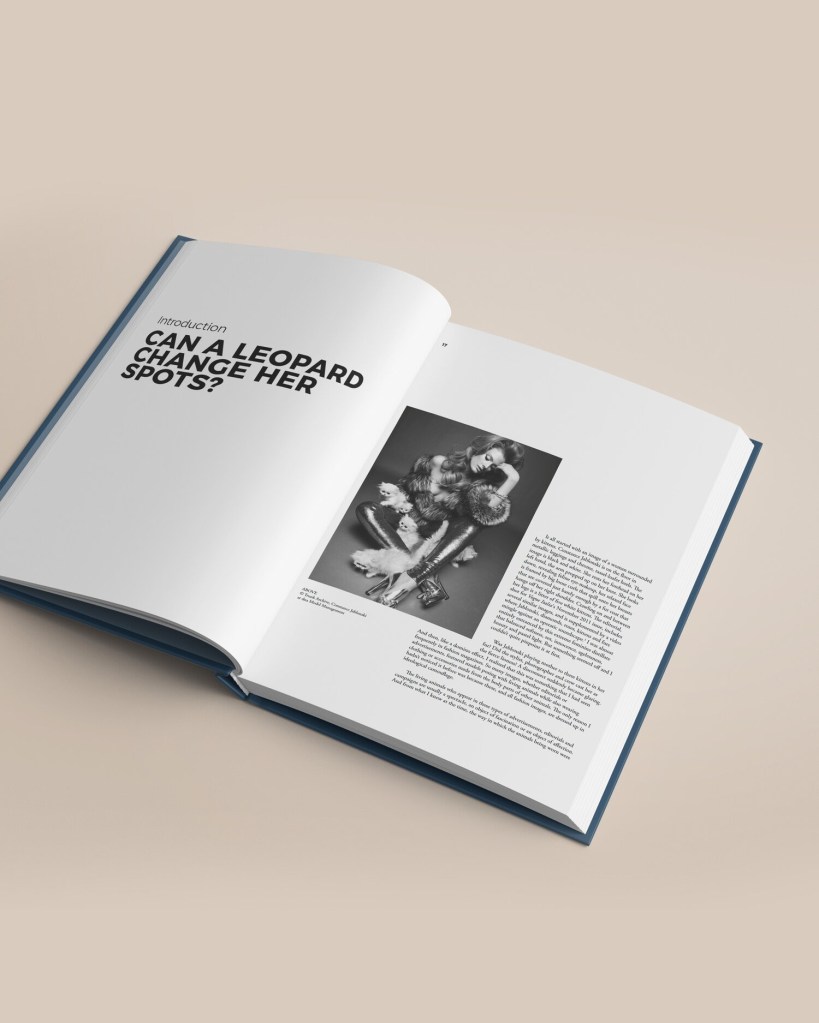
Over a decade later, Katcher ticks the pioneering box again with FASHION ANIMALS, the first book ever to explain how and why animals are exploited in the fashion industry. From recorded historical facts to hidden stories and vivid illustrations, the book provides an in-depth view on animal exploitation, and celebrates contemporary innovations that aim to replace the use of animal-derived materials.
As with any good creation story, in the beginning there was nothing. A literal void in which no publication, academic or popular, existed about what happens to animals in the fashion industry and why. Silly and cute content abounded – but no serious attention was paid to the plight of the animals being exploited for profit. That’s when Katcher decided to write.
Open FASHION ANIMALS and things go from silly to deadly serious – from the indigo trade to the destruction of the rainforests, to greenhouse gas emission – the book explores the complex history and context of animal use in fashion. It took Katcher 5 years to write the book between teaching at Parsons, FIT and NYU, and running The Discerning Brute, Brave Gentleman and Rind. But even when he had finished the book, it proved a challenge to get it published. ‘Several publishers wanted me to rewrite the whole thing. They just wanted the pretty pictures. Animal rights was too political a topic, they wanted me to change the message. And I was like, the book is an animal rights book, what do you mean you don’t want animal rights?’ – says Katcher. Eventually, The Vegan Publishers took the book as it is, pretty pictures and disturbing content altogether.
Wrapping the critical content with charming historical pictures was Katcher’s intention from the beginning. ‘I wanted to make a beautiful object that fashion and creative professionals would be drawn to and then read. I could have written just a regular academic book, but who is going to read that other than people who are already familiar with the topic? I really wanted to reach the people who wouldn’t necessarily seek that out’ – says Katcher. To make that happen, Katcher would spend most evenings browsing through thousands of archival images. Some were not even identified in the cataloguing system, while others turned out to be quite puzzling show stoppers. ‘Lots of archival photographs and illustrations have people wearing fur and holding a dog or hanging out with the animal that the fur coat is made out of. That is disturbing and something that I wanted to understand’ – says Katcher. And when he did understand it, he devoted a whole chapter to the historical creation of myths and values around animal-derived materials, from symbols of heraldry to sumptuary laws and the romanticised ideas of evil in fiction and philosophy. ‘The fictionalised representation of cruelty can be very appealing and even sexy as long as the actual cruelty and harm is not seen. When in reality, evil is banal’ – says Katcher.
Other chapters focus on extensive analysis of current greenwashing practices that dominate the mainstream sustainability discourse. ‘I think we have a marketing problem with vegan materials’ – says Joshua Katcher. ‘The leather and wool industries have put a lot of money to change the conversation from being about animal cruelty to being about plastic. They say that animal materials are natural, and therefore good, and plastic is bad. I agree that plastic is a huge problem that needs addressing, but what people don’t realise is that every year 7,000 square miles of the Gulf of Mexico is declared an oceanic dead zone because of runoff from factories and farms connected to the leather and meat industries’ – he adds. The numbers are striking. 14.5% of all global greenhouse gas emissions are tied to animal industries, and over 1/3 of global fresh water supply is being used for livestock production. The argument that leather is just a byproduct of the meat industry is as invalid as it is incorrect. ‘As meat is often subsided, leather is the primary and most economically important aspect of the majority of slaughter businesses. Leather is not a waste diverting charity. It is a full and proper industry worth billions of dollars’ – says Katcher.
On a happy note, Katcher ends up coining a definition for Circumfauna, which is a research and development category for all innovation that aims to bypass animal use in fashion: ‘The pursuit of replacing animal materials is where the most exciting innovations are happening at the moment, from mushroom leather, or leather made from agricultural waste, to faux fur made from corn and coconut oil. That is why you see such momentum in Circumfauna in both the innovation and legislation spaces. Fur bans all across Europe and North America have been happening in a really short period of time.’ – says Katcher. With so much already done, and yet even more to accomplish, the book is already having an impact on the industry, one person at a time. ‘I had wool knitters contact me and say that because of my book, they switched over to organic and recycled cotton, and that they won’t use animal fiber any more. To see something like that happen, even if it is just one person, I know that the book worked.’ – says Katcher.
- Hardcover: 272 pages
- Publisher: Vegan Publishers (March 17, 2019)
- Language: English
- ISBN-10: 1940184460
- ISBN-13: 978-1940184463
- Product Dimensions: 8.8 x 1 x 11.2 inches
more info on Brave Gentleman/book
image courtesy of Joshua Katcher