

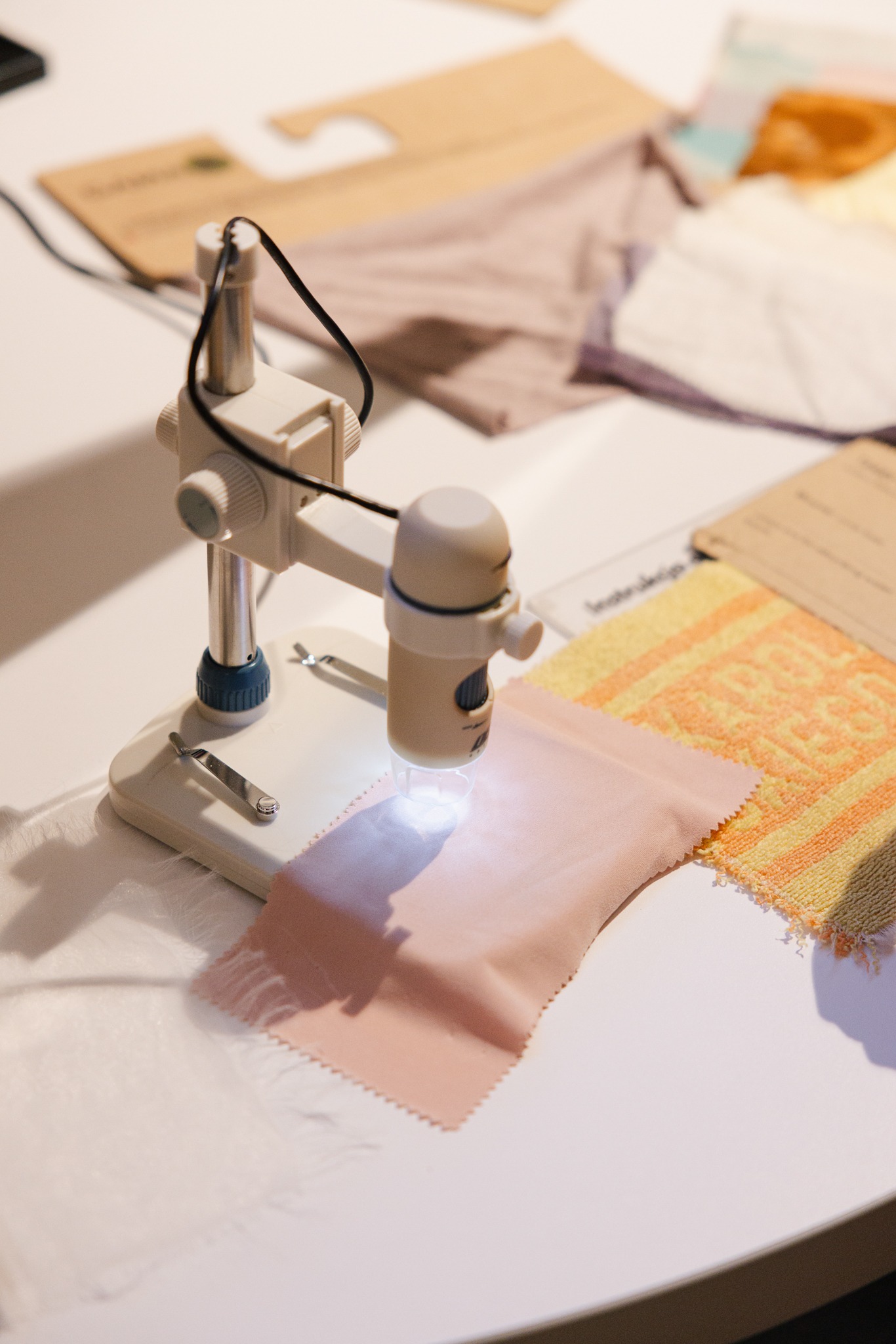
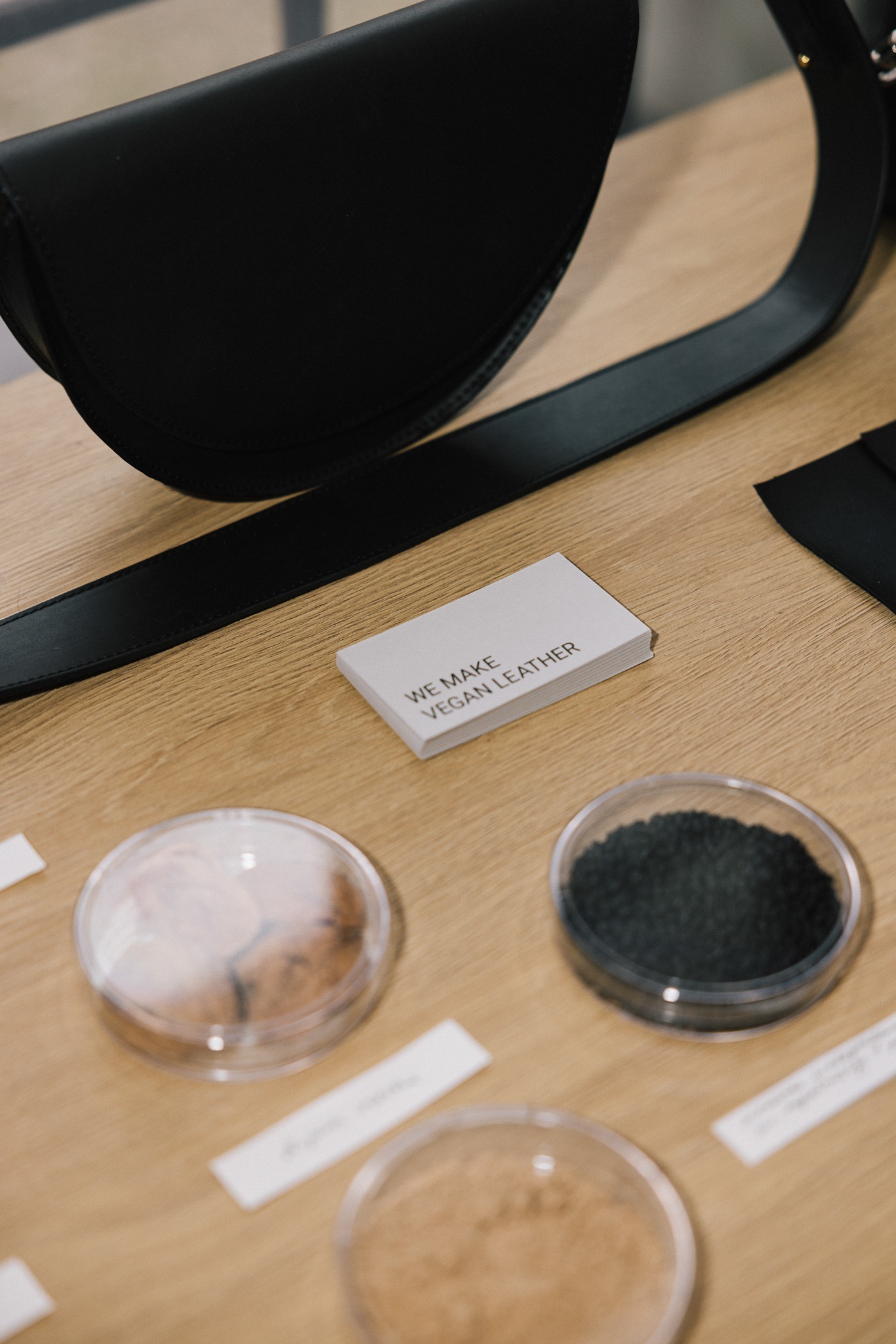
It is only fitting to discuss the future of fashion in a place that is a tribute to its past. Nested in the very heart of Łódź, the Museum of Textiles served as the inspiring backdrop for a remarkable event hosted by the Sustainable Fashion Institute, at which a preview of the future of fashion was provided through insightful discussion panels and the Institute’s newest initiative – SFI Lab, a showcase of innovative fabrics. Plant-based leather alternatives made from cacti, grape, and corn, as well as milk and recycled fibres were examined under microscopes for their elasticity, durability, and potential applications. ‘The aim was to demonstrate how innovations can transform fashion into a more sustainable and responsible industry. These technologies not only enhance product qualities but also enable informed choices that positively impact society and the environment’ – says Ewa Polkowska, co-founder of the Sustainable Fashion Institute.
In this spirit, Bio2Materials, a material innovation startup from Cracow, presented its breakthrough leather alternative made from cocoa and nutshell waste and minimal water footprint. This is one of the very few plastic-free leather alternatives available for large-scale production, next to Mirum®, cork leather, and TômTex. However, for innovative leather alternatives to capture commercial attention, the stigma of low-quality synthetics must be overcome, and this is where strategic partnerships come into focus. ‘There is not much systemic support in the fashion industry for those who seek to be the change, and who do not consider innovation as a temporary solution, but rather a new operational culture‘ – says Ewelina Antonowicz, co-founder of the Sustainable Fashion Institute. Such a fundamental shift would require close collaboration between stakeholders at every production level, from material sourcing to product development, and ultimately consumption and end-of-life treatment. Supply chain tracking solutions, such as the one that Sustainable Fashion Institution is launching in 2025, will enable stakeholders to view the complex production process as one ecosystem, where all decisions are interconnected. ‘Having an open mind for newness and embracing all kinds of strategic partnerships will determine whether innovative solutions will be used as mere damage control, or as the foundation for an authentic transformation that leads the future rather than chasing it’ – says Antonowicz.
‘The last five years have brought us biotechnological milestones that have created materials which can successfully replace animal leather while having a far smaller environmental footprint’ – says Marta Sieradzka, founder of Estimon, an accessories brand that pioneers the exclusive use of plant-based leather alternatives instead of synthetics. Estimon recently partnered with Robert Kuta, fashion designer, artist, and founder of Kuta House, to create a limited collection of upcycled – or rather artcycled – items, that aim to break multiple barriers. ‘It was the first time I worked with a plant-based leather alternative. At first, I struggled to tell it apart from animal leather’ – says Kuta. ‘I was truly impressed with its tensile quality and plasticity. My painting and printing processes are very invasive, yet the items were able to maintain their characteristics throughout’. By bringing together two aesthetically different brands that share a paradigm of circularity, new market possibilities emerge that neither would be able to tap into if they acted independently. ‘Fashion is a challenging market, and pulling off such a partnership can be as challenging as it gets. But I want to show everyone that it is possible to collaborate, and that this is the way forward for fashion’ – says Sieradzka.


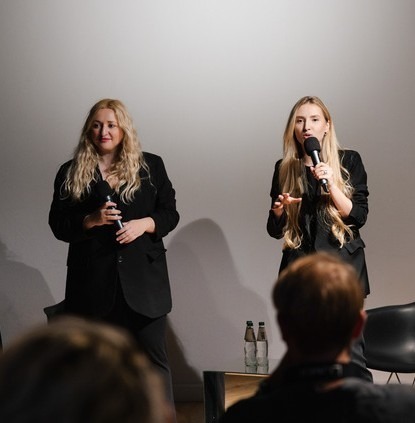
But why do some designer brands struggle to move forward, and ultimately shut down? This uncomfortable yet essential topic was the main focus of a discussion panel led by Ewelina Antonowicz. The panel featured Daria Graczykowska, Senior Account Manager at the ICON Agency, which represents luxury brands such as Bimba y Lola and Hermès in the Polish market, and Joanna Banaszewska, one of Poland’s most sought-after influencers. From failing to control the quality of every product bearing the designer’s name, to falling prey to the misconception that a single core product can sustain a brand, the list only grew longer as the speakers delved into the complexities of aligning a brand’s operational objectives with the founder’s original agenda, which often gets compromised if there is no strategic planning for sustainable growth.
On a more positive note, the speakers agreed on one principle that a brand should consider carefully before investing further resources: “For which problem in my community or client base is my brand the solution?” From enhancing consumer education and accessibility, to producing safer products, improving waste management processes and supporting the local economy and workforce, a successful, genuinely sustainable brand should provide solutions to address the overconsumption and overproduction problems that the industry has already created, rather than merely selling attractively branded products.
The sheer enjoyment and lively discussions that carried from the panels to the microscope stands spoke volumes about the event’s success, as well as how necessary these types of discussions are in today’s fashion industry macro-climate. ‘With this event, we aimed to show that innovations are key to further progress in fashion, providing new production possibilities that reduce waste and introduce more materials with less environmental footprint. We demonstrated that it is necessary to implement innovations which have the potential to revolutionise the entire industry’ – says Polkowska. However, for the revolution to happen, we must ’embrace the long-term view, and be bolder in incorporating innovations at every phase of the creative process. We should stop following trends or reacting to new legislation. Instead, we should set new standards based on knowledge, transparency, and responsibility’ – says Antonowicz. With so much already achieved, yet much more to accomplish, the fashion industry should find its foundation for a successful transition from old to new standards through dialogues, discussions, and open exchanges of know-how.
Vegan Fashion Repository was a media partner to this event.
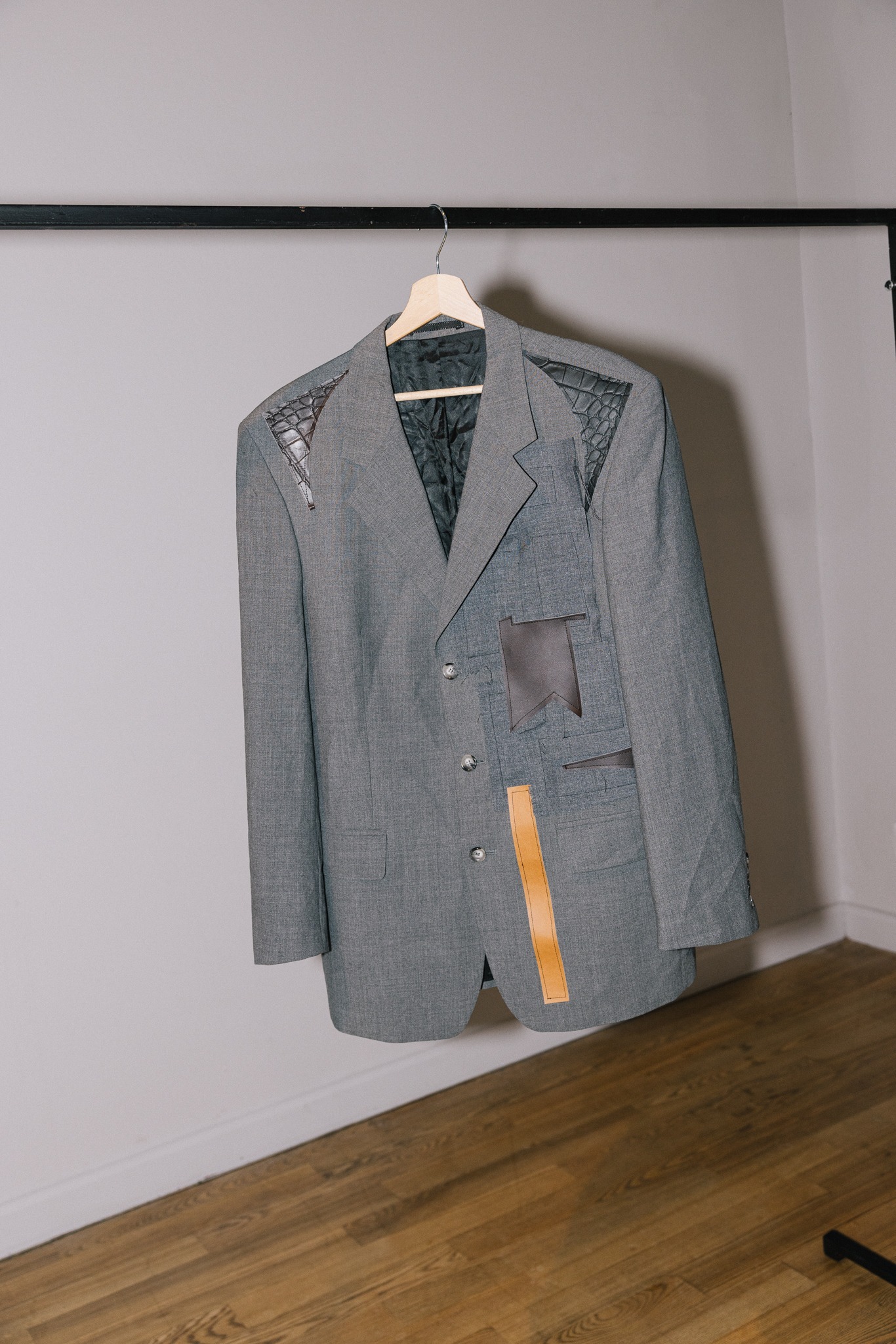


Image courtesy of Sustainable Fashion Institute.