
Updated on 29 March 2025

Or, should we ask the question the other way around: Why Use AI models if human ones are still around? Generative AI is learning to mimic human behaviour at a pace far quicker than humanity might expect – and be comfortable with1. This is becoming increasingly challenging for the average person to tell the difference between a human and an AI in screen-to-screen interactions. Take Aitana, for example – a 25 ‘year-old’ pink haired AI model from Barcelona, whose story of getting invited on a date by a Latin-American celebrity sparked some serious anxiety about how easy it has become to create an illusion of ‘connection’ in a world where every one is connected, yet lonelier than ever.
And while this might suggest that human models are struggling to find their footing, the more we speak to fashion professionals, there more convinced we become that, in the age of AI, human connection is valued – and priced – more than ever.
In this article, alongside breaking down the classic pros and cons of using AI models, we also spoke to individuals who work as, or with, models on a daily basis: Kasia Tręda, a fashion model represented by Bialy Models, Bartłomiej Biały, owner and CEO of Bialy Models, and, last but not least, Irina Dzhus, the fashion designer behind her namesake label, DZHUS.
Everything AI models can promise
For a fashion brand, or, rather, its board, any tool that promises cost efficiency is bound to get a blessing. A human model typically charges around $35 per hour (or more), while the subscription fee for an AI-model creation tool starts at an actual $0 (ZMO.ai). This, combined with the pressure to produce content at lighting speed, has created a wave of demand and enthusiasm for AI models, particularly among brands that rely on e-commerce and social media for sales.
AI is reportedly driving a significant shift in the global $2.5 trillion modelling industry. Brands like Louis Vuitton, Hugo Boss, Levi Strauss & Co., and Nike Inc. have already partnered with AI modelling companies such as Lalaland.ai, Deep Agency and Botika. Levi Strauss & Co., despite launching the project at a time when excitement around operational promises was high, ultimately put it on hold after the very idea of choosing artificial models over real human beings was ballistically criticised – or simply, killed – online.
In the fast fashion sector, Mango launched its first AI-generated campaign in July 2024. The AI models, designed to look like teenage girls, wore a limited-edition of digitalised garments, available for purchase. According to Mango’s CEO Toni Ruiz, speed was the primary factor in the decision, though cost saving undoubtedly contributed to this decision.
In March 2025, H&M announced a campaign in collaboration with Swedish tech firm Uncut, in which 30 digital ‘twins’ are set to be created using AI this year. Once created, they will first be introduced on social media, with each image featuring watermarks for transparency (and feedback tracking). This is hardly a courtesy, though, but rather a compliance measure in line with TikTok and Instagram’s requirements to disclose AI-generated content. The decision, officially driven by ‘curiosity‘ and the will to ’embrace the benefits of new technology,‘ as stated by Chief Creative Officer Jörgen Andersson, is causing a deliberately viral storm on social media, gaining the brand traction and reach in a tumultuous time when fashion consumers are notoriously distracted by other platforms. H&M is therefore owning the controversy, claiming that as a major player in the industry, the company is somewhat obliged to lead the conversation.
The Process
Unlike traditional photoshoots, AI models eliminate the need for photographers, assistants, studios, equipment, make-up artists, and post-production. The dramatic reducing of cost and turnaround time is the key promise—and alleged advantage—of the AI process over the traditional method of shooting campaigns, particularly for those focused on spreadsheets and business objectives. The chemistry and synergy of individuals on set—the ‘collective impromptu creativity’—which, in some cases, may be somewhat over-marketed, but with the right team, can turn a photoshoot into something iconic of its time, is, however, not factored in.
The process of creating AI models requires little more than a single creative wizard who translates a client’s brief into a digital 3D “persona” using data and imagery. Additional research on current trends in facial features, hairstyles, and makeup is often included, though consulting the professionals who would typically work on set is not the norm. If an AI model is created based on a real-life prototype (i.e., a human being), an ethical approach would be to engage the model and take authorised multiple images from every possible angle and under various lighting conditions to serve as references. Capturing movement patterns is the most advanced and resource-intensive part of the process, though it remains relatively contained compared to a traditional set.
Once created, an AI model can be endlessly edited and re-used. AI-generated models are also scalable and replicable, making them a practical solution for producing entire shows or campaigns with as many models as a brand desires – models that might otherwise be unaffordable in real-life settings.



When a client has a specific brief in mind, AI can deliver visuals tailored to virtually any requirement. Diversity is another factor fuelling the excitement around AI models. There are no limits to edits and combinations, from specific facial features and skin tones to nail colours, shapes, and hairstyles that would be a pain to create and maintain in real life. As for clothing and accessories, by 2025, most companies either design from scratch using software that supports 3D with AI-powered tools, or digitalise existing designs for their projects. Last, but not least, AI can deliver any setting – from plain, studio-like backgrounds to cosmic stations or underwater caves. Imagination is the only limit.
So, why are human models still around?
“You can’t teach AI charm and finesse,” says Bartłomiej Biały. Biały has been scouting and managing models and producing fashion shows since 2007, working across Poland, Italy, China, and Thailand – where he also served as a jury member for Elite Model Thailand – and now operates out of Istanbul, Türkiye. From there, he sends models to some of the most coveted runways shows, including Dior, Prada, and Miu Miu, and secures them jobs in top commercial campaigns around the world.
“Rates have doubled – reaching an average of $500 per hour for an eight-hour photoshoot – and agencies are working closely together, with some even merging to keep up with the demand,” he explains. “Take China, for example. No major e-commerce brand is using AI models. Temu, Shein, Tao Bao—they’re all working with real, human models.”
“You can’t teach AI charm and finesse“
Bartłomiej Biały, owner and CEO of Bialy Models
“There’s something about the human brain – we pick up on the tiniest details. The moment we realise it’s not human, it just doesn’t work,” Biały continues. “AI is great where logic is the driving force, like in banking or data analysis. But in fashion, logic is the last thing you’d rely on.”
“People follow the most accomplished models, like Kate Moss or Gigi Hadid, for their personalities, not just their facial features,” says Kasia Tręda. “Personality is something you build and develop. A model is highly self-aware of every single aspect of their body, as well as the way they interact and carry themselves.” In modelling, just as in fashion, trends come and go. A particular type of face, such as wide eyes and prominent cheekbones, might be in demand for a few seasons, only to be replaced by an entirely different look. On top of that, there are also specific market requirements and brand briefs for each jobs. “A good model never stops evolving,” Tręda adds. Personality allows a model to adapt and thrive amidst these constant changes, and is is the very X factor that shows every single time a model walks down the runway, or look into a photographer’s lens.
The growing fear that AI is stealing models’ jobs, particularly in an industry where protecting talent’s rights over their images is already a sore issue, is both an ongoing discussion and a battle. H&M’s AI campaign is only adding fuel to an already raging bonfire. Even though it is stated that real-life models will retain full ownership of their avatars—so much so that they can make them available to any brand they choose—and will still be paid based on usage rates, similarly to standard industry agreements, the backlash is real.
What AI models are discussed to take over is much more than just a job. “It is a dream job, and a challenging one at that. But the rewards are immense – you get to travel and experience the world,” Tręda explains. Models begin their professional training early – most in their teenage years. “Like becoming a psychologist or a lawyer, you must invest time, effort and money. You build a portfolio, hone your skills, and work your way up until you become a professional and start earning. This is a profession, not a gig”.
“People follow the most accomplished models, like Kate Moss or Gigi Hadid, for their personalities, not just their facial features”
Kasia Tręda, fashion model
A fashion model is required to maintain a disciplined routine of exercise, diet, beauty, and sleep. Acting skills have to be honed for commercials and photoshoots. A model is expected to be as professional as ‘fun to work with’ during long and often tedious hours. “You simply have to make a client like you enough to book you again.” – says Tręda. A model who arrives unprepared, or cannot fit into the standard sample size, will likely not be hired again. And you can trust a model when she says that the competition is fierce.

pc. Ryu (Ryutaro Tsukata)

pc. Ryu (Ryutaro Tsukata)

pc. Ryu (Ryutaro Tsukata)

pc. Moritz Hoegemann
A Human Affair
Fashion designers and models have long been known to develop a special bond. For Irina Dzhus, designer and founder of DZHUS, models “mirror a brand’s narrative and deliver a powerful message that stays with the audience long after the show is over.” Dzhus is known for her innovative pattern-making techniques and hypnotic performances, in which she transforms garments in real-time – trousers become dresses, and hats become bags. “For this process, an author-model synthesis is simply crucial” says Dzhus.
In her latest show, ANTICON, performed in Berlin, Prague, and Chisinau, Irina Dzhus elevated the concept of transformation to an almost alchemical level, with garments metamorphosing into homeware objects. By erasing the boundaries between clothing and homeware, which remain two distinct consumption categories, Dzhus highlighted their profound connection to human life. It is tempting to suggest that the concept of the ‘human touch’ – a term frequently used yet rarely exemplified with such depth – has been truly redefined.
While Dzhus is enthusiastic about using AI for creating a database of all possible garment transformations, as well as for technical processes like prototype development and for made-to-measure orders, she still insists on showcasing her pieces on human models. “Fifteen years of manual and intricate pattern-making does inspire certain expectations for AI to save time and resources” she acknowledges.” But whilst I disregard aspects like biological age or gender, I focus on creating an authentic microcosm with a mission to communicate our values on the global scale. I cherish working with unique personalities that align with the DZHUS vibe, appreciating all ethnicities and identities. Working closely with other people is a fundamental component of my brand’s DNA—and my passion.”
“Designers are building their brands on real humans. The same goes for many other professions that need real human beings to get people engaged, and ultimately sell their products” says Kasia Tręda. As a model with quite distinctive features – red hair and freckles – Tręda has had her face recreated by a few AI developers, some authorised and others not. However, she does not perceive AI models as a real threat. “I believe it is more of an experiment. Fast fashion and e-commerce might be tempted to use AI models, but let’s not forget it’s real people watching those commercials. They want to see themselves – or someone they can relate to – before they decide to actually buy a thing.”
“I cherish working with unique personalities (…). Working closely with other people is a fundamental component of my brand’s DNA—and my passion“
Irina Dzhus, fashion designer and founder of DZHUS
Despite their obvious operational advantages, AI models remain as promising as they are ‘off‘. With ‘human side of sales’ becoming a new business objective for fashion brands, and the rising influence of ‘silver spenders’ – both identified by the Business of Fashion as key drivers of fashion markets for the foreseeable future, it seems unlikely that customers would resonate with a pitch-perfect AI model trying to sell them a bag or a garment.
“We simply don’t go for perfection anymore. It is human to be imperfect, and to show it, and to talk about it,” Tręda concludes.
Contributors
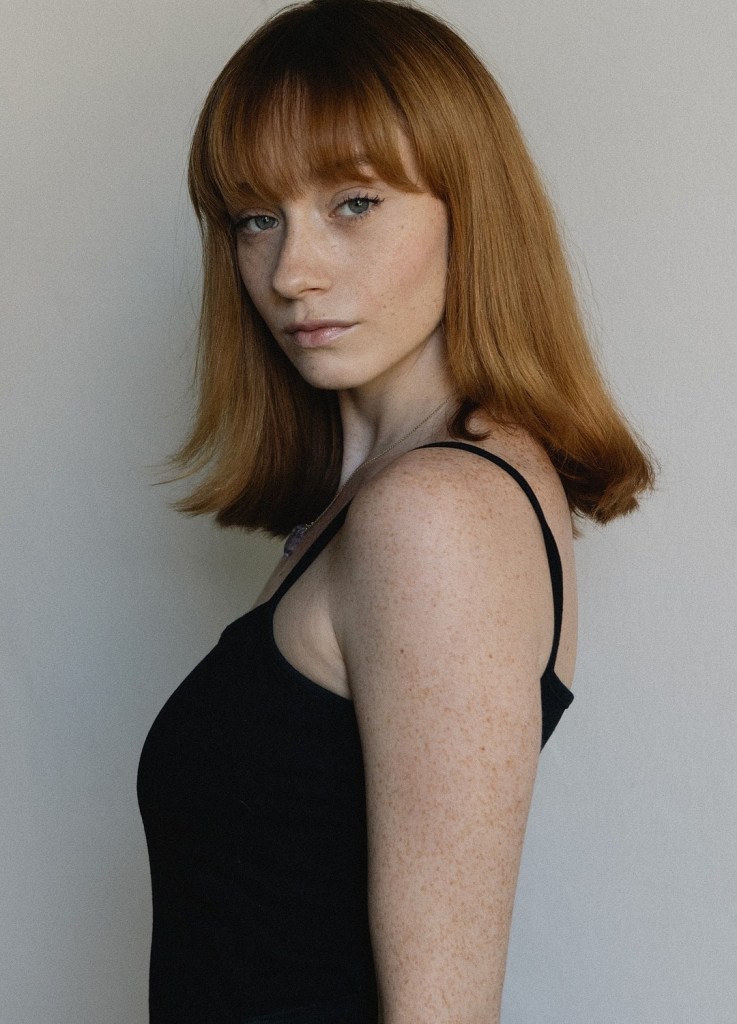
Katarzyna Tręda is a fashion and photo model represented by Bialy Models. Her career has taken her to a variety of destinations, from Iceland to Mexico. Dedicated to her craft, she continually hones her skills, body, and portfolio.

Bartłomiej Biały is a model scout, manager, and owner of Bialy Models, with an extensive portfolio of collaborations, including FTV, Models Beijing, The Support Foundation of Her Majesty Queen Sirikit of Thailand, and Elite Model Look.

Irina Dzhus is a fashion designer and the founder of DZHUS, a cruelty-free brand renowned for its uncanny transformative pieces crafted from innovative patterns that transcend traditional notions of clothing, accessories, and wearable art.
- Back in March 2023, more than 1,800 high-profile tech leaders and researches signed an open letter to tech companies and requested a further moratorium, training and ultimately ‘something’ that would regulate the speed in which “AI systems with human-competitive intelligence'”. ↩︎