
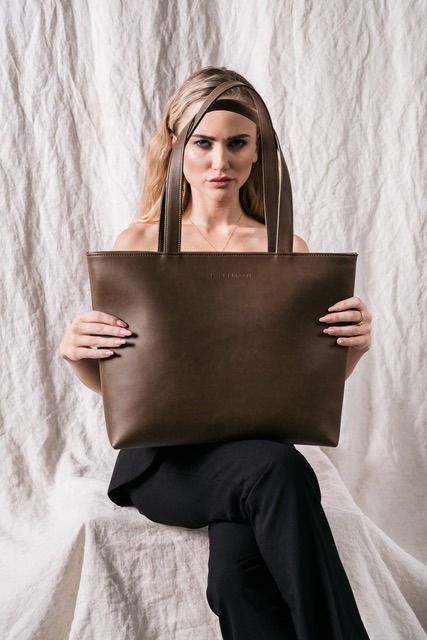
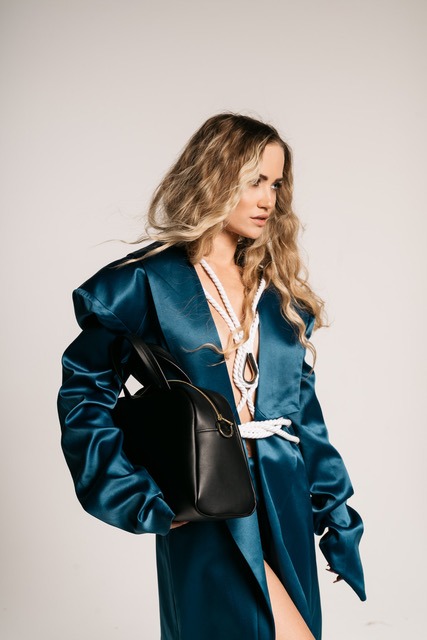
Marta Sieradzka named her brand of bags made from plant-based leather alternatives ‘Estimon’, which means ‘respect’ in Esperanto. But perhaps it should have been ‘no compromise’.
After a few conversations and a shared trip to Berlin Fashion Week, I quickly realised that Marta is not one to sugar-coat things. So, we started with Estimon’s origin story, which begins in 2017—back when ‘vegan leather’ mostly meant polyurethane (PU) or polyvinyl chloride (PVC). “I thought, ‘There has to be something else,’ and started digging deeper and wider,” says Marta. For the next five years, she worked entirely on her own, keeping it all to herself. “I already had the concept, the name, bought the domain—but no one knew. Not my friends, not my husband, not even my mum,” she adds.
And that’s coming from someone trained in psychology and communication studies. So imagine her friends’ and family’s surprise when, after her 30th birthday in 2022, she announced the launch of her brand. “Sounds cliché. But I thought, it’s either now or never—out with it, or off.” It was a pivotal moment in her life, right after finishing a course of therapy that helped her step out into the world and show what she had to offer. “I’m still afraid of being judged, though. But it gets better—and therapy helped.”
A Hands-on Journey
For example, in just the past few years, the biomass content in most innovative apple leather alternatives has risen from 31% to as high as 91%. A number of manufacturers are replacing fossil-based PU or PVC with water-based bio-PU made from renewable resources such as vegetable oils or sugars—or even developing formulas with no synthetics at all. “That’s what I love about it. That moment when I get the new material, touch it, and see how it’s changed since last time. These companies keep developing, tweaking coatings or backings to make it better, and you get to discover it all over again,” says Marta.
Then comes prototyping. “It’s such a joy working with your hands. I get to sketch and experiment. And when it’s finally there, in full shape—that’s the moment.” People are mostly a good part of the process too. “I meet the people [who develop the materials], talk about their ‘why’ and their ‘how’. And that ‘how’ is such a mammoth job. They invest so much time, energy and resources—and often get little recognition. I have huge respect—and gratitude—for everyone who’s ever attempted it, whether they succeeded or not.”
Over the past few years, Marta has noticed that smaller companies—those who don’t treat this as ‘just another business’—are often the most committed to developing the perfect formula. And they won’t budge, despite lacking the resources of the big players. “I have a real soft spot for them. I think it’s because we share the same values—we just get each other,” Marta says.
But people are people, and there’s frustration too. When reaching out to learn about materials—which is essential if you’re planning to test them—some producers remain cagey about their formulas, hiding behind confidentiality and patents. “I get it, I wouldn’t go shouting about my formula either, especially if it’s a good one. But we’re talking about products already on the market, from producers who claim to be open to collaboration. I’m not asking for specific proportions or production secrets—I’m simply asking about the ingredients.”
Inquiring Minds


To be fair, she also asks about certifications. They’re often the most reliable way to verify whether a brand really does what it claims—especially when it comes to water and energy use, pollution, waste management, and ethics (animal and human alike). And that’s where it gets tricky.
Some vegan certifications—even from well-known bodies—can be bought with little more than a payment. Others, far less popular, require thorough audits—of documents, sites, or both—before granting approval. Paying for the process is no guarantee of a successful outcome. So it’s not enough to ask whether a product is certified—you need to know by whom. “A producer might proudly display a certain certificate, but if you take the time to check it against the official database, it turns out it’s no longer valid,” says Marta. “That’s often the case with those who see materials as a business trend rather than a calling.”
This is where larger companies tend to fare better: they have the resources to join long-term certification schemes, and too much at stake to let a certificate expire. “They just have much more to lose.”
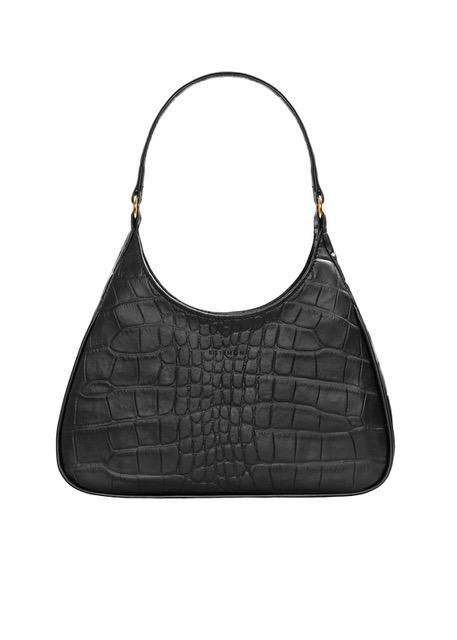
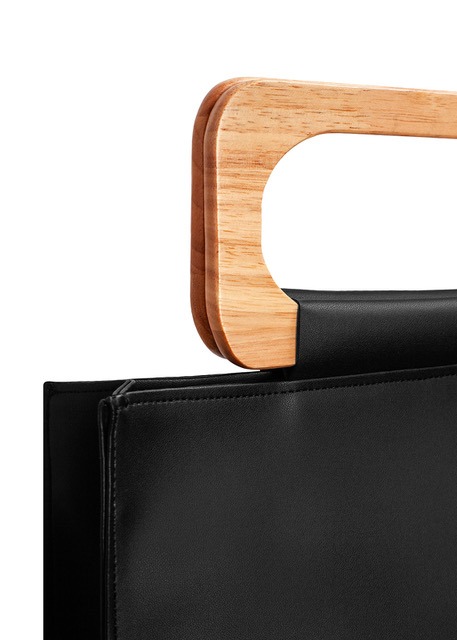
Estimon uses only plant-based materials that contain either no or minimal amounts of fossil-derived synthetics—such as mushroom leather, olive leather, Vegea® grape leather, and Viridis® corn leather—all certified by bodies that carry out comprehensive audits. Marta also shares her research with students at the International School of Costume and Fashion Design. “They’re really open-minded, they ask questions, and they want to check out these leather alternatives,” says Marta.
Since producers are rarely keen to hand out free samples to students, Marta acts as a go-between—drawing on her business relationships with producers who trust her expert judgement, and know she’ll train the next generation of designers to use their materials responsibly. “I think students are more open to experimenting. They know that, as with all experiments, things might go well—or not,” says Marta.
Snags and Walls
The same can’t always be said of customers. “When you’re about to spend your hard-earned money on something, you’re naturally less willing to risk disappointment. That’s why people tend to stick with the same brands and materials they’ve had good experiences with. But they often forget that quality can vary—even within the same model from the same brand,” says Marta.
The hardest part of the job? “Breaking the wall.” A wall that’s been built over decades—if not centuries—around the image of happy cows and the supposed ‘waste’ that their hides become. That image is what triggered Marta’s initial deep dive into the subject. “People buy more and more cheap, poor-quality items that use up more and more resources. That cheerful cow image just didn’t sit right with me,” she says.
What really kicked off her research streak was the sheer difficulty of finding any information. “The lack of transparency—that’s what did it.” Eventually she found reports and data sheets—even those from the United Nations. “Ironically, some were commissioned by departments tasked with portraying animal leather production as okay. But even then, you can tell it’s not okay, despite the mild and ambiguous language,” says Marta.
She’s gone on to consult countless other reports, and particularly values the work of F.A.K.E. Movement and Collective Fashion Justice. “I like how direct they are—calling out big companies without being judgemental towards individuals. That’s how it should be done. Yes, the images are drastic, and yes, people can choose to look away. But they need to be out there.”
The images are only as drastic as the reality of the animals’ suffering. Marta recalls visiting a foundation that rescues fur animals in Poland (Fundacja Otwarte Klatki), accompanied by her husband. “He’s not an emotional person. But I could see how it affected him—he refused to be a part of their suffering,” says Marta.
Promoting plant-based leather alternatives is a battle on all fronts. The wall Marta refers to is made up of long-held, misguided beliefs—about the supposed luxury of animal leather, its durability, and its biodegradability. “I don’t think people are stubborn out of malice. They simply believe what they’ve been told for years,” she says. As a brand founder and materials expert, her aim isn’t necessarily to convince—but to spark curiosity. “It’s about getting people to start asking questions.”
Asking the Tough Questions
Yet even asking questions—and being willing to hear the answers or dig deeper—can feel disruptive. Had the question been asked—about the sourcing of animal leather, for instance—the answer would often be unsettling. Another common sticking point is durability. “I can’t break through to someone who clings to the belief that their leather item has lasted 20 years, and everything else is plastic that cracks after six months. I understand the concern. But you can’t expect your mind to change if you’re not even willing to try something new.”
Granted, most plant-based leather alternatives—especially the plastic-free ones—haven’t been around long enough to prove 20-year durability. But that’s where research and testing come in. “I’ve worked with them for over seven years. I can say confidently that the most durable ones are more resilient in daily use than animal leather. Why shouldn’t they be equally durable in the long run?”
Still, the pursuit of high durability without any synthetics—fossil-based or not—follows the usual rules of innovation. Some materials will be game-changers; others won’t. “But as long as we’ve got proper data sheets, reports and calculations—showing that a material uses less or no water, has a significantly lower carbon footprint, or is simply safer because it uses natural, certified dyes and adhesives—why not give it a chance? It shouldn’t be that hard, should it?”
Transparency is a huge issue. Not just in the animal leather industry (“Oh, the way the leather lobby silences any attempt to even discuss transparency!”) but also within the vegan and innovative materials space. “Vegan fashion isn’t blameless,” says Marta. “On top of producers jumping on the hype bandwagon, fast fashion has diluted—and outright contaminated—the very concept of ‘vegan leather’.”
The real damage is done when fossil-based synthetics are marketed as ‘vegan leather’, reinforcing the mainstream belief that it’s “just plastic”. Technically, most plant-based leathers currently on the market still include a PU coating. But so does animal leather—especially patent leather. And while synthetics are added to plant-based materials for durability and chemical stability, animal leather achieves the same effect through tanning: essentially soaking hides in toxic chemicals such as chromium, formaldehyde, arsenic, benzene, and toluene. These substances harm workers and ecosystems during production, and leach back into the soil, water, and air when landfilled or incinerated. Vegetable tanning is less harmful—but any tanning process fundamentally disrupts biodegradability, which is rather ironic, given that poor biodegradability is the argument most often used against plant-based alternatives.
Meanwhile, it’s within the vegan space that fully biodegradable, synthetic-free alternatives are being developed.
Carrying the Torch

With so much misinformation—some of it deliberately spread—the vegan fashion industry faces serious challenges, especially now that recent legislative momentum (such as the Green Claims Directive) is being put on hold, while fossil fuel interests are resurging. Still, the EU is continuing to work on Extended Producer Responsibility (EPR), which could help regulate market supply. “It’s promising—but I worry about unintended consequences. I’d hate to see legislation that ends up punishing customers, especially through higher prices. These changes must target producers first.”
Consumers already carry enough of the burden. Financial anxiety is real, and it’s already dampening enthusiasm for vegan and sustainable choices. “We have no say in that. And it makes people more reluctant to try something new.”
To break into the mainstream, vegan fashion needs buy-in from major players—beyond the occasional capsule collection made with pineapple leather. “It’s got to be more than a flashy PR move. But for that to happen, big brands need to see real, fast ROI.” That’s why small brands matter so much. “They carry the torch. They can make it fun and educational. And the more there are, the easier it will get. Eventually.”
The broader picture is complicated. What fashion media call ‘luxury fatigue’ reflects a shift in consumer priorities. “I see two groups—those who are completely fed up and eager for change, and those who don’t care. But the demographic with the most purchasing power is starting to demand more than pretty objects. That’s the opportunity vegan fashion needs to seize.”
Today, ‘vegan’ no longer refers solely to animal welfare, but to both animal and environmental welfare. “People who actively seek out vegan products aren’t just looking to buy plastic—and their values are very specific.” Marta is adamant—but not without doubt. “It might be unpopular, but I’m not entirely comfortable with introducing more products into the market. That’s why I focus on upcycling and reuse, and I remind myself: always do the best you can.”
For Marta, vegan fashion means aligning your values across animals, the environment, and human health. “You can’t compromise on those.”
Curious about what’s next for vegan leather? Explore VFR’s curated directory of innovative, vegan leather alternatives and discover what the future of sustainable materials looks like.
Further reading (in alphabetical order):
- Allocating The Carbon Footprint Of Leather Production by Faunalytics
- Animal Leather: Their Skin, Not Ours! by F.A.K.E Movement
- Future Trends in the World Leather and Leather Products Industry and Trade by United Nations Industrial Development Organisation (UNIDO)
- Leather’s impact on the planet by Collective Fashion Justice and Center for Biological Diversity
- Leather Panel – UNIDO’s official website for matters related to leather production
- Under their skin: A report series on the injustices of leather production by Collective Fashion Justice