pc Anasteisha Danger for BFW
Innovations drive civilisation’s progress, but in the contemporary fashion landscape, it is no longer enough to invent for invention’s sake. The imperative now is to develop solutions that address real problems – particularly as the industry is defined by overproduction and overconsumption.
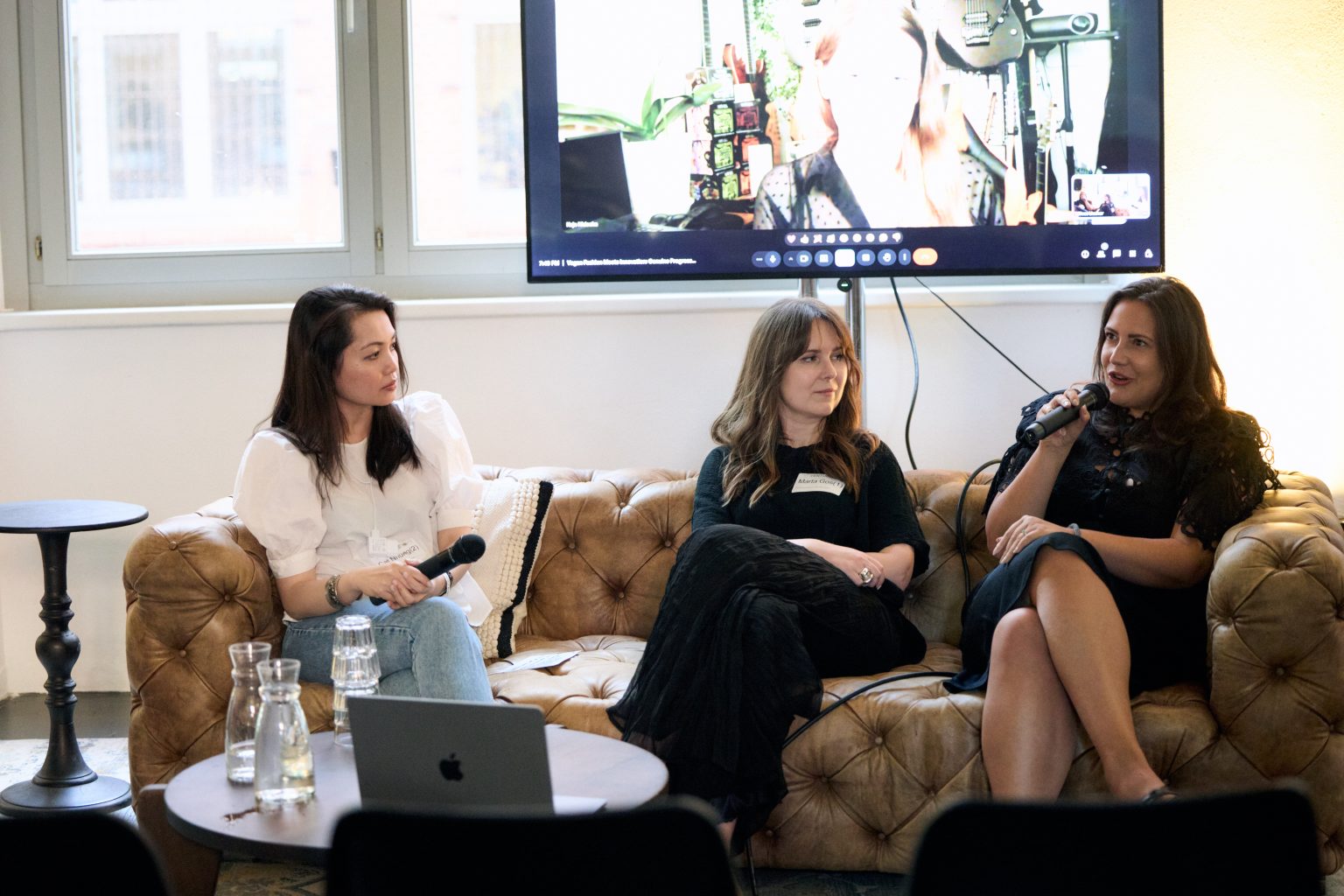
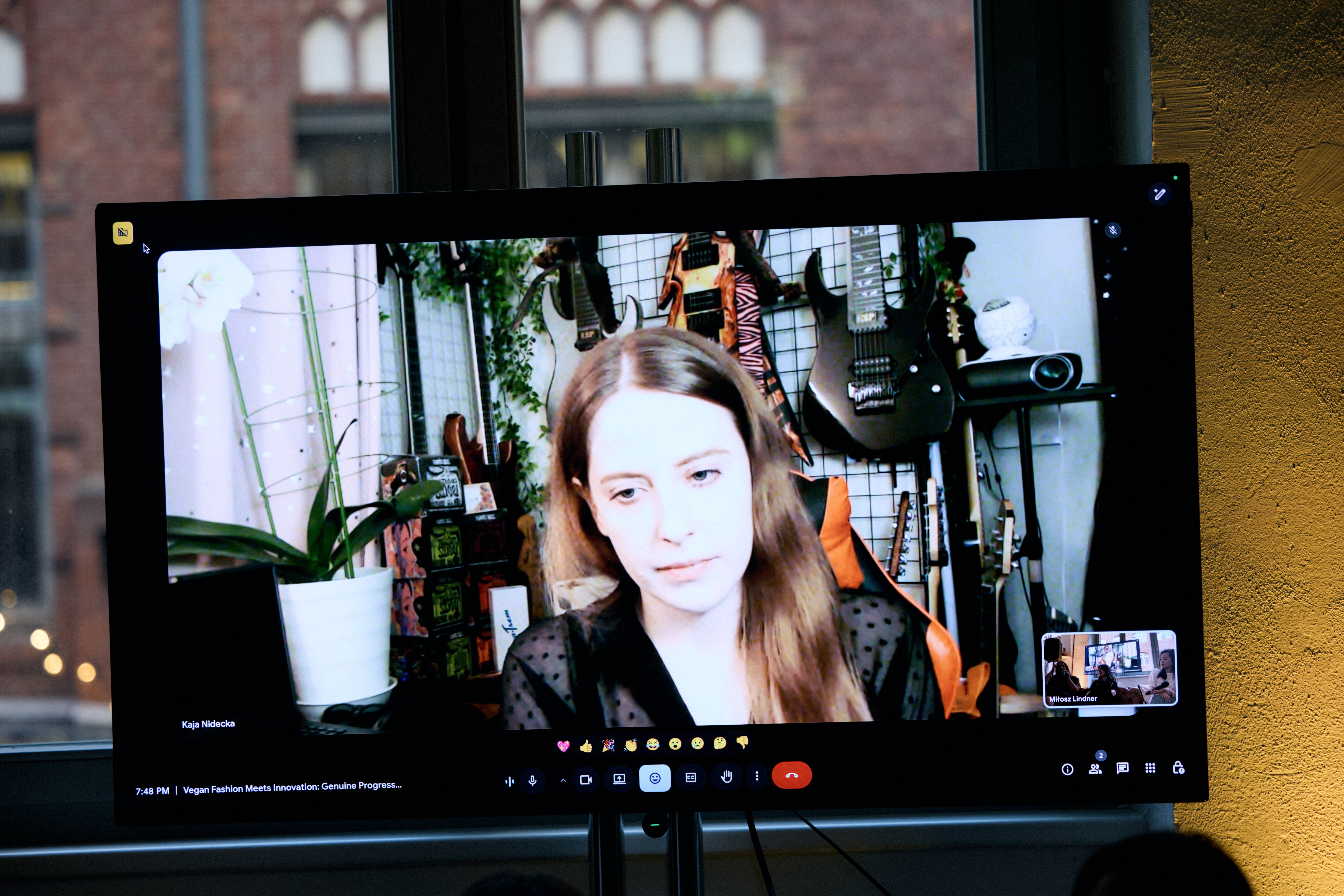
At the Thursday Gathering #15 – ReFashioned by Design: yoona.ai & Venture Café Berlin – on the final day of Berlin Fashion Week, we hosted a panel discussion titled Vegan Fashion Meets Innovation: Genuine Progress or Marketing Hype? Our panellists included Marta Gos, creative strategist and fashion innovation expert, who recently joined Bio2Materials, the Polish startup behind Nutico™, aka ‘The Chocolate Leather’; Marta Sieradzka, founder of Estimon, a plant-based materials expert and lecturer in sustainable materials at MSKPU; and Kaja Nidecka, VFR’s co-founder and our design and communications lead, who joined us remotely from Tokyo, where she is currently based. Together, we explored the intersection of material innovation and vegan fashion – and addressed the big, fat elephant in the room.
To start the conversation, I posed the central question: are vegan fashion and innovative materials truly a match – or simply a marketing trick? “It’s a necessity,” says Marta Gos. She explains that inventing new materials with reduced environmental impact is, in fact, one of the core tenets of ethical fashion. This definition has evolved far beyond animal welfare to include environmental and human welfare – both for those directly involved in the production chain and for those whose lives are affected by the impact of production.
Marta Sieradzka also highlights the alignment with values as a natural integration of innovation into vegan fashion. It is not a whim or a branding tactic, but a logical continuation of a values-driven approach – if a brand truly aims to use materials with reduced impact and with respect for animals, the environment, and people alike.
At the panel discussion, we addressed the plastic issue, as most plant-based leather alternatives currently on the market still contain polyurethane, bio-polyurethane or even polyvinyl chloride alongside bio-mass, to ensure chemical stability. “Many producers add plastic to the formula not because they are fans of plastic, but because they need to enhance the product’s durability,” says Marta Gos, adding a point that – while well known in the materials industry – raised a few eyebrows in the audience. “Natural leather is coated with plastic too,” she adds, prompting us to delve a little deeper.
The elephant in the room
To begin with, most natural – or ‘genuine’ – leather used in the fashion industry for shoes, bags and garments – such as the patent leather commonly used for footwear – is coated with plastic (polyurethane or polyvinyl chloride), just like many leather alternatives. The reason is the same: durability – and aesthetics. Animal leather also undergoes a tanning process that releases numerous toxic substances, including chromium (VI), formaldehyde, arsenic and lead – both during production and as the leather biodegrades. While biodegradability is often cited as a key advantage by supporters of genuine leather, it is important to remember that any tanning process compromises this quality – even vegetable tanning, although it is a better option than conventional chemical tanning. What is often overlooked in these arguments is that most leather is coated in plastic anyway.


The production of animal leather also requires two to three times more water than most leather alternatives and has a significantly higher environmental impact than synthetic options, primarily due to livestock farming and chemical tanning. Plant-based alternatives, while still containing a percentage of synthetics, are made from repurposed bio-waste from the food and beverage industry – which helps tackle the waste problem. Some manufacturers of plant-based alternatives are switching to bio-based PU or polylactic acid (PLA) to further the use of renewable components instead of petroleum-based synthetics. Ultimately, sustainability is about reducing environmental harm and resource consumption – and water remains one of our most vital resources.
Semantics also played a role in the conversation. “I wouldn’t call genuine leather ‘natural’. There is nothing natural about the way those animals are killed – and wearing dead skin sourced that way doesn’t feel natural at all,” says Marta Sieradzka. Marta spent years researching environmental impacts before founding her brand, Estimon. She’s enthusiastic about sharing technical details. “I love datasheets!” she exclaims – a sentiment immediately seconded by Marta Gos.
Feet on the ground, eyes on the future
When two experts start diving into data sheets mid-panel, one must act fast – there’s only so much technical information an audience can absorb in 30 minutes. The same applies when engaging with customers. “It’s all about the language,” notes Kaja Nidecka. Marta Sieradzka, devoted expert that she is, knows that when it comes to the first contact with a client, less tech and more design is the way forward. “You can’t overwhelm the customer with technicalities. You need to capture attention with great design,” she says. Once you have their attention, that’s when the storytelling begins. And while data sheets are essential when it comes to sustainability, the connection between a brand and its customer is, ultimately, an emotional one.
“At the end of the day, you have to gain the customer’s trust,” says Kaja. And it is a trust that a brand earns over time, with patience and diligence – something Marta Sieradzka can certainly attest to from her own experience.
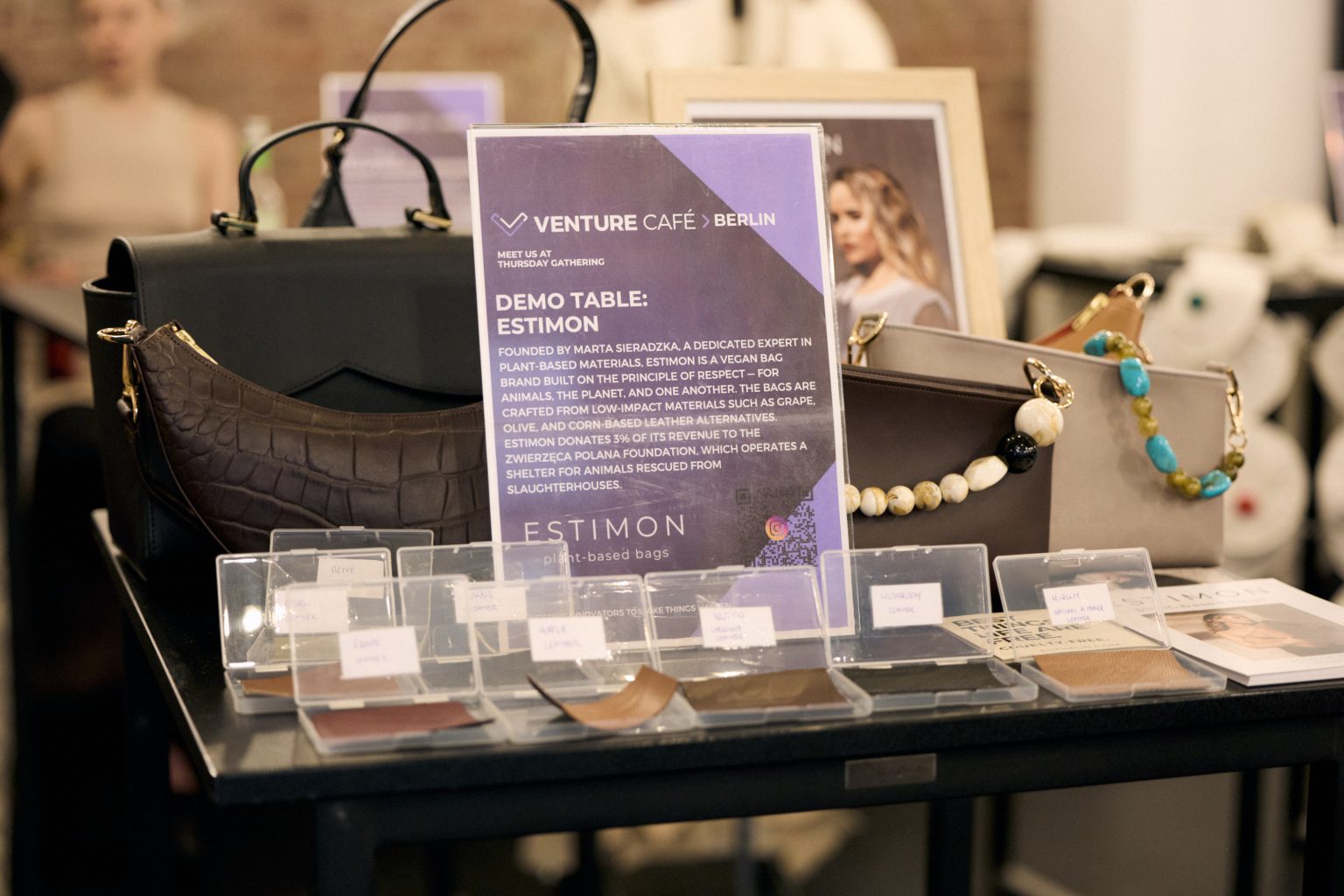
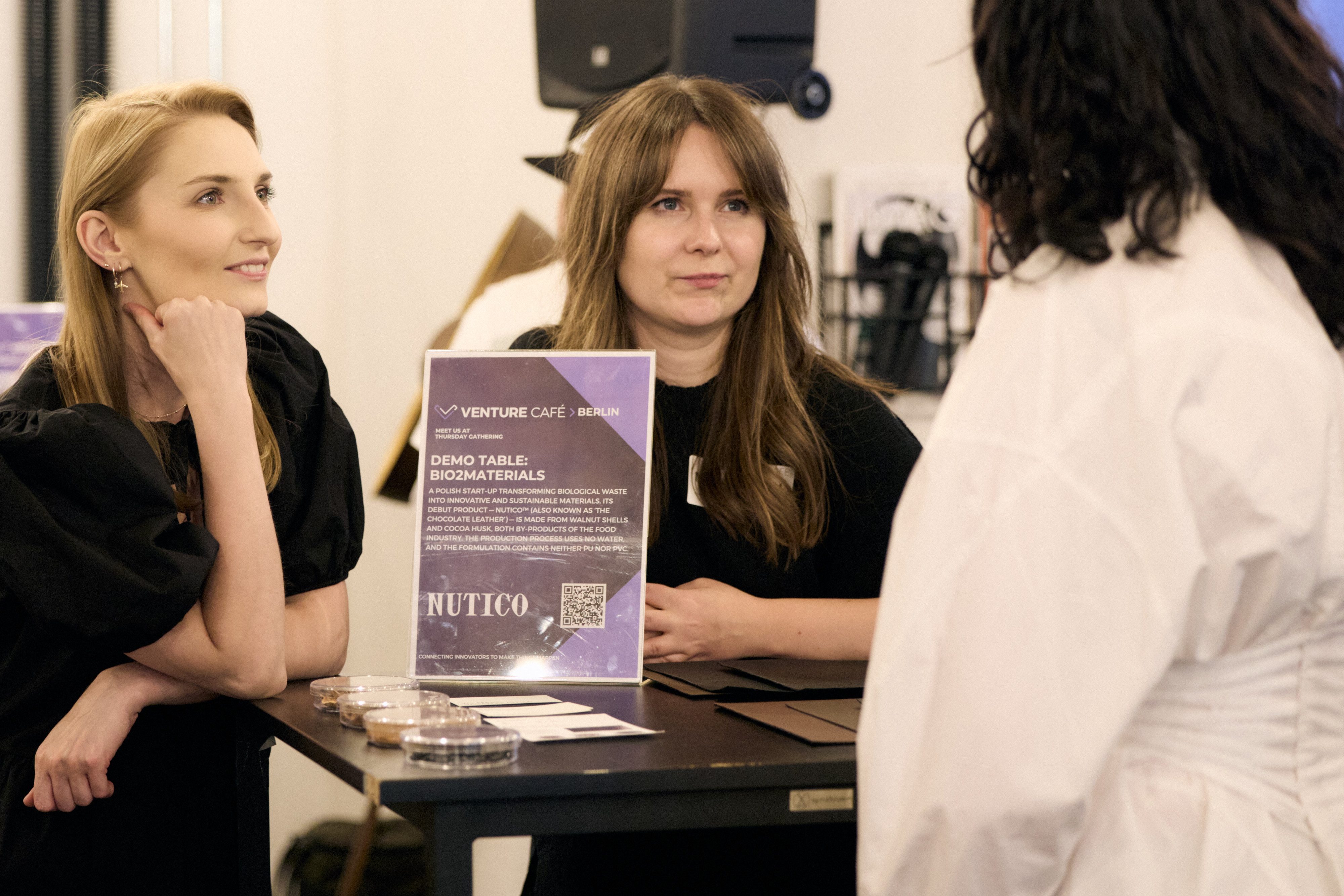
Bio2Materials has developed Nutico™ – a leather alternative made from cocoa and chocolate husks – and their formula contains neither water nor PU or PVC. Even better, the material is now scalable, meaning it’s ready to enter the market. The startup is already garnering interest from brands and manufacturers, because while it’s one thing to create a plastic-free leather alternative in the lab, it’s another to scale it successfully. “We always hear about the success stories – but it’s in the failures, and the lessons they bring, that real innovation happens. I honestly wish there were more competitors in the plastic-free leather alternative space,” says Marta Gos.
Only with more similar products will vegan and plastic-free innovations enter the mainstream. “That’s the next big thing – to break into the mainstream, and to have customers encounter these materials frequently in real-life stores, not just online. That’s how people want to experience products,” says Kaja. And while there are a few plastic-free leather alternatives already available – such as MIRUM®, Reishi™, Shorai™ and HyphaLite™ – marketing still has a long way to go to reach the average consumer who may not actively seek out vegan or plastic-free options.
Greenwashing also remains a major obstacle, undermining the efforts of brands and material innovators to engage the mainstream. With the Green Claims Directive currently on hold, this may be one of the biggest challenges in the years to come. But alongside that challenge comes a collective determination among those for whom ethical and plastic-free values are a daily commitment. “We need these materials to become mainstream – but not through greenwashing or campaigns. They need to be there for good,” says Marta Sieradzka.

pc Anasteisha Danger for BFW
pc Anasteisha Danger for BFW
pc Anasteisha Danger for BFW
left to right: Milena Tobjasz (BLUMI), Marta Gos
pc Anasteisha Danger for BFW
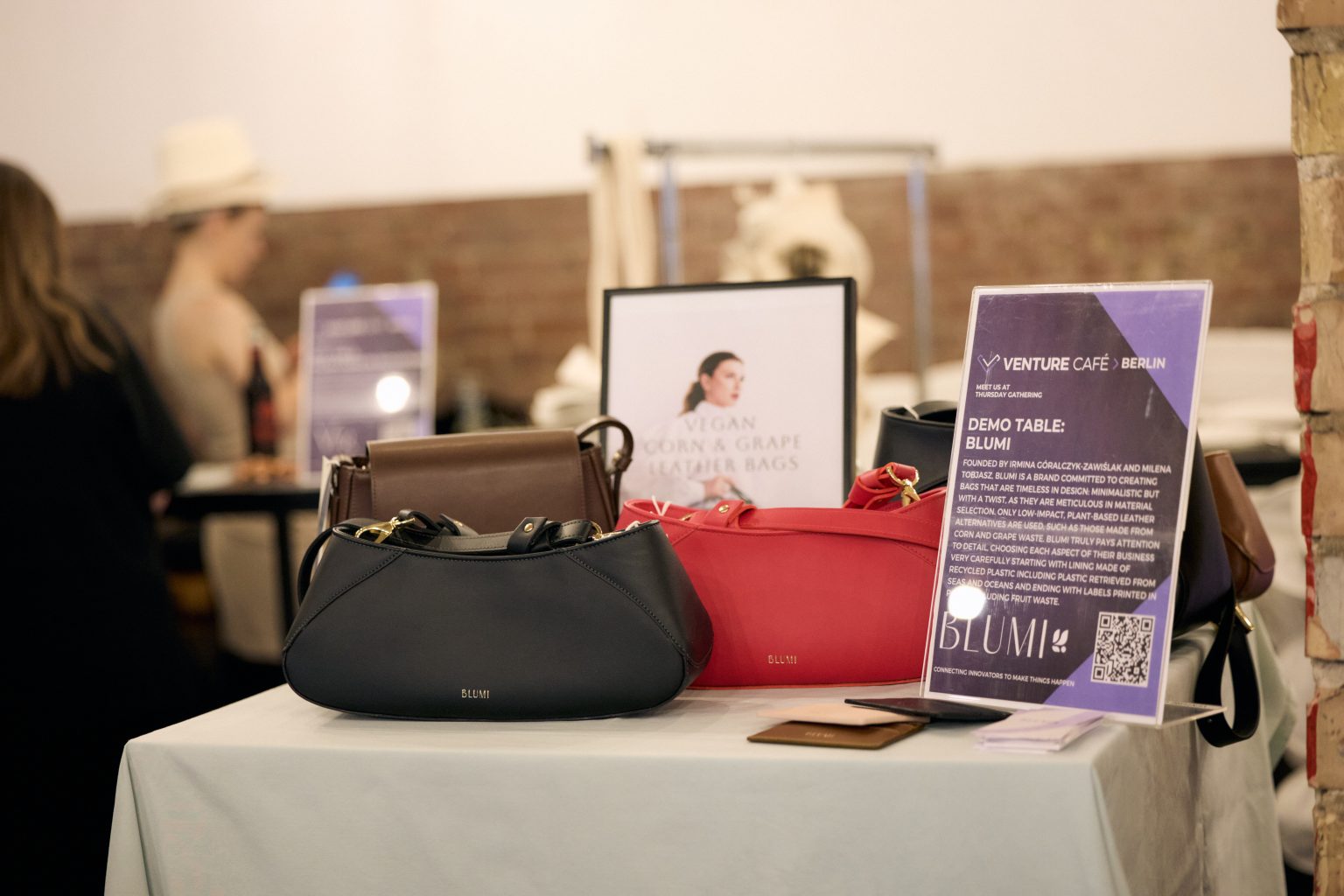
To help foster this agenda, we came together for a special edition of Venture Café Berlin’s Thursday Gathering during the latest Berlin Fashion Week. Bio2Materials presented their Chocolate Leather; Estimon and Blumi showcased their captivating, immaculately crafted vegan bags; and DZHUS – the conceptual fashion label founded by Irina Dzhus, a visionary who regularly donates to animal rescue efforts in war-torn Ukraine – delivered what could more aptly be described as a fashion installation, embodying her uncompromising aesthetic and the transformative nature of her pieces – Dzhus’ unmistakable signature.
It was a cheerful and inspiring evening that highlighted just how far the industry has come in advancing responsible innovation – both digital and material. But there’s still work to be done – and we’re on it.

Discover more from Vegan Fashion Repository
Subscribe to get the latest posts sent to your email.