Yes, there is a vegan response to traditional leather footwear of the highest quality and craftsmanship. Vincenzo Zingales talks us through the founding story and everyday operations of Zingales Footwear – and why leather footwear is no longer the benchmark for quality.
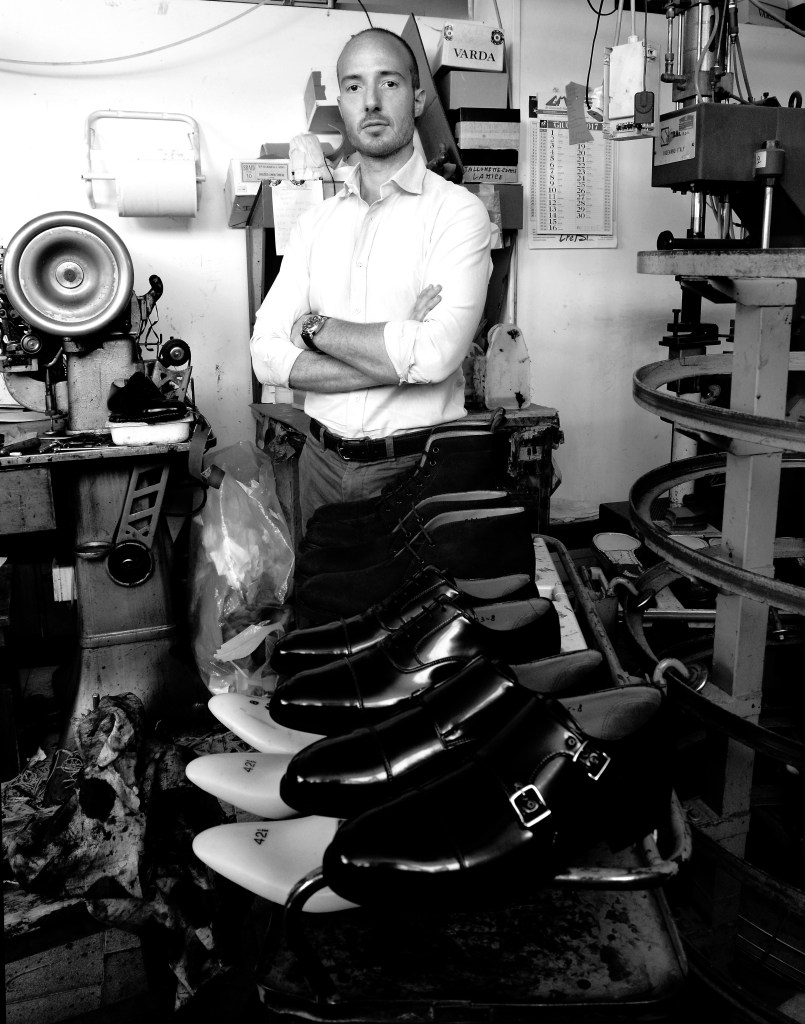
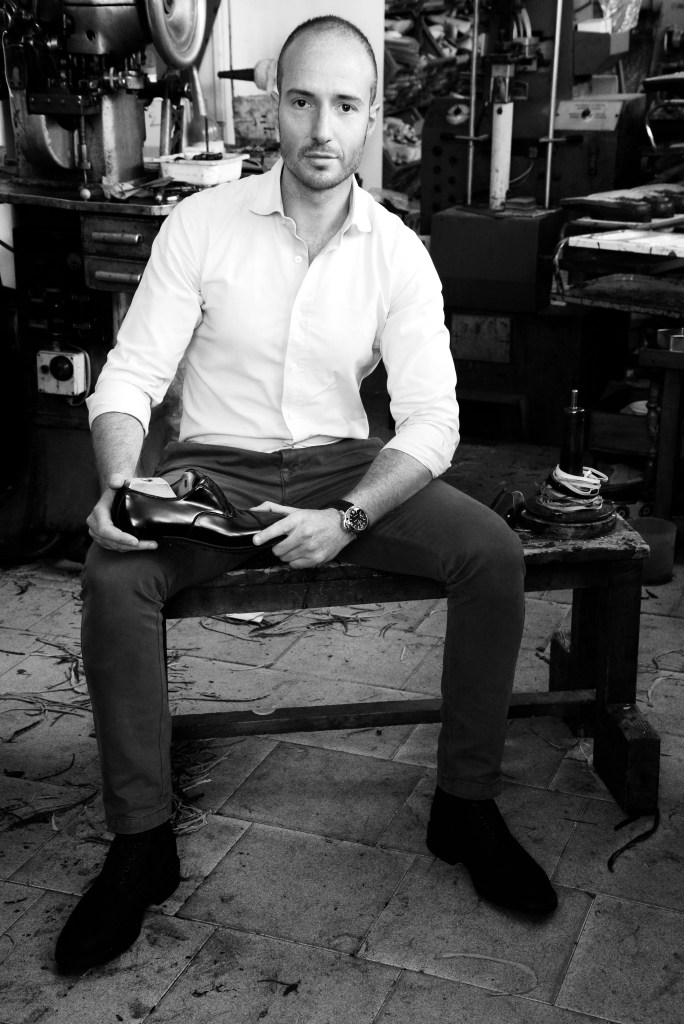
Every good story has a plot twist. In Vincenzo Zingales’ case, the very journey from having a respected shoemaker from Le Marche – Italy’s shoemaking nexus – hang up on him after realising Zingales was asking him to work with microfibre instead of suede, to the point where the whole county – the shoemaker included – became deeply involved, is a plot twist two years in the making.
‘Every week, I’d take a plane to Le Marche and stay through the weekend to develop the product with him. The first time we spoke, he called me stupid. Two years later, he said, “It’s perfect.”’ Zingales says.
‘An Electric Ferrari’
Zingales is indeed a perfectionist with a laser-sharp focus on how he wants every single step of a pair of shoes to be executed. ‘I want my shoes to be cut by the man, not the machine.’ And thus, there is a man who cuts the different parts of the shoe from a roll of microfibre paper, and another who cuts the holes – and the chain of craft continues all the way until the shoe is placed in the Goodyear machine for stitching, which passes through all three parts of the shoe.
The production process of a Goodyear pair of shoes takes over 200 steps. The method, named after the English machine, is the one most celebrated luxury shoemaking brands use to produce their shoes – such as Church’s, Edward Green, Tricker’s and John Lobb. Due to their specific construction and a peculiar combination of both human and mechanical precision, Goodyear shoes have proven the most durable under various conditions – including resistance, impermeability (the original invention being English, after all), and undeniable craftsmanship. ‘It can’t get more handmade or artisanal than that – at least none that I know of.’
A law and human resources graduate, and an accomplished marketing professional, Zingales ensured that the variation of the Goodyear method he so meticulously developed over those two graceful but intense years – the one adapted to the particularities of working with vegan materials – is patented as an “environmentally sustainable construction without animal products or derivatives.” A vegetarian of 15 years (‘vegan at home, occasional pizza on nights out’), and a ‘big fan of shoes and watches’, it only made sense for Zingales to develop his own pair of shoes that would involve no animal dying or suffering whatsoever.
When the idea first came to him, roughly at the time he stopped eating meat, the very thought of making a Goodyear shoe from anything other than ‘genuine’ leather seemed irrational, if not sacrilegious. ‘It was a very difficult start. I basically wanted to make an electric Ferrari. People are cool with that kind of idea now, but 10–15 years ago, it made no sense to them whatsoever.’
However, what ultimately made no sense to Zingales was to wear animal skin while refusing to eat meat. And the rest is history.
Material Matters

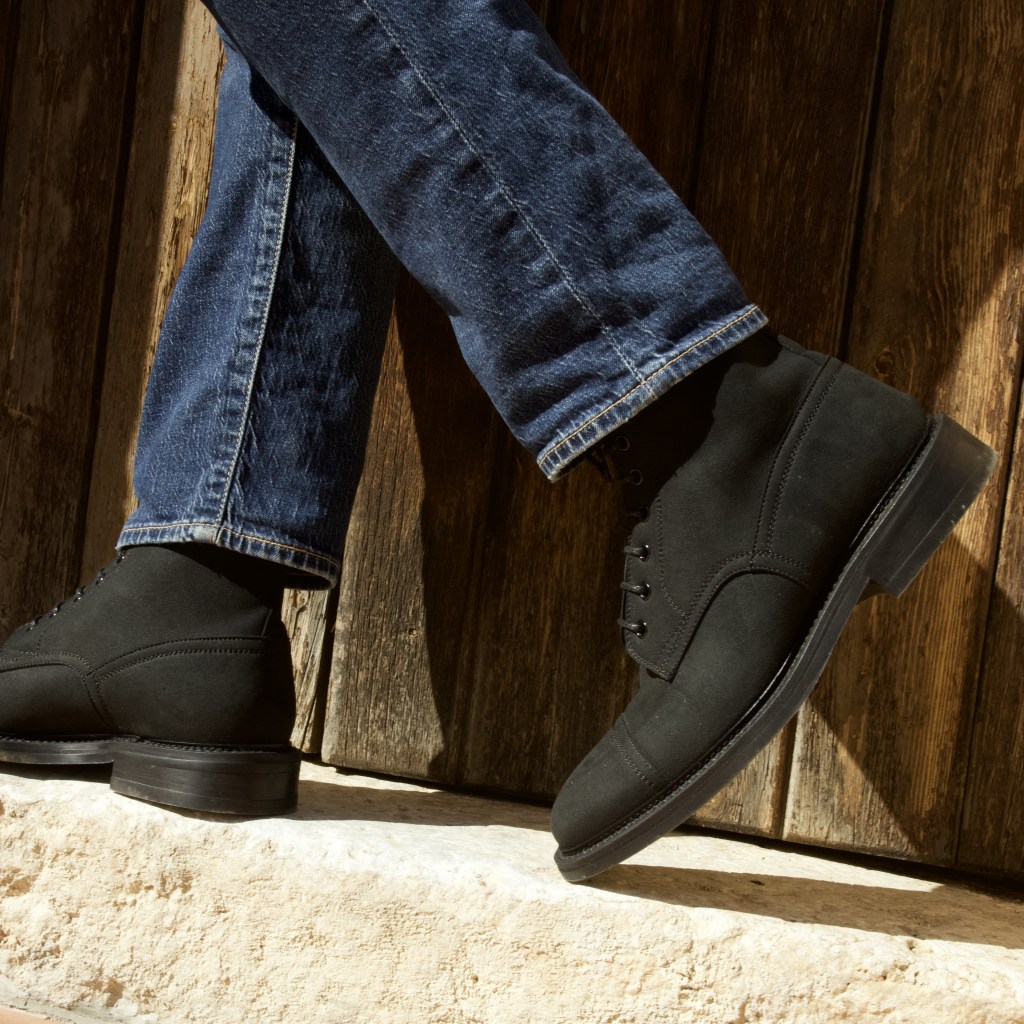
‘My idea was always to make shoes that are nothing short of leather ones. They’d have to stand the test of time, aesthetics, durability, quality, construction, and material.’ Having already settled on the very best technique available in the history of shoemaking, the materials simply had to be the absolute best too. ‘We use the best materials the market can offer at this moment. I do research every day. Every time I hear there’s a new material, I make a call immediately to test it out. But if I discover it isn’t a good material, or it’s too similar to what I already have, then I don’t want it.’
To Zingales, a responsible purchase is one that serves you for a long time. Durability is therefore a fundamental factor in assessing a shoe’s quality – and value. The secret of durability, apart from adequate shoe construction, lies in the very structure of the material itself. ‘When you cut through the material, it has to be one homogeneous material, not layers glued together.’
For the upper lining, Zingales uses a suede alternative made from PVC-free ultra-microfibre, produced with recycled polyester from plastic bottles and bio polyols obtained from non-food and GMO-free corn crops, with Life Cycle Assessment (LCA) certification. It is light and breathable, waterproof and resistant to ageing and abrasions.‘I know I use synthetics – but I use the best synthetic there is. After one year, the shoe is still in perfect condition. After five to seven years, it’s still in good condition. If you break a part, we’ll replace it for you. Why must everything in this world have a short life?’
To be fair, buying one pair of shoes that outlives a few others does sound like a good deal.
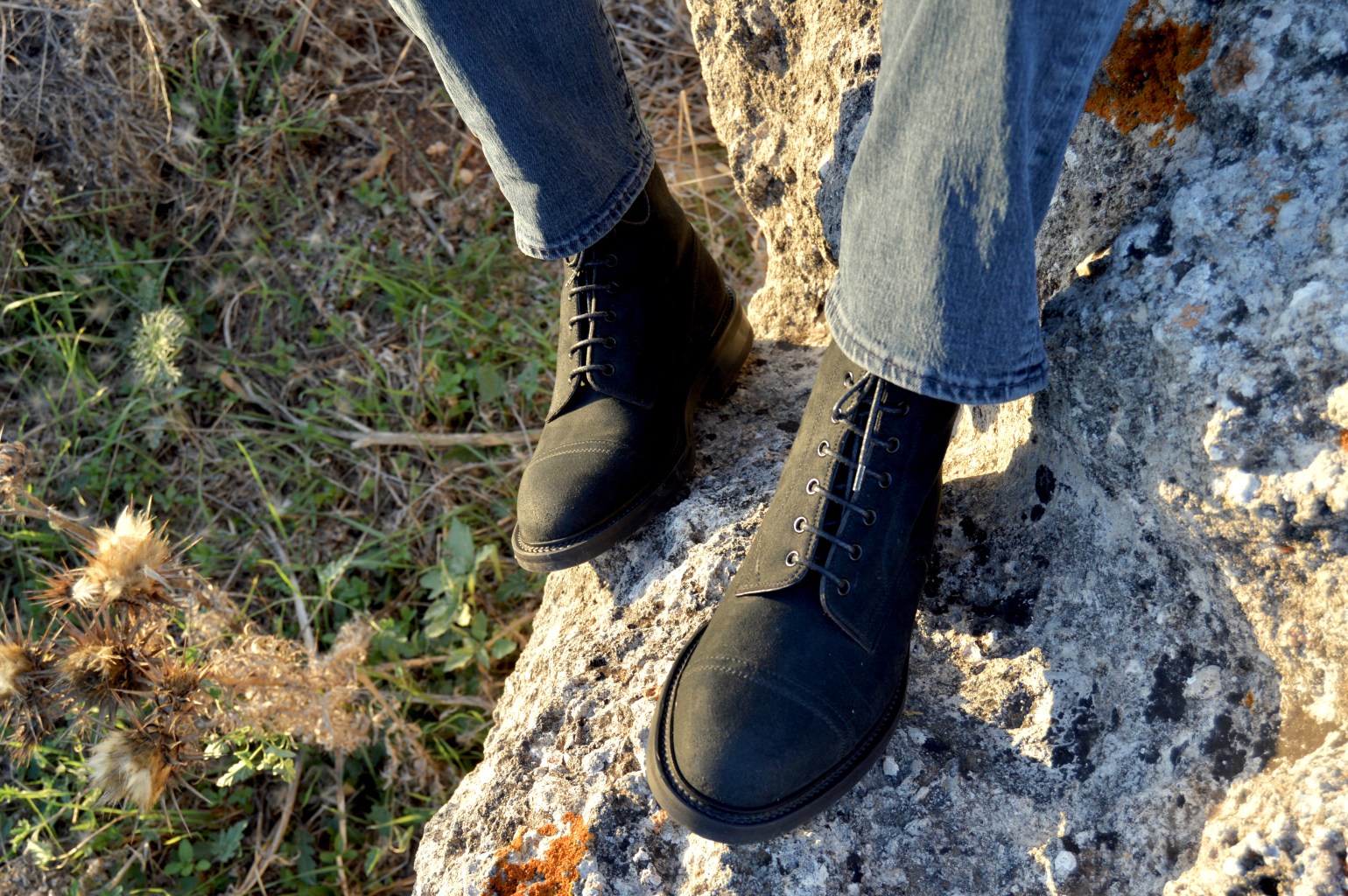
For the sole, the best variation of Vibram soles is used – the Vibram N-OIL – made from 90% natural rubber and natural pigments. On top of environmental and durability points, it also adds unexpected softness to the heel – something that offsets the characteristic stiffness Goodyear shoes are known for, which only softens with regular use.
Zingales considers animal leather the least ethical material not only because of the obvious animal abuse but also the disastrous impact it has on the environment – and ultimately, people. ‘People say animal leather is natural – I tell them it isn’t. The production of animal leather utilises toxic materials that are anything but natural, and those factories are often located next to villages full of people. Poor people.’ The toxins leak into the soil and water bodies and linger in the air – a horror that must be seen to comprehend the full scale of it. ‘That is a lot of problems,’ says Zingales.
Similarly, ethical production, according to Zingales, goes beyond the welfare of animals. ‘When I select the material, I also select the company I work with very seriously. Typically, that’s an Italian company that is as eco-friendly and sustainable as possible, which means they respect and follow both climate and worker welfare policies as well. You can’t have a good, ethical pair of shoes if they were made in the Third World where there is no legislation on human welfare.’
The Rules of the Game
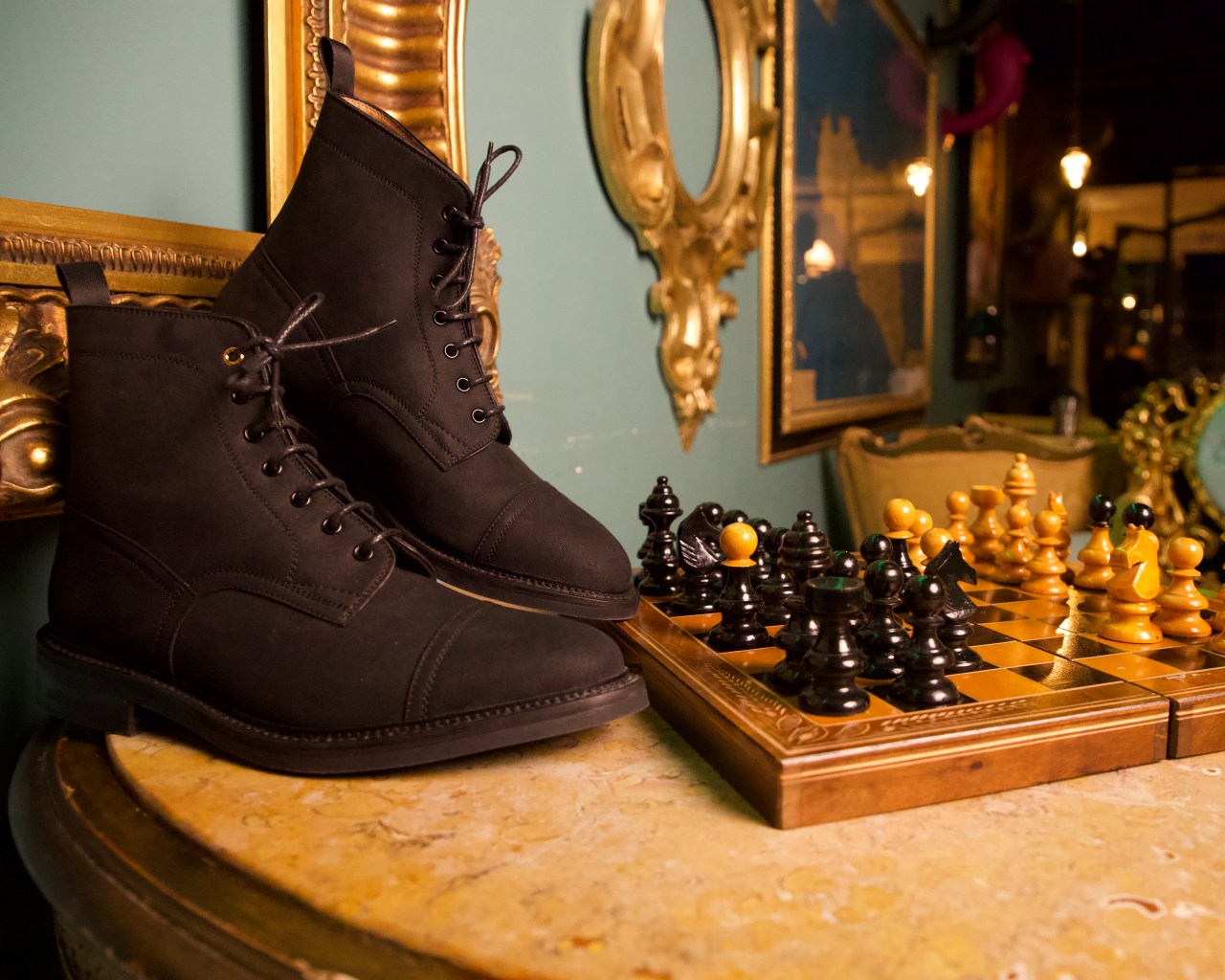
It should come as no revelation that the ethical production of a craftsmanship product is a costly endeavour. Operational expenses aside – including fair wages – the materials Zingales uses are not just ‘the best there currently is’, but also rather expensive. Homogeneous microfibre has significantly higher prices than any leather type – animal or plant-based alike. ‘If I had a commercial product, I know that plant-based leather is a much more reasonable material choice. It’s cheaper and much easier to market. But I insist on using only what is better to have the best shoes. And that’s expensive.’
To reduce the unit production cost, Zingales has to purchase large quantities of materials – quantities exceeding the current production scale – a practice that typical small independent brands can’t afford to undertake, which makes most innovative materials unavailable to them. ‘If I wanted to make 40 pairs of leather shoes, I would purchase 10 metres of leather. However, with this material, to make 40 pairs of my shoes, I still have to purchase not less than a minimum of 30 metres of fabric.’
Having a unique and patented construction method also means that the production of Zingales shoes cannot be conducted alongside other Goodyear shoes. ‘If you want to produce 100 pairs of Goodyear leather shoes, the shoemakers take your order and make your shoes along with the others. But to make my shoes, they must stop every other production. So, if their daily capacity is 1,000 pairs, and I only ask them for 200, I still pay the cost of 1,000,’ says Zingales. ‘This is why I still work a day job and put all my money into the brand.’
Typically, a Goodyear pair of leather shoes would cost somewhere between €700 and €1,000 – a price that reflects the unit production cost and leaves a decent margin. However, Zingales’s shoes fall slightly below that range. ‘I know I’m not an established brand. This is why my business idea is to sell as many as I can to reduce our stock costs, keep improving the quality of the shoes, and ultimately reduce both material and production costs.’
Beyond the Workbench
Zingales is being modest, though. The shoes were worn by Colin Firth at the Green Carpet Awards when the brand was still a newcomer in 2018. Since then, Zingales Footwear has received twelve awards and nominations across start-up, sustainability, and ethical fashion categories, including recognition from SCIENT, TCBL, UK–Italy Businessboost, and ICE MICAM 2020. More recently, an Alta Moda brand invited Zingales to produce shoes for them — a mark of both craftsmanship and design. A friend, Giuseppe, has also joined the company, making it a two-man venture as the brand prepares to expand its online business, recalibrate its presence in the US market, and enter the UK market.

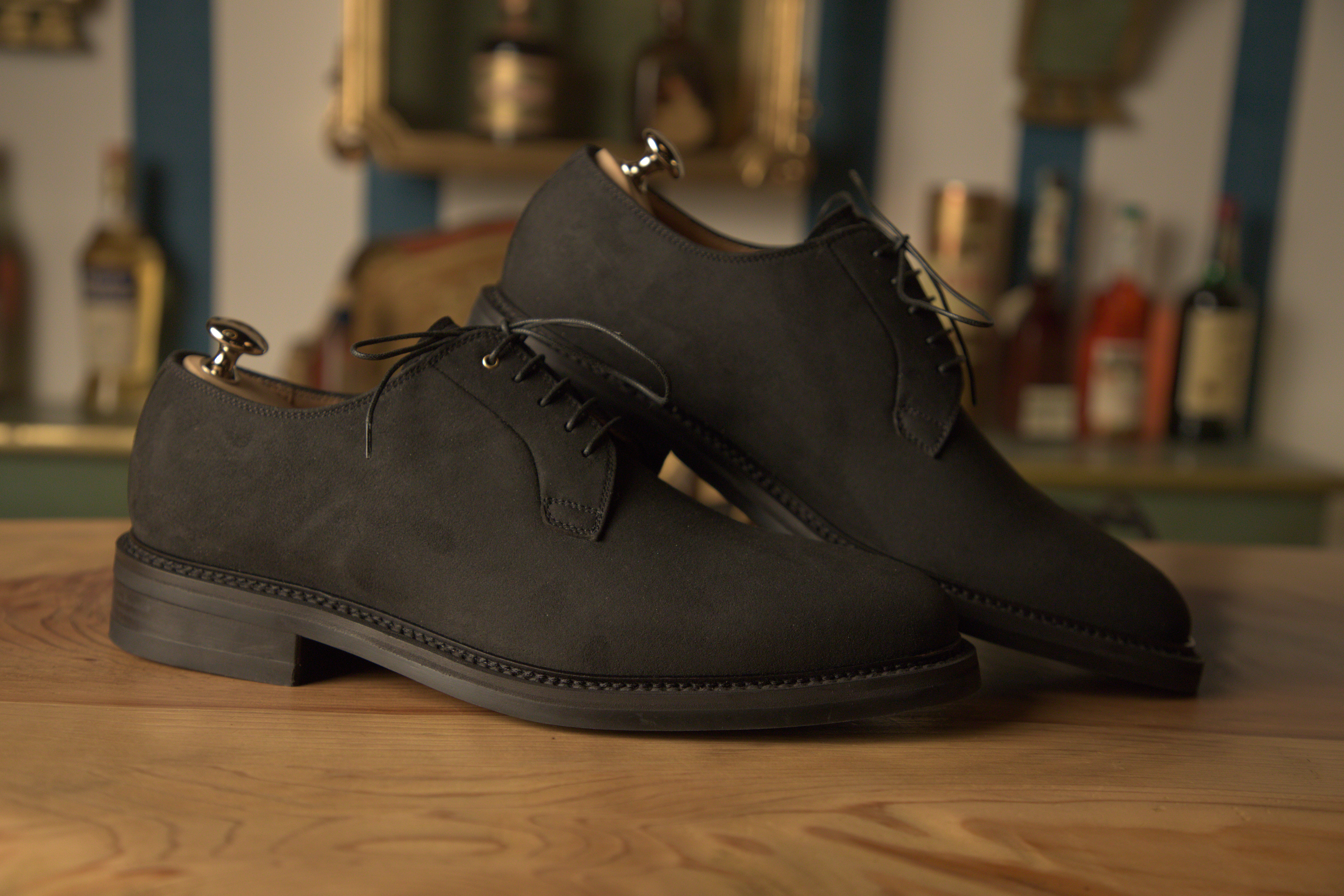
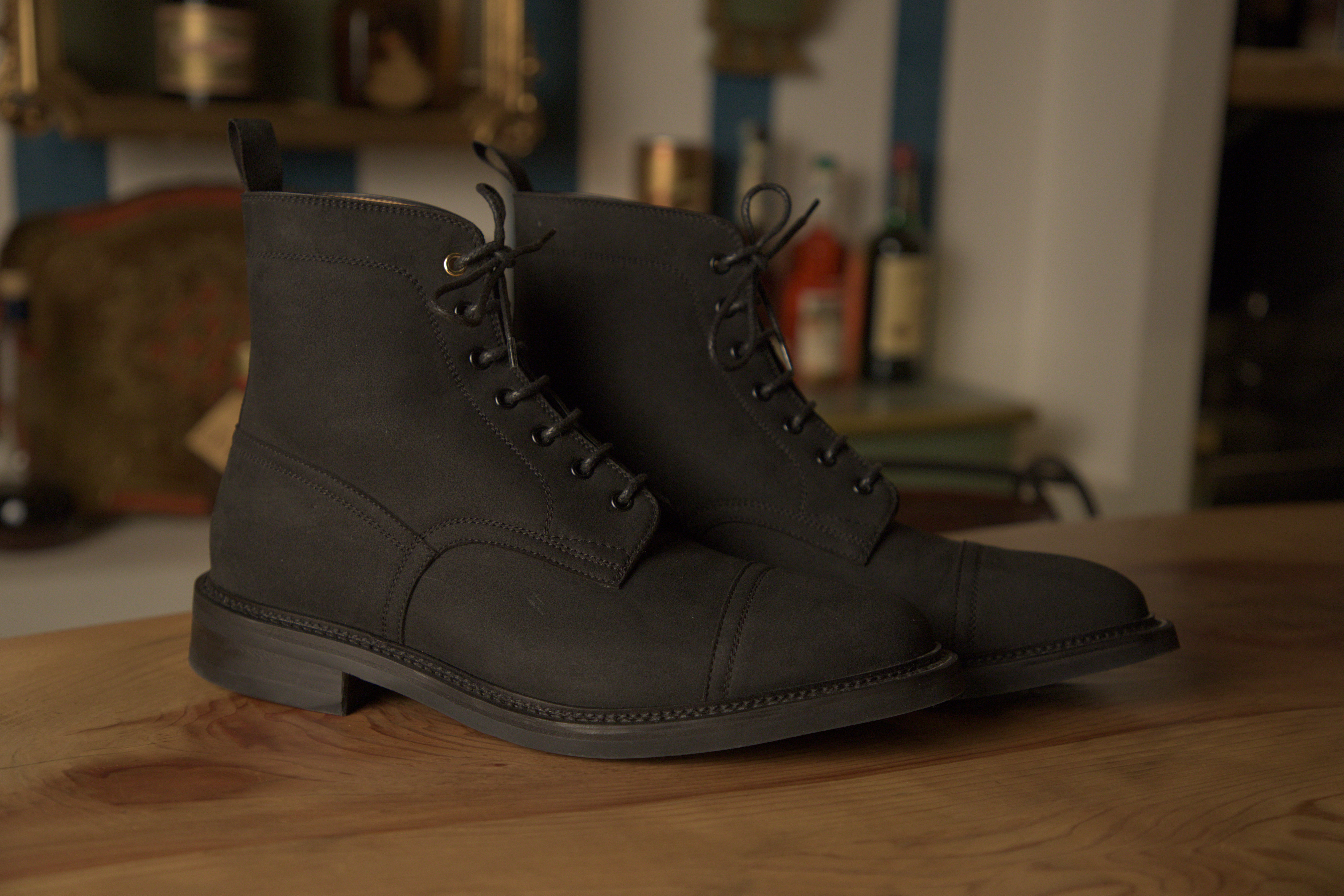
For Zingales, a product’s craftsmanship must extend to the way it is presented to the world. ‘Everything must be perfect – from the materials and the construction down to the packaging.’ The communication must be equally beautiful too – and definitely not one of judgement or division, but rather an invitation to experience something good and beautiful together. That’s how the message reaches both vegans and non-vegans alike – and it certainly lands, as according to Zingales, 70% of the people they send shoes to declare themselves non-vegans.
‘As I get older, I understand that the black-and-white approach can be wrong sometimes. For me, the good way is to make everything, every day, the best way that can be done given the current circumstances – for us and for others. This is my way.’
Awards and Recognitions
Zingales Footwear has been recognised for its innovation, sustainability, and craftsmanship through numerous national and European awards:
- 3rd place for Business Idea and Business Plan at the Italian StartCup SCIENT competition.
- Invited to represent Italy at the European StartCup SCIENT Final in Cyprus (11–14 September 2017).
- 4th place in Europe at the StartCup SCIENT competition (Cyprus, 2017).
- Selected as a start-up within the European TCBL Project (Textile & Clothing Business Labs).
- Winner – Top 3 European Start-ups in the TCBL Project (out of 7 finalists), and invited as a speaker at the 2nd Annual TCBL Conference (Athens, 20–22 June 2017).
- Selected among 35 initial ideas for the 13th edition of StartCup Palermo, and admitted as one of 8 projects to the Business Plan development phase.
- Winner of the Confcommercio Special Award at StartCup Palermo 2017.
- Finalist among 8 projects at UK–Italy Businessboost – Innovation & Fintech Stories 2018.
- Winner of UK–Italy Businessboost – Innovation & Fintech Stories 2018.
- Selected start-up for Showcase Altaroma 2019.
- Representative of high-end ethical fashion at Maker Faire 2019.
- Winner in the Green–Eco Sustainability category at Assocalzaturifici – ICE MICAM 2020.
All photos courtesy of Zingales Footwear.
Discover more from Vegan Fashion Repository
Subscribe to get the latest posts sent to your email.