The Play Sustain Foundation, an organisation driving the transition towards a circular fashion economy in Poland, has released the English version of its second report, Ekoprojektowanie Mody Polskiej (eng. Ecodesign of Polish Fashion).
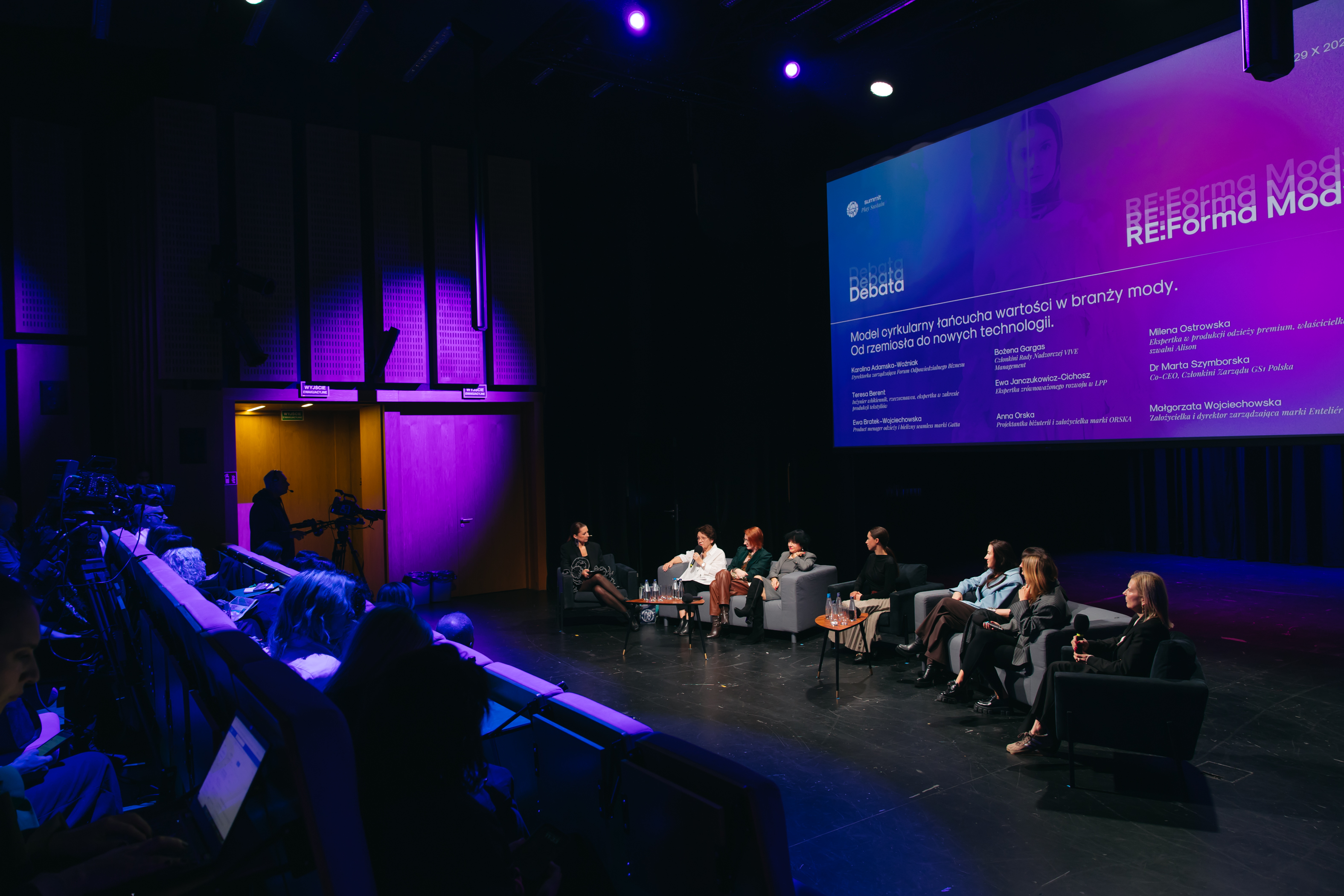

Key findings were presented at the Summit Play Sustain 2025: RE:Forma Mody, held on 28–29 October 2025, by Barbara Wybacz, the foundation’s Creative and PR Manager, and Dr Paweł Jurowczyk, Strategy Director and Vice President of ABR SESTA Market Research & Consulting.
And thus, we sat down with both speakers to talk through the broader picture that prompted the report itself. Input was collected between July and September 2025, using the IDI (Individual In-depth Interview) method, drawing on insights from 18 key players in the Polish fashion industry, including local brands, manufacturers, distributors and multi-brand platforms, and covering sectors from mass market to luxury.
16 key challenges, growth barriers, and potential solutions are analysed across more than 50 pages, ranging from the overexposure of ultra-fast fashion offerings, through the limited availability of locally sourced low-impact materials, to the lack of a skilled workforce capable of sustaining the growth of local craftsmanship. Although these challenges are by no means unique to Poland, any tangible course of action can only be developed through an in-depth understanding of the country’s cultural and economic landscape. And a peculiar one it indeed is, as the emerging circular fashion industry finds itself grappling with the consequences of decades of neglect.
The Groundwork
‘Each of these challenges requires close collaboration between multiple stakeholders, including government bodies. Brands and manufacturers must be involved, and some solutions will depend on the level of consumer engagement. And by consumers, I mean all of us,’ says Dr Paweł Jurowczyk, pointing towards consumer education, which, while a complex challenge, is a good place to start, as it is everyday choices that ultimately lead to systemic shifts.
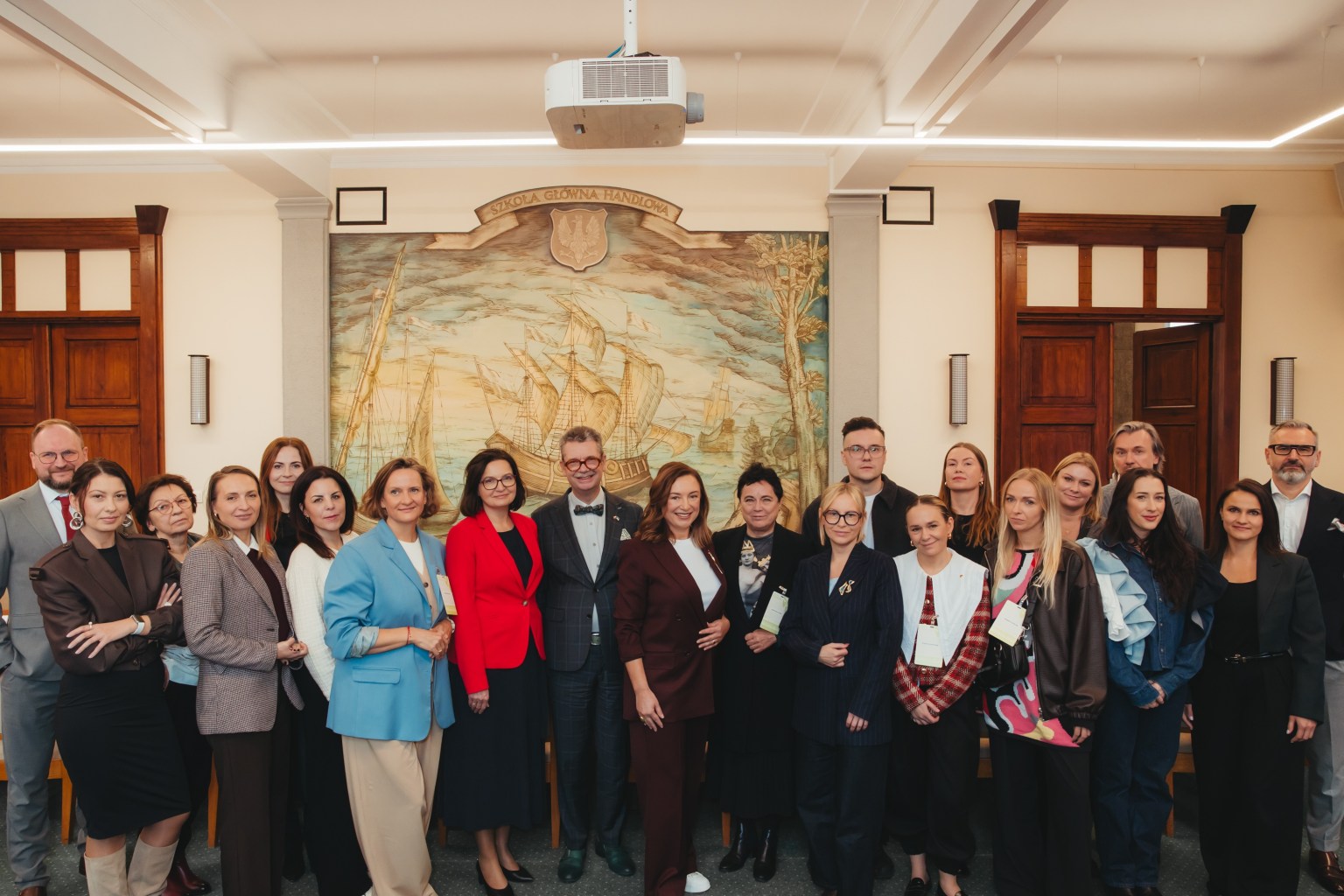
Since 2023, The Foundation has taken it upon themselves to lead on these systemic changes and has since managed to gather an impressive community through the Forum Ekspertów (Eng. Experts’ Forum), of which Jurowczyk is a member. Together, they are brainstorming and experimenting with solutions and practices that advance the circularity and sustainability agenda in a tangible way.
As a result, a nationwide education programme is being developed to address children (aged 5–15) and adults (aged 16–116), raising awareness of the wide-ranging impacts of common shopping practices (yes, including cheap fashion shipped from the other side of the world, and many others) and introducing the principles of circularity as a more mindful way of buying, wearing and disposing of fashion.
‘Fashion concerns everyone who lives in the modern world,’ says Wybacz, who is particularly keen on developing an education programme focused specifically on textiles and fashion, addressing audiences from consumers to brands alike—especially given that no such programme currently exists in Poland.
However, to make this effective at a business level—or, in Wybacz’s words, ‘to get real’—the right amount of education must be combined with a clear and deliberate communication effort to formulate a coherent value system. ‘Ultimately, consumers will not pay more if they can pay less. What we can do is help them realise that they are not simply buying a mere product, but the end-product of a story—and that they are actively choosing which story to support,’ she explains.
According to Ekoprojektowanie Mody Polskiej (Play Sustain Foundation, 2025, p. 41), respondents define ecodesign as “a product creation approach that transcends mere artistic creation and aesthetics by accounting for environmental care and the entire product lifecycle.”
This, according to Wybacz, is the key to transparency. ‘It’s about baby steps. It’s far more important to say, for example: our company has been operating for 25 years, and in the past five we have invested a specific amount in better solutions. When communication is simple and information is verifiable, it becomes much easier for consumers to check the facts—and to stop wondering whether something is genuinely green because it is, say, plant-based, or simply greenwashed.’
According to the report, it is extremely difficult for consumers to separate the grain from the chaff when information is either vague or overly activist. Even if they make the effort to verify claims, there are few reliable independent sources they can trust. ‘Younger consumers, particularly millennials, are keen to use verification tools. But just look at certifications—there are so many that even specialists struggle to navigate them. Consumers, however motivated, simply don’t stand a chance,’ says Jurowczyk.
The Economic Imperative
Simultaneously with developing the education programmes, The Foundation and the Experts’ Forum are leading discussions with the Instytut Przemysłów Kreatywnych (Institute for Creative Industries), an organisation reporting to the Ministry of Culture and National Heritage, and the Ministry of Climate and Environment to develop a legislative blueprint that supports the circularity agenda and, ultimately, provides systemic support for the Polish fashion industry. Any developments in this area, while highly necessary, are long overdue, as for decades creatives and entrepreneurs alike were left unsupported in a tedious struggle merely to stay afloat, while fast and ultra-fast fashion marched straight through the doors—which, at present, remain wide open.
“One of the industry’s key demands remains the introduction of uniform regulations that would apply to all market participants – both local manufacturers and global suppliers.”
(Ekoprojektowanie Mody Polskiej, Play Sustain Foundation, 2025, p. 19)
What is significant is that it was only earlier this year that the Institute for Creative Industries was rebranded to include fashion creatives. ‘Until now, fashion was systematically excluded from governmental support programmes,’ says Wybacz. ‘Yet fashion extends far beyond what we traditionally consider culture—it is a vital component of both industry and the economy.’

As fashion begins to return to the economic agenda in Poland—a slow but nonetheless noticeable shift—the primary objective is to ensure that all stakeholders recognise that only by investing in circularity can local fashion production play an active role in the long-term economic interest and build resilience. ‘I believe that if we successfully lobby for these changes, we can persuade decision-makers that this is a profitable path for both the national economy and its citizens,’ Wybacz argues.
The strength of collective voices also matters. ‘Our goal is to bring one business entity after another on board, and then join forces,’ she says. Jurowczyk agrees: ‘This is entirely feasible. The pool of brands and ambassadors we can meaningfully collaborate with on transparency and authenticity is finite and clearly defined. The key is to actually get started.’
‘We need to demonstrate that ethics, transparency and authenticity pay off,’ Wybacz adds. ‘This isn’t wishful thinking—we already have enterprises that serve as textbook examples of this being a viable business model. There’s plenty of talk. Now it’s time to actually do the work.’
“The majority of surveyed companies have established non-economic goals, which are often related to sustainable development, production ethics, social activity, and the pursuit of circularity and product durability. Some companies explicitly stated that they do not have formal, long-term non-economic goales; however, they simultaneously conduct intensive social and pro-ecological activities that align with this context. This demonstrates that even though such actiosn are not formally defined, they are being implemented.”
(Ekoprojektowanie Mody Polskiej, Play Sustain Foundation, 2025, p. 49)
As a researcher and investment counsellor, Jurowczyk relies firmly on real-world data. ‘We evaluate investment potential from two perspectives. First, technology: those who move first gain a competitive advantage. Second, we see companies that have invested boldly in circularity continuing to do so successfully. It is therefore reasonable to conclude that this is a sound investment.’
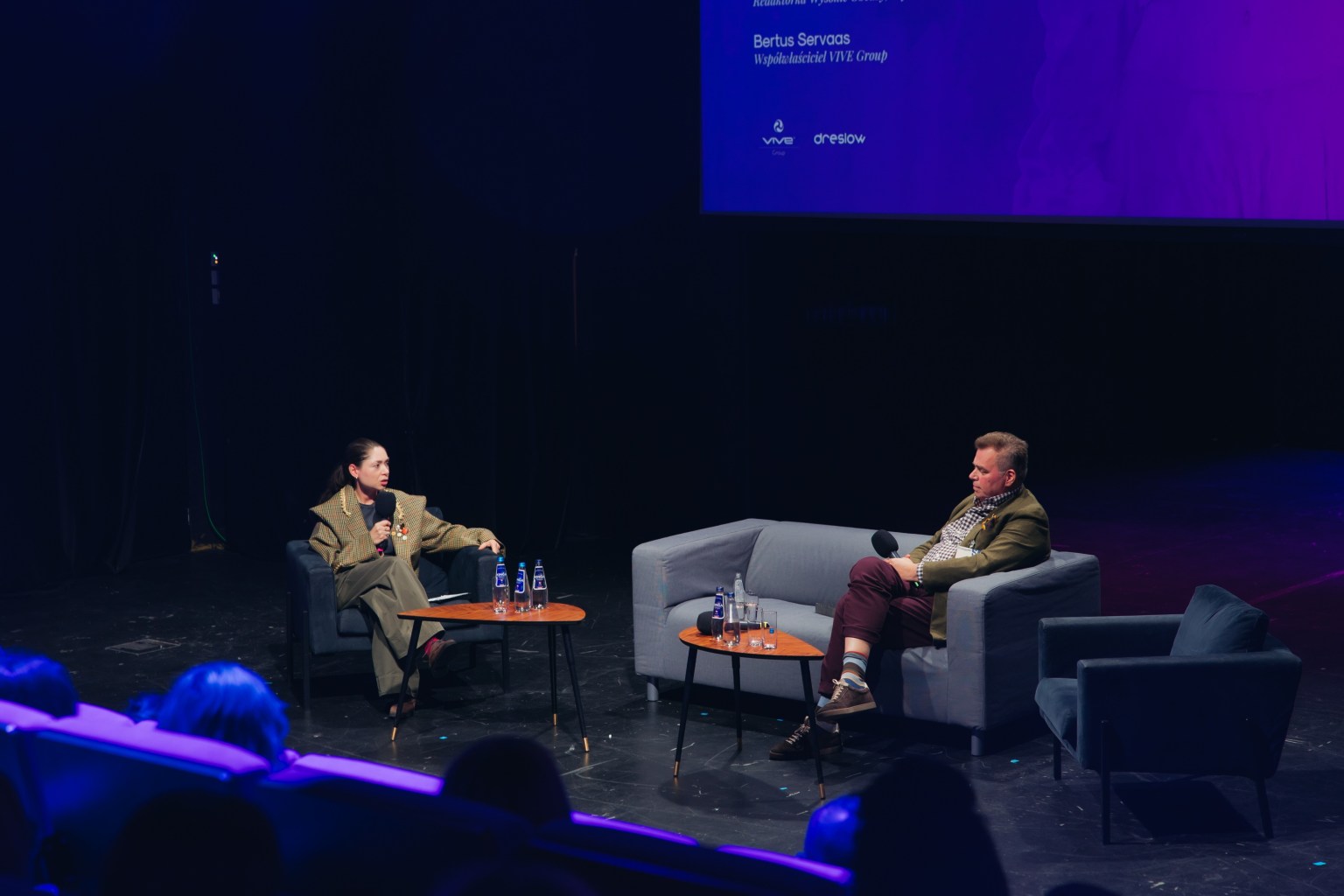
Wybacz points to VIVE—currently a leader in the textile recycling industry in Poland—which has been making strides since 1992 and continues to develop technologies and product offerings that serve as real-world case studies demonstrating that circularity, when properly executed, can be as profitable as it is sustainable in the long term. VIVE has recently developed the VIVE TEXCELLENCE composite, repurposed for architecture and interior design and made from textile waste, including significant amounts of polyester which, while deservedly vilified, still accounts for approximately 59% of total global fibre production as of 20241.
However, there is only so much a brand or innovator can do independently without supporting infrastructure. In Poland in particular, many brands and innovators seeking to be part of the solution rather than the problem find themselves exhausting resources simply to stay afloat—innovations be dammed. And yet, from time to time, promising solutions do emerge; for example, scalable, low-impact, plant-based leather alternatives. ‘For this level of technological progress to continue, government support and the involvement of large entities are essential, whether through legislation or targeted funding,’ Wybacz notes.
New technologies will lead to further low-impact biotech material innovation or more straightforward advacements, such as health-monitoring textiles, and to genuinely inclusive solutions supporting people with disabilities—needs that have always existed but were ignored for centuries. ‘These needs arise from physical, mental and social barriers, and I believe it is inevitable that fashion will have to respond to them,’ says Wybacz.
‘Poland is strong in innovation and has enormous potential, but it has been fundamentally underinvested in recent years. That is spilled milk—so instead of crying over it, let’s do something about it,’ says Jurowczyk, encouraging investors to examine the sector carefully and strategically. ‘Systemic change will only accelerate once investors come into play.’
The Future of Fashion
To wrap up the discussion, we asked which direction fashion is heading in the foreseeable future. ‘Change is happening so fast that I don’t think we can fully predict, or claim full agency over, what the next ten years will bring,’ says Wybacz. ‘Fashion doesn’t exist in isolation. Technology will drive new materials, new business models and entirely new needs.’

This is a good moment to mention The Designers Play Sustain contest, the Foundation’s signature activity—and personally Wybacz’s favourite project—which is now actively inviting creatives and executives across digital, fashion and business management to team up and develop a solid scaling strategy for local Polish brands seeking international expansion. Submissions are open until 29 January 2026. The ultimate goal is to generate feasible business solutions for creative endeavours.
‘Perhaps in the future fashion will be a self-making endeavour and therefore will no longer be defined by a producer–consumer dichotomy. Or, perhaps, given current climate change and intensified mobility, we will need to transfer much of our activity to the virtual world, clothing included. Perhaps the ongoing environmental and political changes will force us to live more flexibly and rethink the way we approach ownership entirely,’ says Wybacz.
Jurowczyk, who began actively researching the phenomenon of de-consumption seven years ago, is optimistic about this change. ‘Perhaps we don’t need to surround ourselves with so many items. I believe that—whether in Poland, France or Japan—quality, responsibility and innovation will take root in fashion if we work together and act boldly. And I have a strong sense that we are already doing that,’ says Jurowczyk.
Image courtesy of The Play Sustain Foundation