
Capturing the crowd’s attention at Berlin Fashion Week, where every designer is expected to present their most competitive oeuvres, requires something close to magic: an ability to draw everyone into a story. That’s where Maria Chany comes in, fully armoured and ready to talk.
pc Brittany Anne Scott
pc Brittany Anne Scott
pc Brittany Anne Scott
pc Jay Zoo

pc Jay Zoo
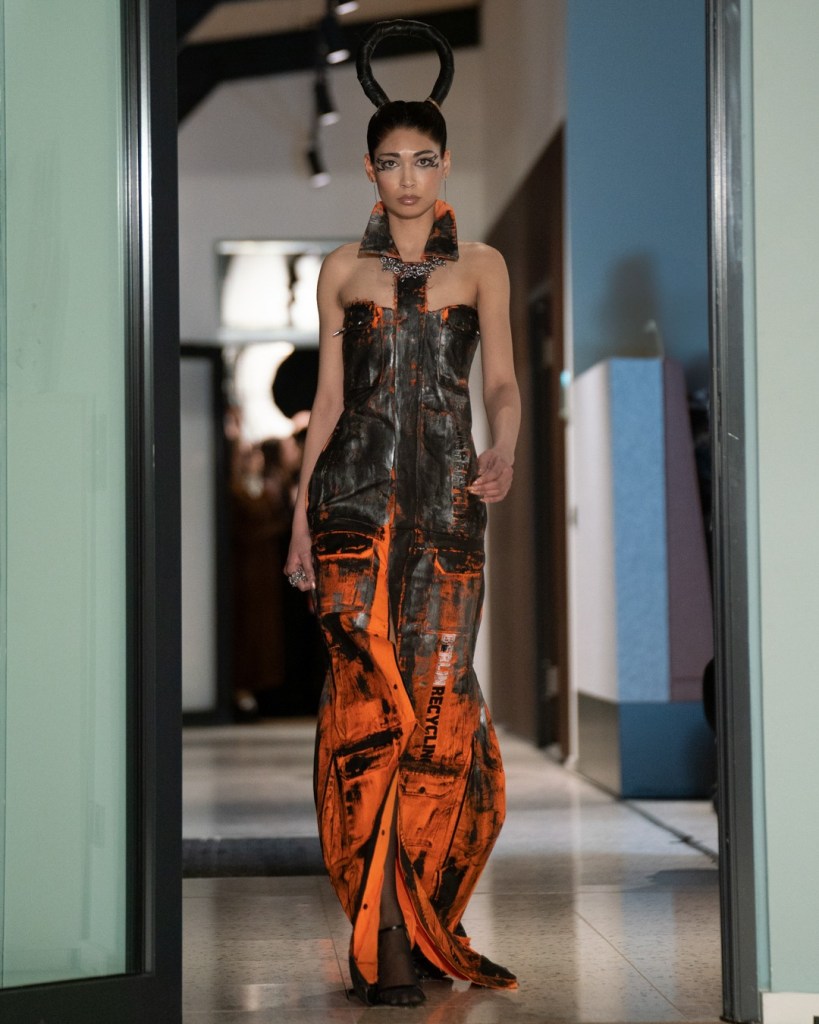
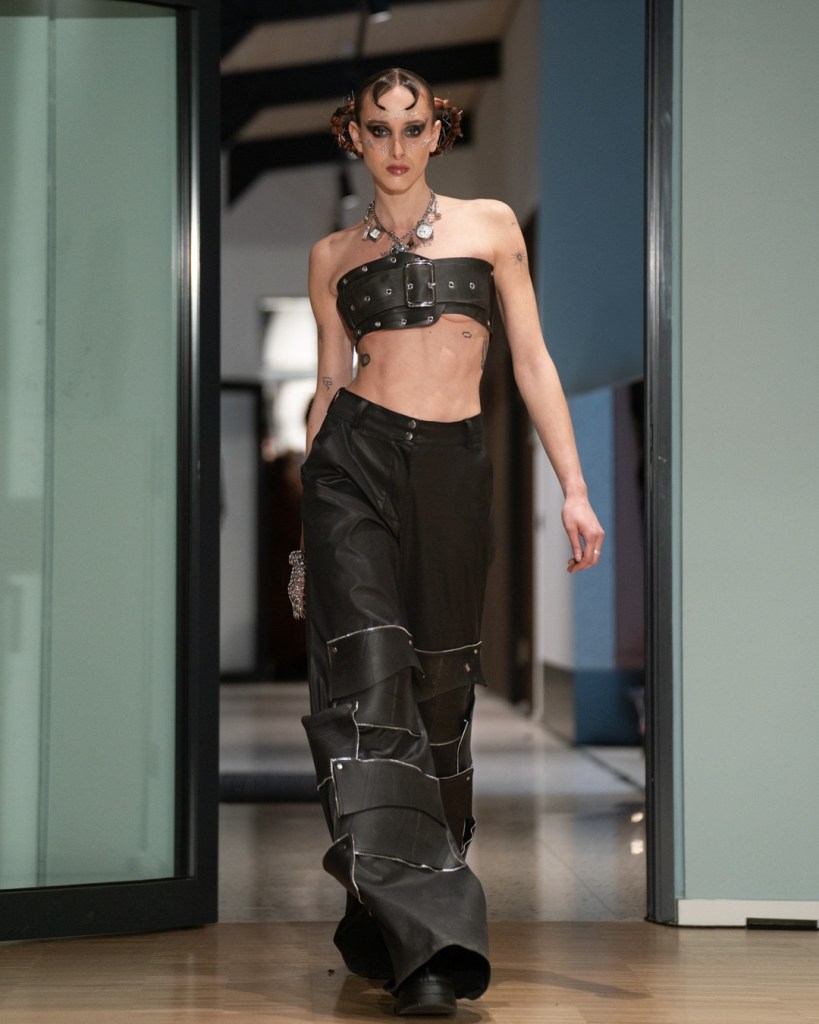
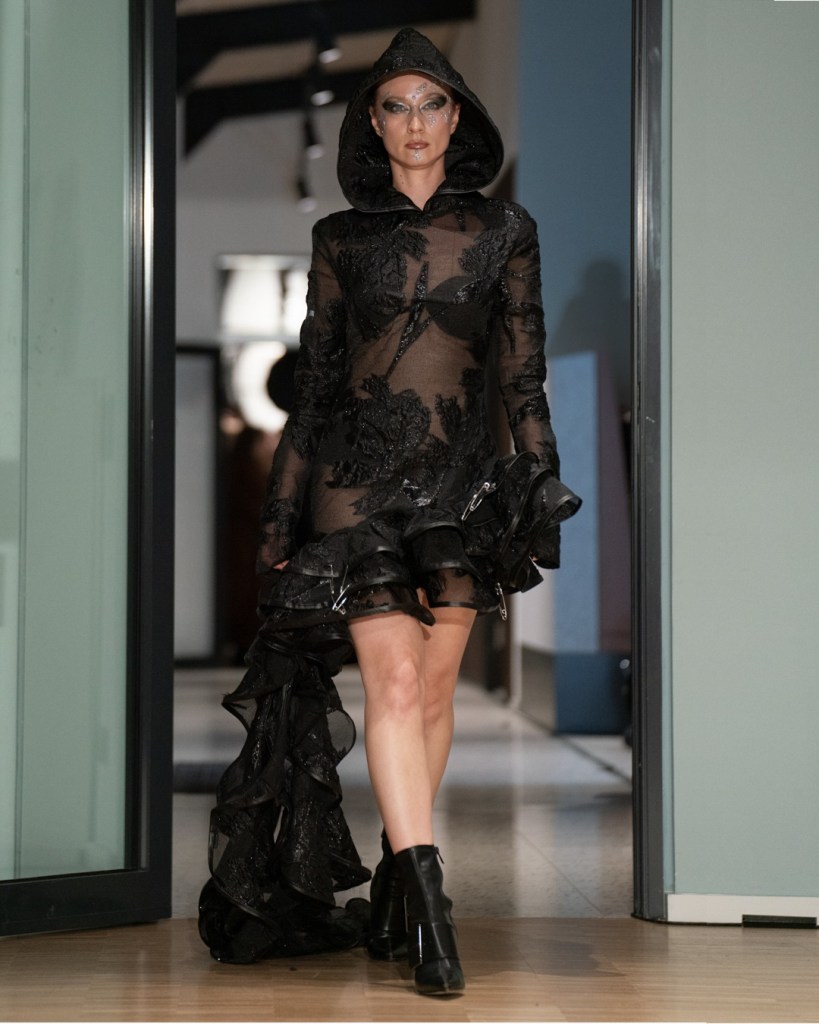
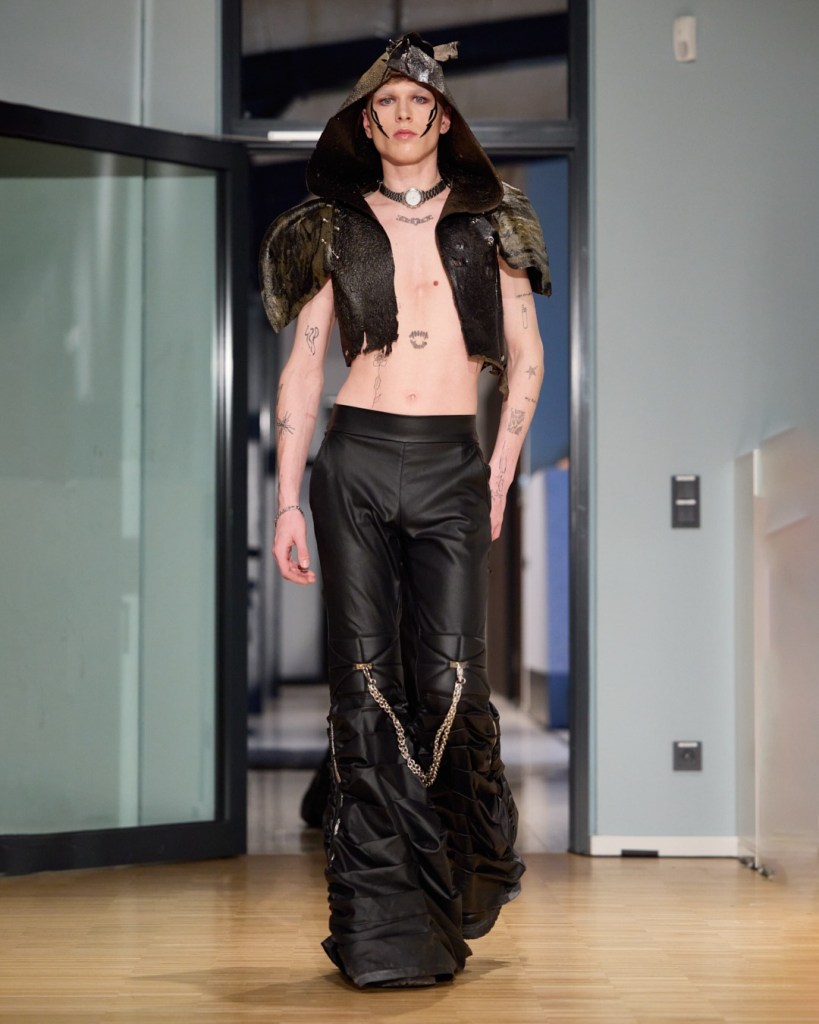
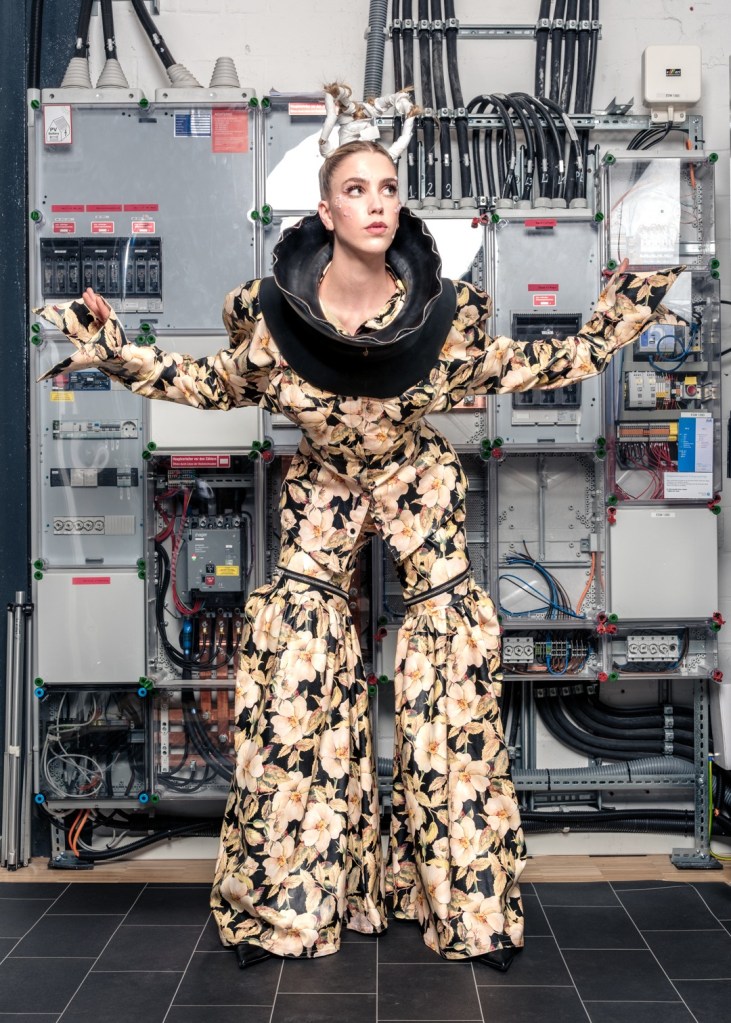
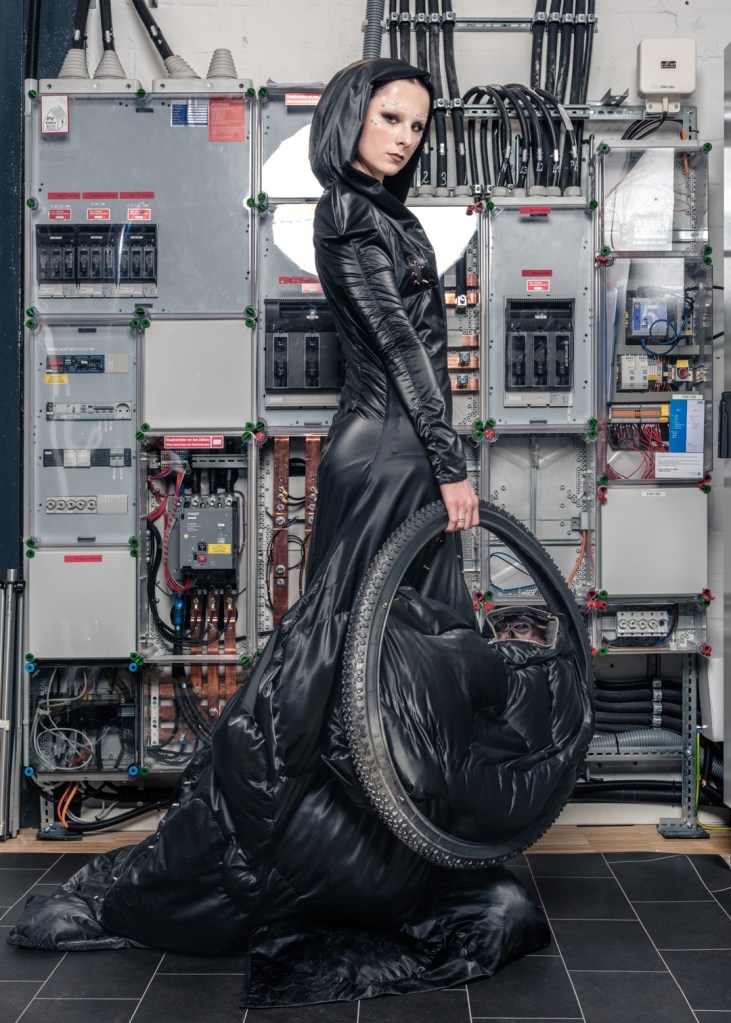
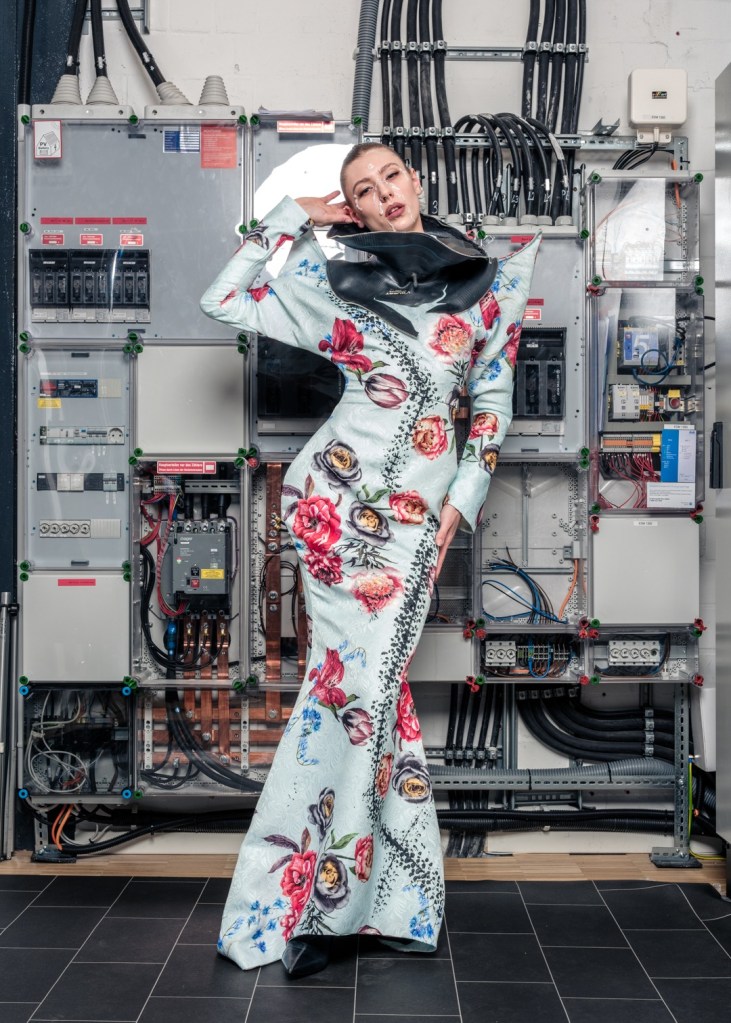
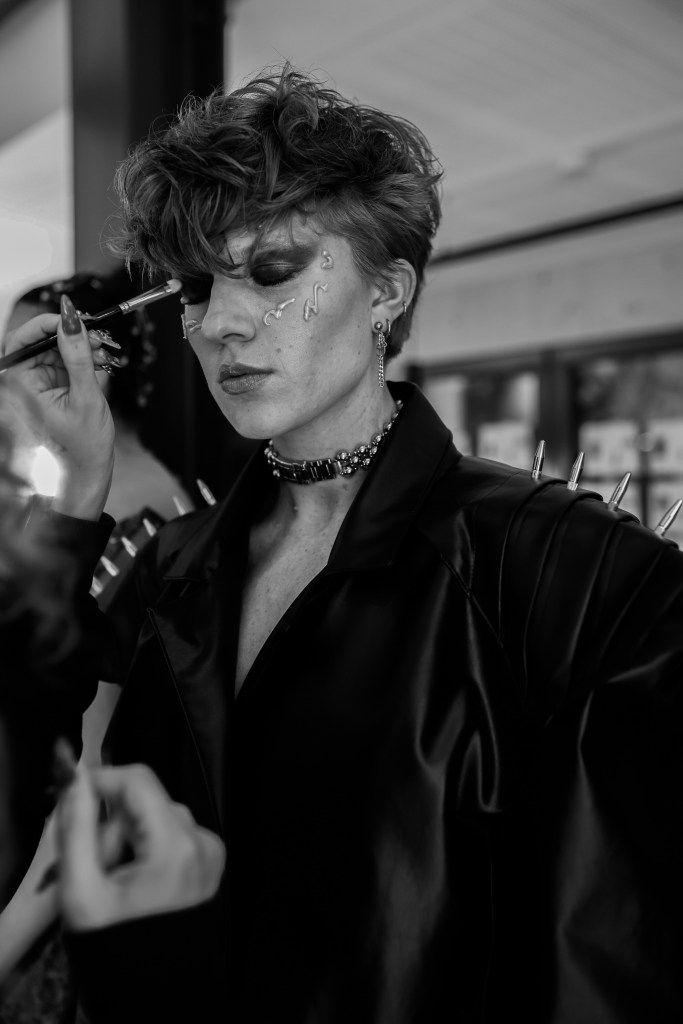
‘It is not normal to be happy and smiling all the time’ says Maria Chany. Her latest collection, Elysium (AW25), has been gaining her a fervent following across Milan, Prague, and Berlin. It has it all—from sculptural pattern-making and a holistic approach to sustainability, including the choice of venue, the Mall of Berlin Recycling, a former waste management site, to a distinctly dystopian take on what it truly means to be human. ‘People should be free to tell what they feel, live in their own way, and reach their own conclusions. Maybe utopia is the problem’
Chany views fashion designers as artists, as they reevaluate the world through their work. ‘The role of artists is to keep asking questions, and to deal with everything around them. I believe that every artistic creation makes the world a better place by opening up those little bits of human mind, one step at a time’.
‘People should be free to tell what they feel, live in their own way, and reach their own conclusions. Maybe utopia is the problem’
Maria Chany
A battle of reason and heart

Based in Belgrade, Chany speaks several languages—Serbian, Slovak, English and Polish, the latter thanks to her mother, who moved to Serbia from Poland following a fateful meeting —a love story —with her father.
As a child, Chany would assist her mother, a self-taught seamstress, with sewing and pattern making for family and friends. Young Chany soon took up what would later be given a fancy name —upcycling —though at the time, it simply meant remaking whatever was available. Not every endeavour was authorised though. ‘My mother would get very angry because I ruined all her clothes,’ says Chany with a devilish smile.
Serbia was a war-torn country in the 1990s, and studying fashion design was perhaps the least reasonable path one could take. Rebellious at heart yet still eager to respect her parents’ wishes – and so-called common sense – Chany enrolled at the Faculty of Philosophy at the University of Novi Sad. After graduating, Chany married, had a child, and worked for many years as a journalist and language teacher, eventually landing a quite prestigious government position. But something still felt off. ‘I was like constantly fighting the whole world inside of me. There was just something very big missing in my life.’
It took the loss of her parents for Chany to take a bold leap of faith. ‘I realised that life is short, and I had to at least try to do something with it. At the age of 42, Chany enrolled in a two-year fashion design course at Atelje Milena Čvorović. She attended the classes after work while juggling the demands of motherhood and family life. After the graduation show at Belgrade Fashion Week in 2019, Chany quit her job and launched her namesake label. Drawing, designing and patternmaking carried her through the lockdown. And the rest is history.
New, better worlds
pc Oz John
pc Oz John
pc Oz John
Every one of Chany’s collection is a chapter in a space odyssey – Winter Fairy (K)nights, Space Travelers, Space Knights, and, last but definitely not least, Elysium. ‘It’s the place we all seek,’ says Chany.
As a child in her hometown of Selenča, she would look up to the night sky and find comfort in the promise of other worlds scattered across the vast universe. ‘I would see that big sky full of starts and felt reassured —that everything, that I, was going to be, OK, after all.’
Now, in Belgrade, where the city lights and pollution make it nearly impossible to see the starts, Chany creates new worlds with her mind and hands, searching for comfort and security in forms that are as otherworldly as they are empowering. ‘Maybe that’s why I use big volumes and strong shoulders. It’s like those big walls humans build to protect themselves and their loved ones. I just want to create a shelter for myself and people who feel the same way’.
At home, her now 11-year-old son Daniel, has spent the past few years urging her to watch him play Roblox. ‘He keeps asking me to sit with him and to watch him play,’ Chany says. This is where all the dots begin to connect, shaping her signature aesthetic. ‘It was quite some time ago that I realised —this is the future. They are an entirely different generation. As both a mother and a designer, I guess I just have to accept this’.
And since this—escapism, gaming, virtual reality — is a part of Chany’s daily life (‘I literally just told him to stay off the PlayStation —they spend so much time on these games!’), it only makes sense that she translates these influences into her work. And while the fashion industry is rushing to tap into the gaming community to target Generation Alpha, designers who wouldn’t typically spend their time on Roblox are being briefed to create pieces that will sell both online and in real life.
The question is —given that Generation Alpha’s daily habits and spending patterns are unprecedented and unlike those of any previous generation —how much flow, and how much authenticity, can a designer achieve if they are not immersed in the gaming universe every single day?
The business side
pc Maren Nordtorp Larsen
pc Maren Nordtorp Larsen
pc Maren Nordtorp Larsen
Chany is simply doing her thing. At Berlin Fashion Week in 2023, she had another glimpse into the future when her collection got the Virtual Reality makeover with Studio 183 at POPKDM. The experience left her so fascinated that Chany is now looking to bring her cosmos-ready pieces into the metaverse on a regular basis. However, everyday business must come first. Chany is currently working to launch an online shop. Until then, she sells through concept stores in Belgrade, Berlin, and London, as well as on Instagram.
Every order is made to measure in collaboration with seamstress Tanja Perisic, who not only ‘gets’ Chany’s aesthetic but also serves as an essential second pair of hand – and eyes. ‘I have these ideas, and Tanja tells me whether something will work, or not.’ It’s safe to say that every piece is a two-woman effort.
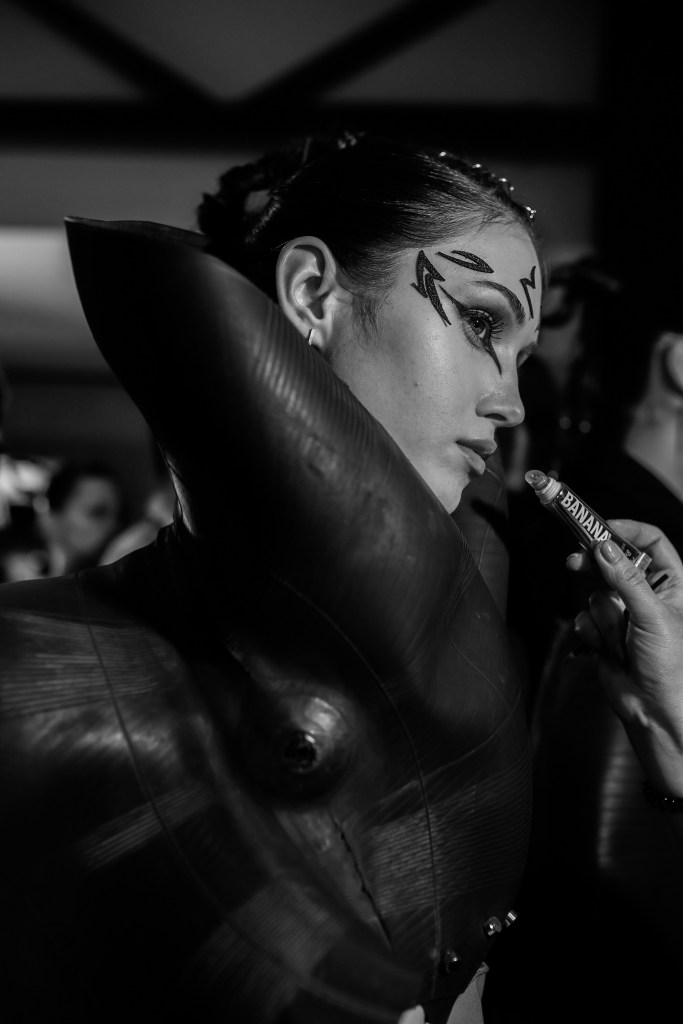
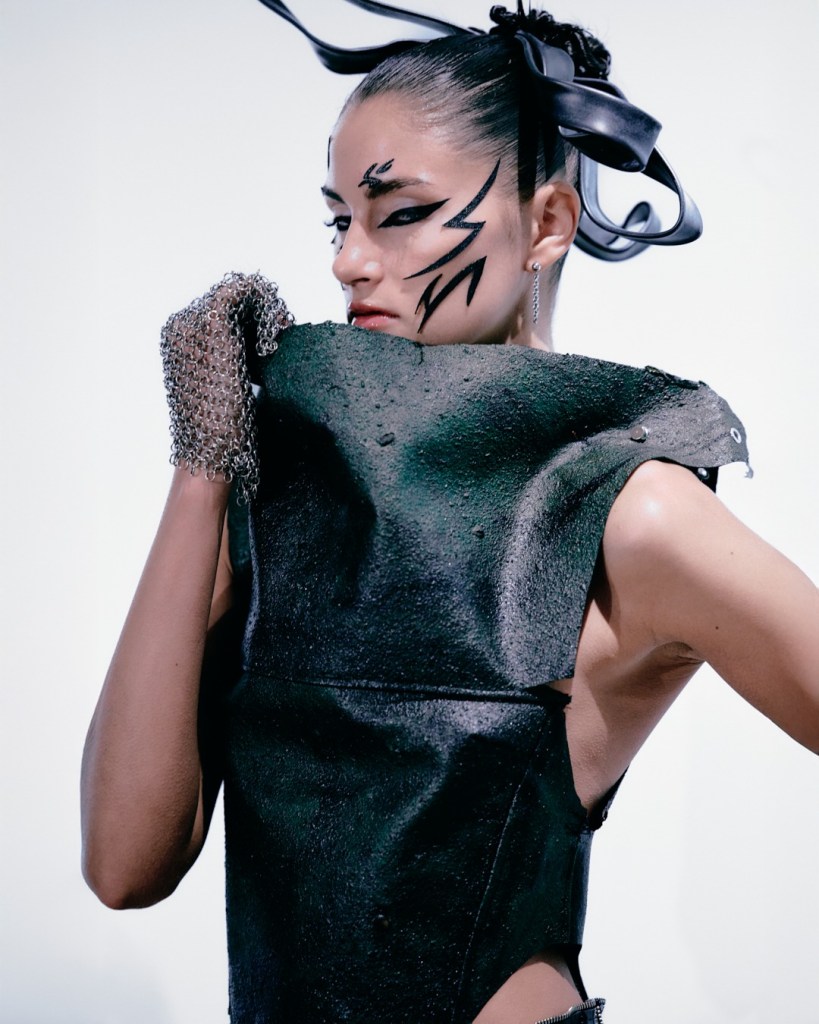
Chany does not use any animal-derived materials, though she does not label herself as vegan. For the Elysium collection, she partnered up with Aleksandra (Funky Botaničarka), a Belgrade-based wonder woman who experiments with biomaterials made from plant and walnut waste. Rubber is also sourced locally —her relatives, who own a vulcanisation workshop, supply her with old rubber tyres, which she repurposes for jackets and accessories. Since imported materials in Serbia are subject to high duties, sourcing locally is, in many ways, a blessing in disguise.
Mixed blessings, and the beauty of imperfection
pc Jay Zoo
pc Jay Zoo

pc Jay Zoo
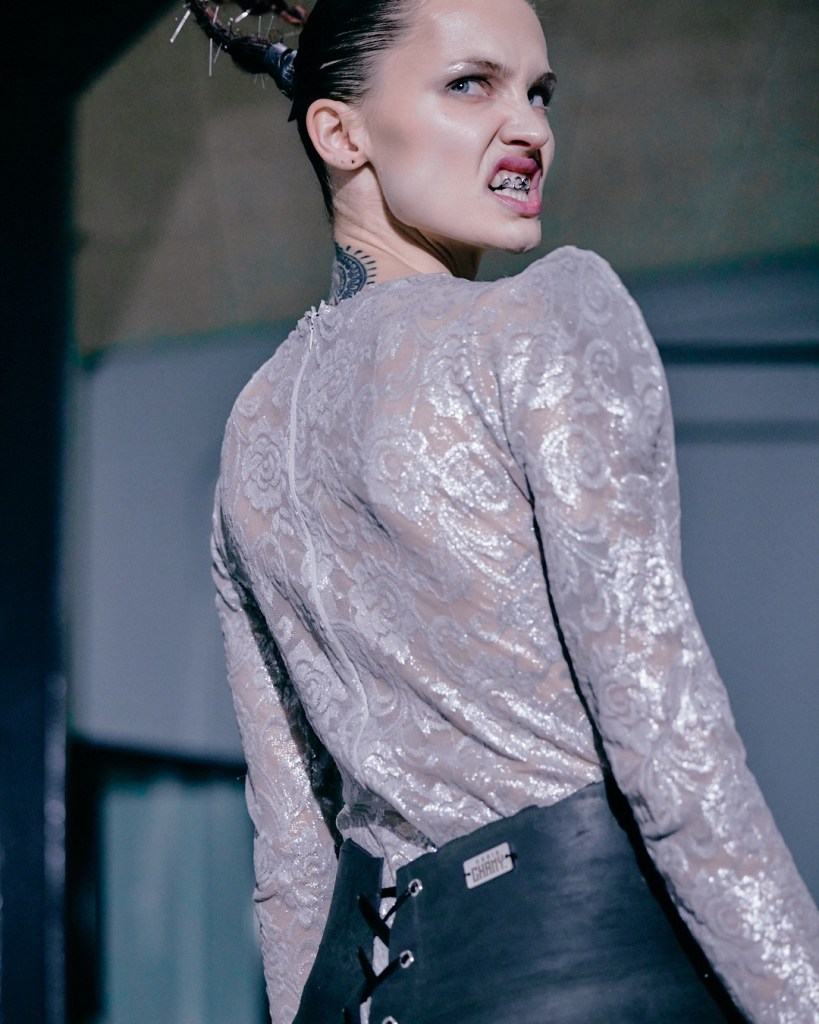
pc Jay Zoo
When it comes to blessings, being an artist is definitely a mixed one. ‘You see the world through different eyes, feel it differently, you’re just much more sensitive, which few people can understand and relate to.’ But there are always stories to tell and share. For Chany, it is also drawing and writing, as she perceives creativity as a holistic, multidisciplinary gift. ‘Being an artist is something you are born to be. Some people are good mathematicians, some are good with money. You can’t simply ‘become’ a gift —you’re born with it.
‘Being an artist is something you are born to be. Some people are good mathematicians, some are good with money. You can’t simply ‘become’ a gift —you’re born with it.’
Maria Chany
Chany considers herself as a pessimist, a label given to her by those who care for her yet can’t seem to fathom her overwhelming concern for where the world is heading to. ‘As a civilisation, we just can’t seem to understand each other — we’re always thinking only of ourselves and our own needs.’ Overcoming these differences is the key, and keeping an open mind is fundamental. ‘All it takes is to open our yes and think a bit about other people too’.
However, openness requires freedom — ‘freedom to learn, to gain knowledge, to draw on our mind and emotions’ — and this is something humanity has had to fight for time and again. Chany further discuss this problem, which is far from unique to the century we live in. ‘It’s in our genes. Humans are complicated’. But it is within this complexity that we find destruction and fear, as well as hope and beauty. That is where art and fashion come in. ‘Fashion and art are not just about nice and beautiful things. We must find beauty in every imperfection.’
List of stores:
Belgrade: Pokret, No Sugar Fashion Studio, Portfolio
Berlin: Studio 183
London: Bleaq
Discover more from Vegan Fashion Repository
Subscribe to get the latest posts sent to your email.