This is a story about the greatest dreams coming true – having one’s own vegan fashion brand and then making it happen, from Cologne all the way to New York Fashion Week.

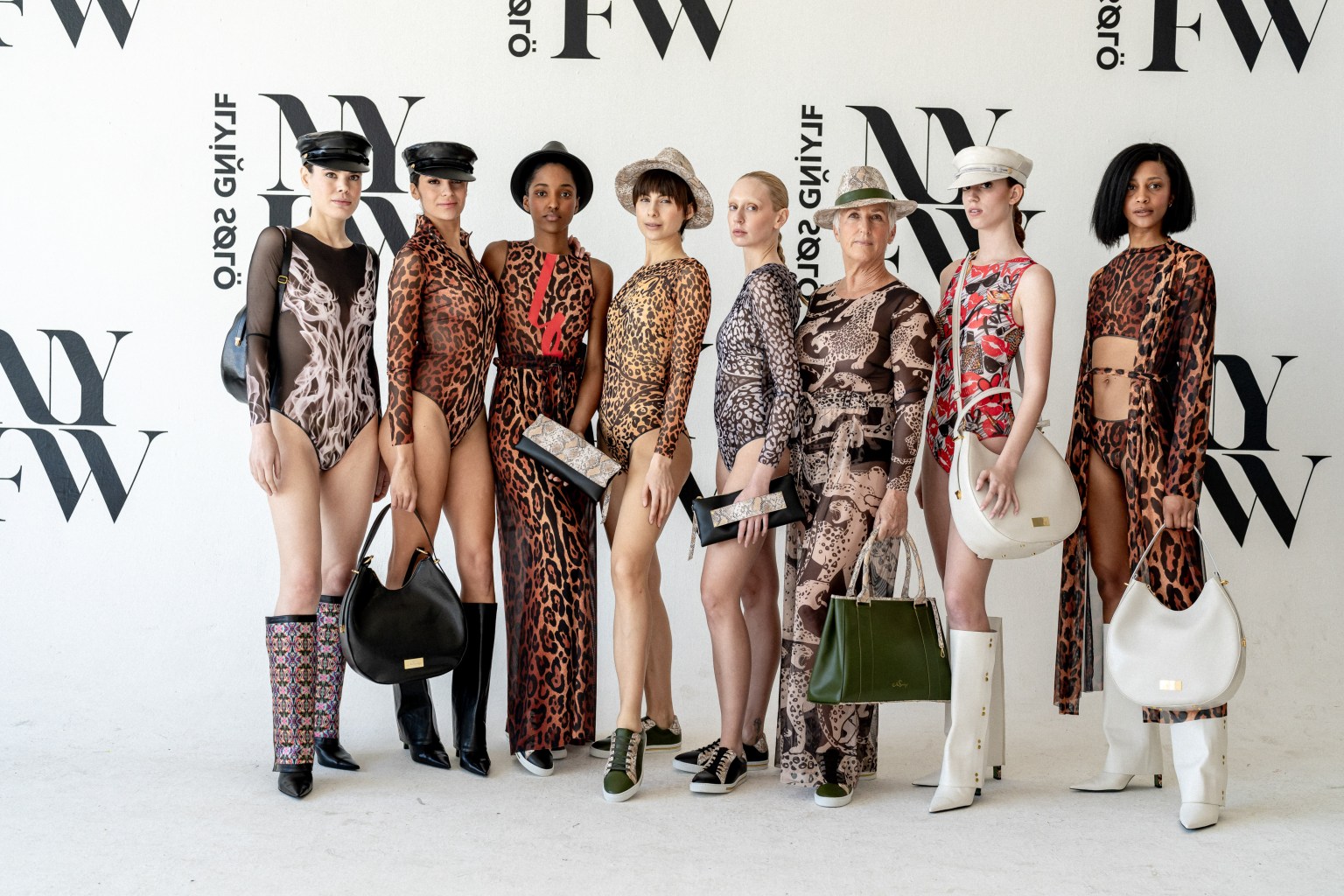
It was exactly as I had imagined – and yet, it was also different,’ says Anne-Kristin Schollenberger, founder of Anne Schollenberger, about her AW25 show at New York Fashion Week. ‘Today’s shows are far more understated than the ones you see in films. And everything is over far too quickly.’ Schollenberger presented with Flying Solo – the US’s biggest retail platform for independent fashion. This means a tough crowd – as picky as it gets in the city that has already seen it all. Both stakes and emotions run sky-high – and the fast pace is almost impossible to keep up with. ‘At times I didn’t know what to do with myself. I was so nervous, almost on the verge of a breakdown.’
But it is in those moments that the pieces make the tapestry whole. Schollenberger had dreamed of having her own fashion brand for years before actually launching one in 2022. As for the show, it was always meant to be New York – not any other city. ‘This city is pure energy, and every time I’m there, I soak it all in. Making it in New York means you can make it anywhere.’
The creative thrill
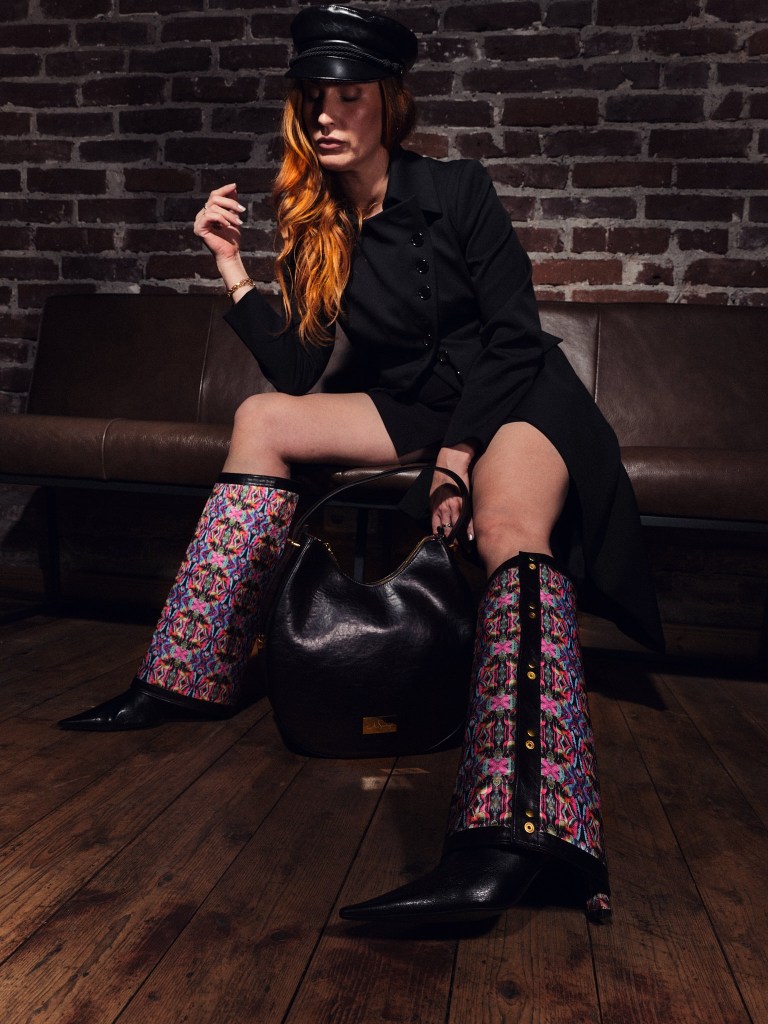
A long-time vegan – one of those who couldn’t bring herself to eat her great-grandmother’s Easter roast back when she was still a child – she then set out to make accessories – bags, shoes and hats – that would show the whole world that refusing to use animal leather is anything but compromising on the actual ‘it’ factor – design that turns heads, literally. ‘It feels incredibly rewarding when someone on the street or at an event compliments me on my stunning bag or amazing boots and asks where they’re from, and I can proudly say: They’re from my own label. I’m the designer.’
It is quite straightforward to pinpoint the components of good design. Typically, clean lines and supple texture do the job. Add neat finishing, and that’s what most already consider luxury. One level up, there’s always something extra on top of it all – smart details that do credit to the designer and make a product distinctive in an otherwise crowded market. In the case of Anne Schollenberger, it’s a peculiar contemporary tweak to an otherwise uninterrupted form. ‘I just ask myself what I would want from a bag, a pair of shoes, or a hat – what would make me fall in love with it. And then I translate that vision into my designs,’ says Schollenberger. ‘Creativity doesn’t automatically mean something has to be completely crazy or impractical.’
That being said, Schollenberger does admit to being asked by her producers to hold her horses when she comes up with something so extravagant it can’t be executed. But, according to her, this only happens ‘sometimes’.
‘Creativity doesn’t automatically mean something has to be completely crazy or impractical.’
Anne-Kristin Schollenberger, founder of Anne Schollenberger
And while it does sound like fun (‘the freedom to be creative, and being surrounded every day by the things I love most’), running a vegan brand that inspires and enables people to make better choices does come with its own particular set of challenges. The first one being sourcing the right vegan materials – and finding people who are willing to work with them. ‘I had honestly imagined that part would be much easier,’ says Schollenberger.

The transparency drill
Ultimately, Schollenberger settled on manufacturing in small factories in Portugal, sourcing only materials with reduced environmental impact, using repurposed waste and recycled fibres where possible.
For a material to be considered ‘vegan’, no animal-derived ingredients are allowed. However, for a truly vegan material, the concerns for environmental impact and the ethical use of resources – including human ones – must be addressed and minimised.
‘The word “sustainability” has been overused, and you have to be careful with the term “vegan”. Vegan doesn’t automatically mean cruelty-free. It simply means that no animal-derived ingredients are used – for example, in cosmetics. That doesn’t necessarily mean that no animal testing was involved in the production of those ingredients or materials,’ says Schollenberger. Anne Schollenberger is a PETA-certified brand, which means no animal-derived components are used in the production of any products, nor is animal testing conducted at any stage. In short, neither dead nor living animals are involved whatsoever.
The vegan message is also often diluted when people go vegan out of concern for their health – changing their diet, but continuing to wear leather items – creating quite a confusing image for everyone. ‘Sometimes it can feel almost hypocritical when someone claims to live vegan and avoid animal products but still wears leather shoes and bags – it quickly becomes clear that their commitment is not genuine,’ says Schollenberger.
For a brand – and the people behind it – to claim accountable sustainability and transparency, they must keep tabs on every step of their supply chain – materials and suppliers alike. At this moment, such commitment is mostly declaratory, with many brands and celebrities jumping on the opportunity to capitalise on the hype, often contributing to superficial marketing or straightforward greenwashing. ‘I hope that transparency will become mandatory, so that vegan brands are required to disclose the origin, environmental impact, and material composition of their products – helping to prevent greenwashing and avoid animal testing.’
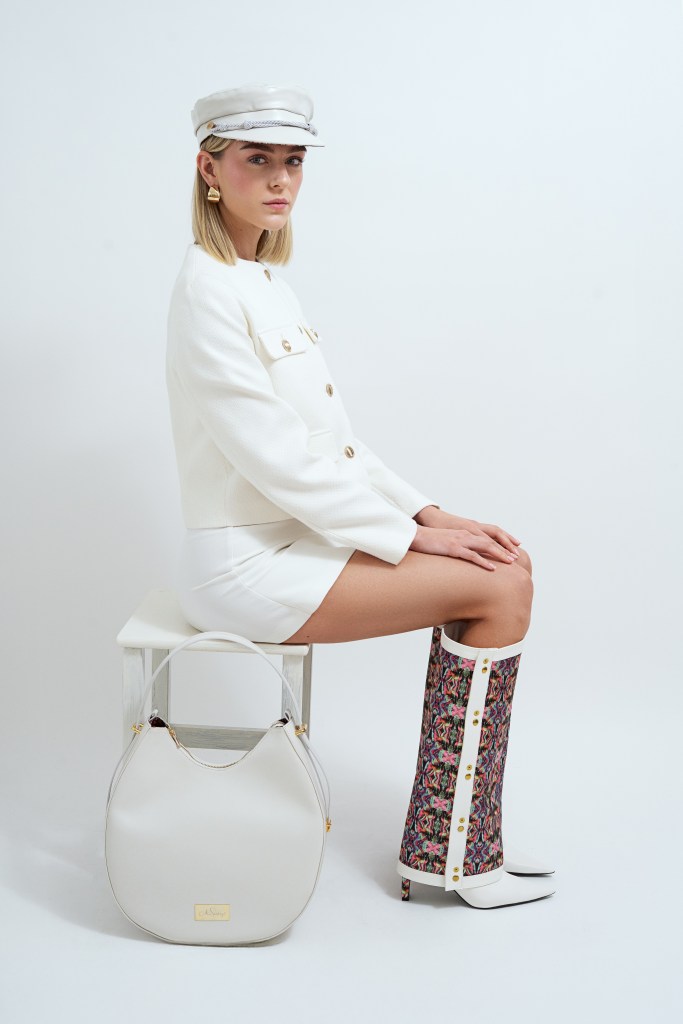
As long as there is no mandatory policy in actual force on transparency – one that imposes tangible actions against greenwashing rather than merely recommending against it – it falls entirely on brands like Anne Schollenberger’s to break through to the mainstream. And here’s where we arrive at the second challenge – getting the message across and navigating through a vast and stormy sea of misconceptions, misinformation, and consumer mistrust towards anything new and unorthodox. ‘Honestly, this ignorance and misinformation can drive me crazy. Yet I always try to explain everything with patience and love.’
The essential communication happens on social media, where a brand is supposed to do everything at once: storytelling, informing, and engaging in conversations – a peculiar mixture of PR and activism. The most challenging moments? ‘Responding over and over to comments and messages from people who claim that vegan leather is just plastic, without taking the time to learn the facts. Or staying calm and polite when others on social media insist that leather is merely a by-product of the meat industry – which is simply not true.’
The deliberately misguided belief that animal leather is merely a by-product of the meat industry and would otherwise go to waste if not used for fancy bags and shoes is often paired with another deeply ingrained one – that only pieces made with animal leather are worth investing in for status and durability. Blame it on history – millennia of treating leather, fur, precious metals and stones as the guarantors of exchange value could make innovative vegan alternatives seem irrelevant at best – or simply a bit off if one doesn’t dabble in these on a daily basis.
This is where kindness – along with perseverance – is put to the test. ‘I try to persuade people kindly. I don’t want to force anyone to change – that never works. Eventually, we’ll all look around and realise, sooner than we think, the damage our ignorance and indifference have caused to animals and the environment,’ says Schollenberger.
‘Eventually, we’ll all look around and realise, sooner than we think, the damage our ignorance and indifference have caused to animals and the environment.’
The way she does it

‘I am convinced that vegan fashion and accessories are the future. Especially vegan bags and shoes, which are gaining traction thanks to the incredible materials now available – and the fact that these materials continue to evolve.’
And evolve they do indeed. Staying up to date with ongoing developments and improvements in low-impact materials is another challenge – one that requires time, effort, and money. Innovative materials are usually the expensive ones, especially for small brands that produce only in small series, which – although never meant to compete with mass-market products – do find themselves vying for the attention of several market segments at once: luxury, bridge, and mass market alike.
Fortunately, consumers are now more open than ever to trying out new things when they choose to pay more for an item – or have simply become more critical towards the old luxury players, who are still struggling to find a new recipe for allure, with some actively seeking out innovative materials of reduced environmental impact.
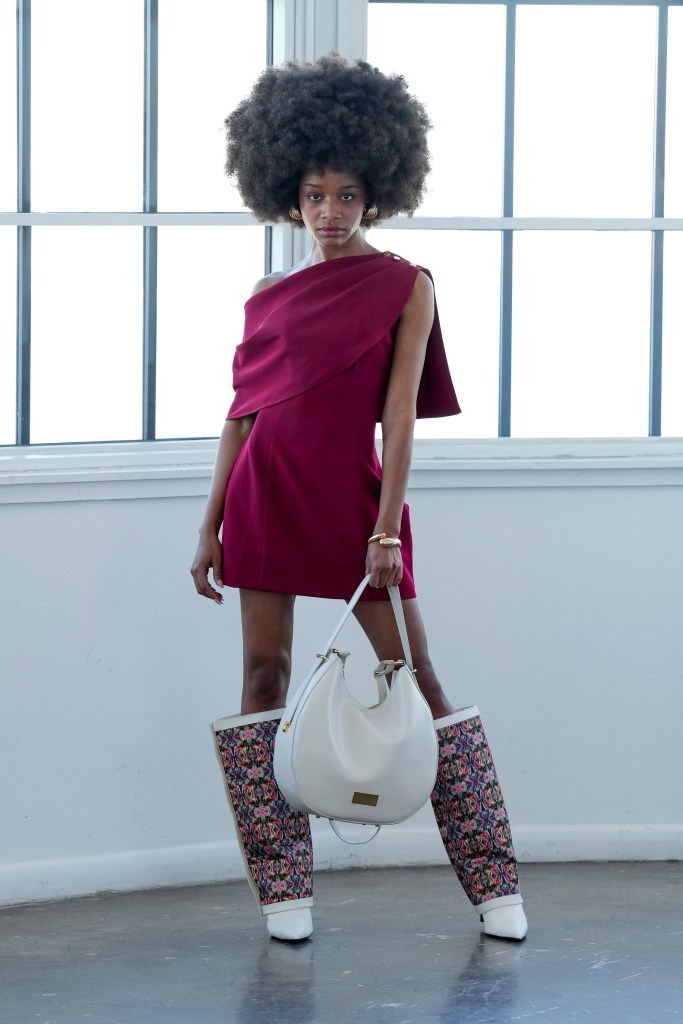
Schollenberger created her first collection from cactus leather. Then came olive leather (‘took my excitement to an entirely new level!’), from which the YVE Bag – the ‘it’ model that made it to – or rather at – the New York show – is made. ‘I notice it time and again when people ask me about the YVE Bag because they love its style or shape. I usually start by explaining that it’s not only beautiful, but also incredibly versatile – you can wear it as a handbag, a backpack, or a crossbody. People are always amazed.’
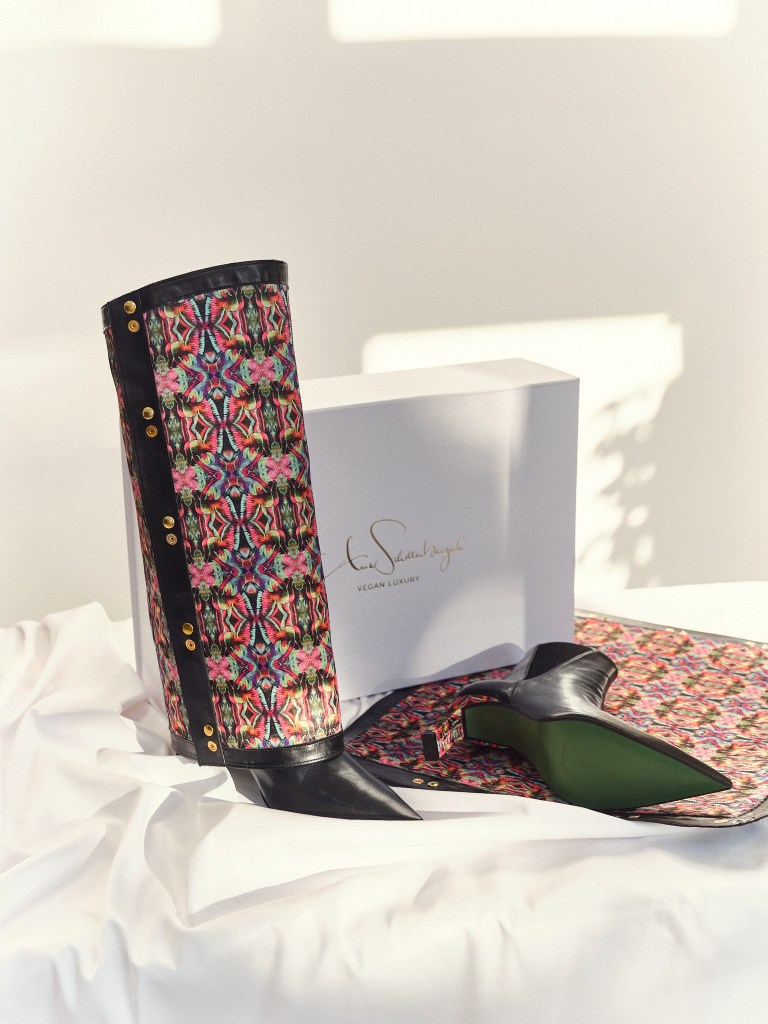
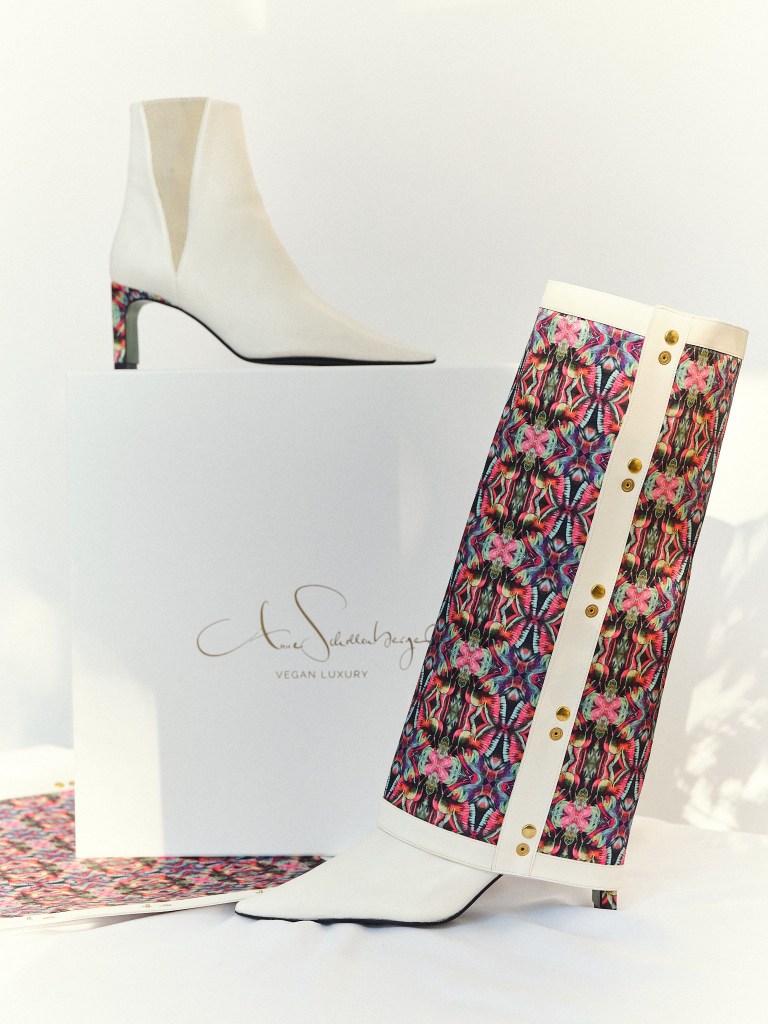

There is always this subtle moment when one decides whether to quote the latest research on the materials used – or simply let people touch the bag. And while the first option is oddly satisfying, it is usually the physical experience that keeps curiosity at its peak. ‘I hand them the bag, and they fall in love with how it feels. Only after that do I mention that it’s made from vegan olive leather. Every time, I’m met with wide eyes and a surprised face: “Wait, this isn’t leather?” And I say, “No – it’s not animal leather. It’s vegan, plant-based leather made from olive waste.”’
And then it lands. ‘People are blown away. They just can’t believe it.’
With every new person who opens up to experience this crossroads of contemporary design and vegan, cruelty-free materials, there is an extremely rewarding feeling of having contributed to something meaningful – and a growing appetite to contribute even more. And that’s Schollenberger’s ultimate goal. ‘For the future, I hope that I can really make a difference in the fashion industry.’
Photo courtesy of Anne Schollenberger
Curious about plant-based leather alternatives? Discover more in our Vegan Fashion Directory.