

Every year, World Environment Day and World Oceans Day encourage us to reflect on the environmental challenges facing Planet Earth. From plastic pollution and textile waste to resource depletion and overconsumption, many of these issues are deeply interconnected. Increasingly, so are the solutions.
Earlier this month, I found myself moving between two cities that offered fascinating insights into sustainability in East Asia. The journey began in Taipei, where I visited House of Story Wear, a unique lifestyle space dedicated to circular fashion, repair culture, community events, and conscious living. Just a few days later, I arrived in Seoul, South Korea. The visit would ultimately offer an interesting glimpse into sustainable fashion in South Korea, revealing common themes that appeared across multiple brands and retail concepts.
The original purpose of the trip was simple. I wanted to visit one of the boutiques of PLEATSMAMA, a brand I first discovered during TRANOÏ Tokyo and later met again at the following edition of the show. Their distinctive pleated bags made from recycled materials immediately stood out among the brands exhibiting at the event, and we later highlighted the company in a dedicated feature on Vegan Fashion Repository.
What I did not expect was that this visit would reveal a broader pattern running through South Korea’s sustainable fashion scene — one centred around circular materials, environmental innovation, and an apparent return to physical retail experiences.
Unexpected Discoveries in Seoul
PLEATSMAMA was not the only familiar name I encountered during the trip.
While visiting one of Seoul’s well-known vegan restaurants, I noticed a neighbouring store simply called Vegan Fashion Accessory Shop. Naturally, curiosity took over.
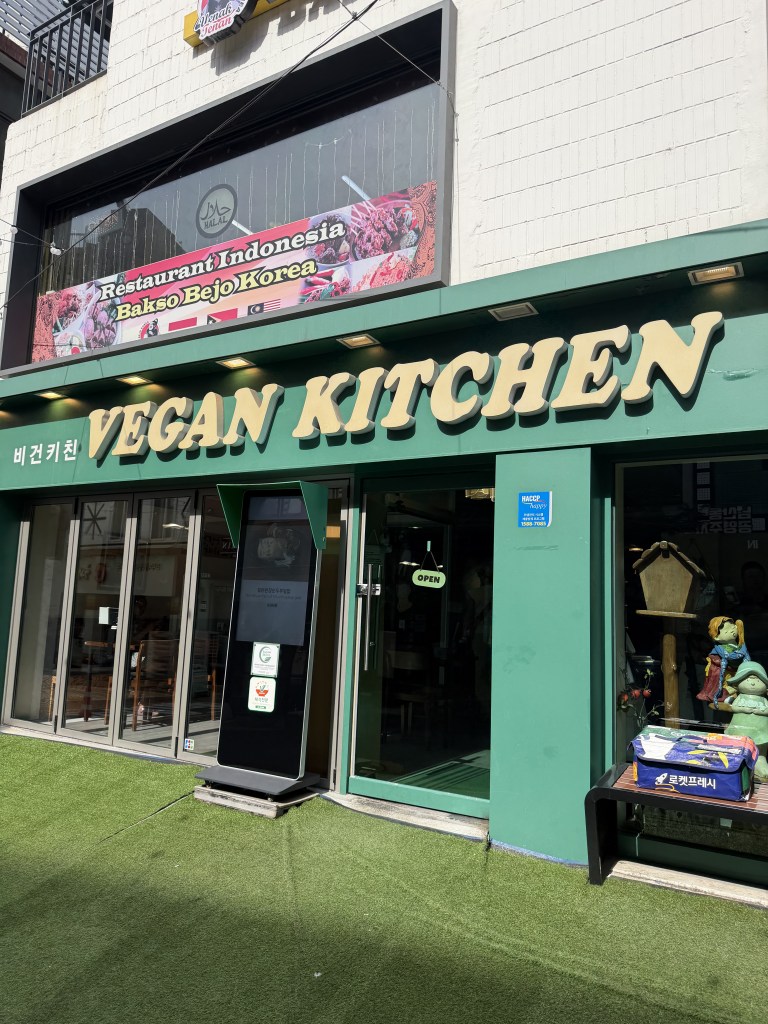
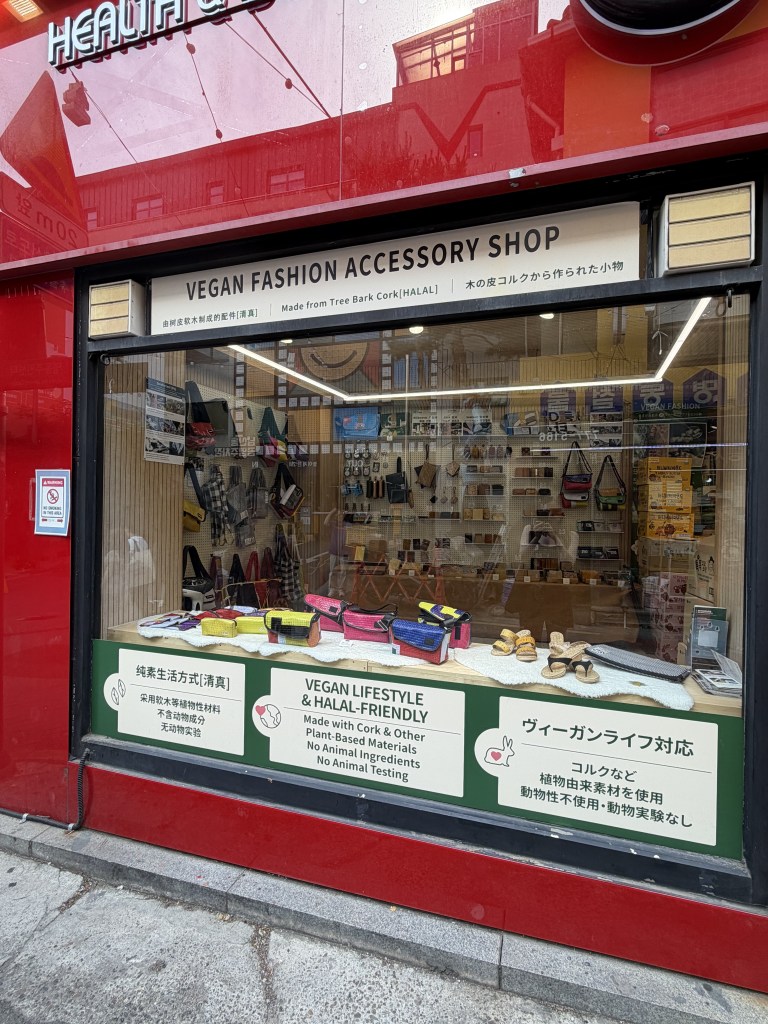
Located at 23 Toegye-ro 20-gil in Jung District, Seoul, right next to Vegan Kitchen, the small shop appeared to focus almost entirely on a single fashion brand: Zero Percent [0%], a company we had previously discovered during the 2025 Spring edition of Fashion World Tokyo.
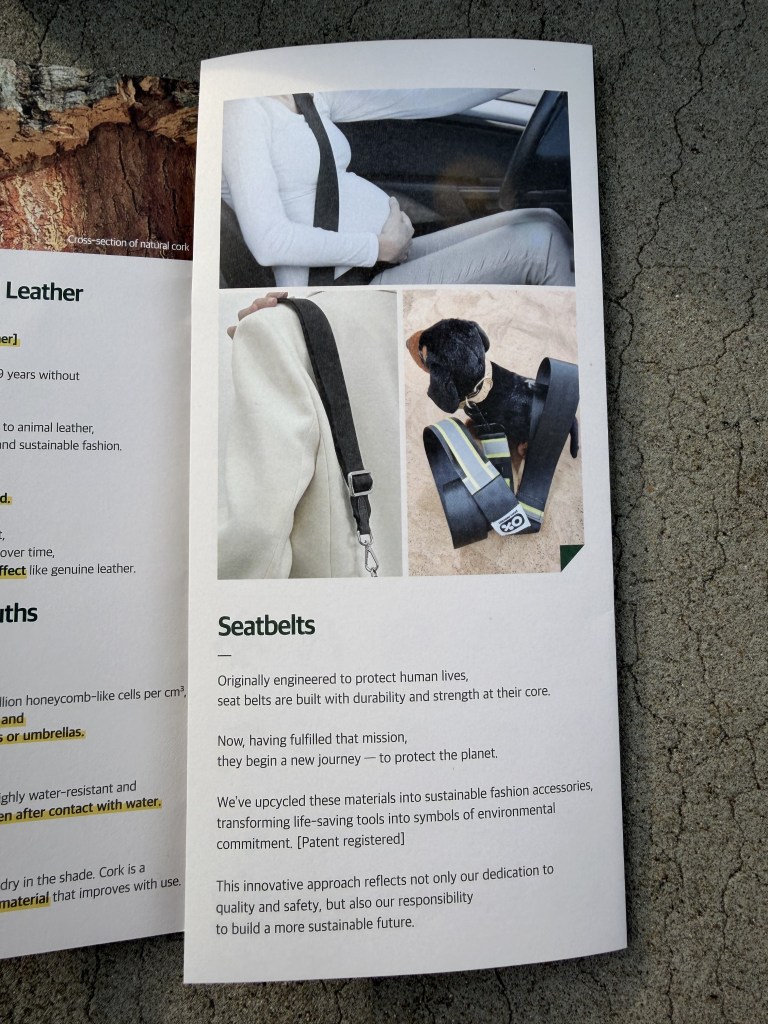
Zero Percent’s philosophy centres around carbon reduction, circular design, and finding new value in materials that would otherwise become waste. Through the use of recycled banners, seatbelts, plastics, waste fishing nets, and cork, the brand demonstrates how discarded resources can be transformed into functional everyday products rather than ending up in landfill.


Interestingly, despite references to recycled leather scraps on the company’s website, I once again did not encounter any leather-based products during my visit. Neither the products available in the store nor the brochure I picked up included leather items. The collection appeared entirely focused on cork and other recycled alternatives. Through a conversation with the staff, I also learned that the company operates a separate flagship and stationery store elsewhere in Seoul.
![Zero Percent [0%]](https://veganfashionrepository.com/wp-content/uploads/2026/06/IMG_3252-768x1024.jpg)

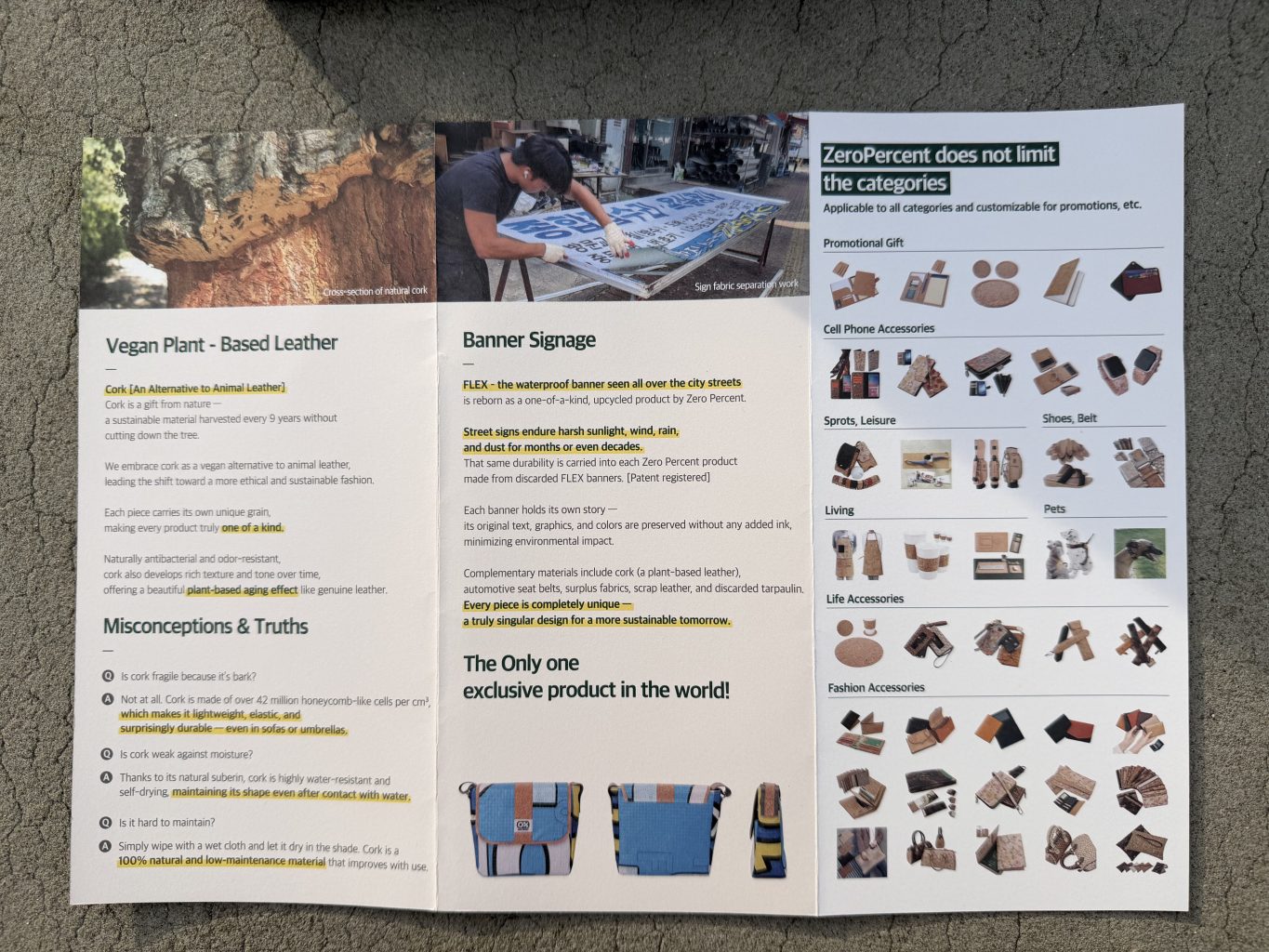
The visit reinforced an observation that would continue throughout the trip: circularity appears to be one of the defining themes of South Korea’s sustainable fashion landscape.
Circularity as a Design Principle
PLEATSMAMA offers another example of this broader movement.
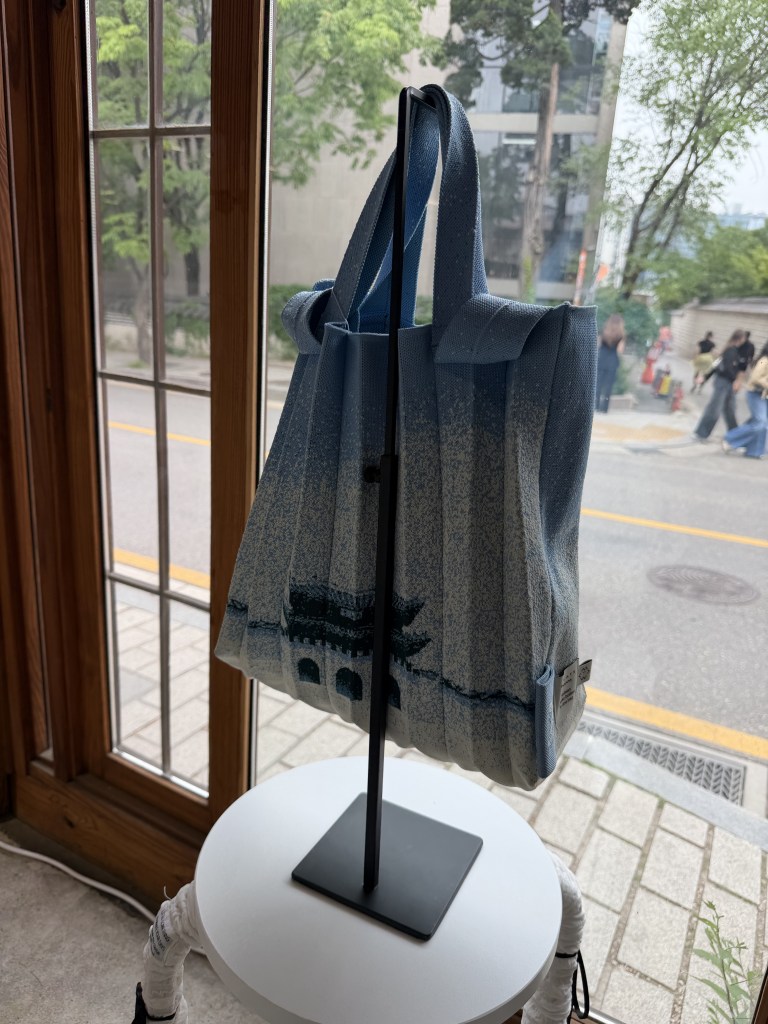
During my stay in Seoul, I visited one of the brand’s boutiques located at 121 Sogyeok-dong in Jongno District, just a short walk from Gyeongbokgung Palace and the historic Bukchon Hanok Village. Surrounded by historic streets and independent shops, the boutique embodies the balance between tradition and innovation found throughout the area.

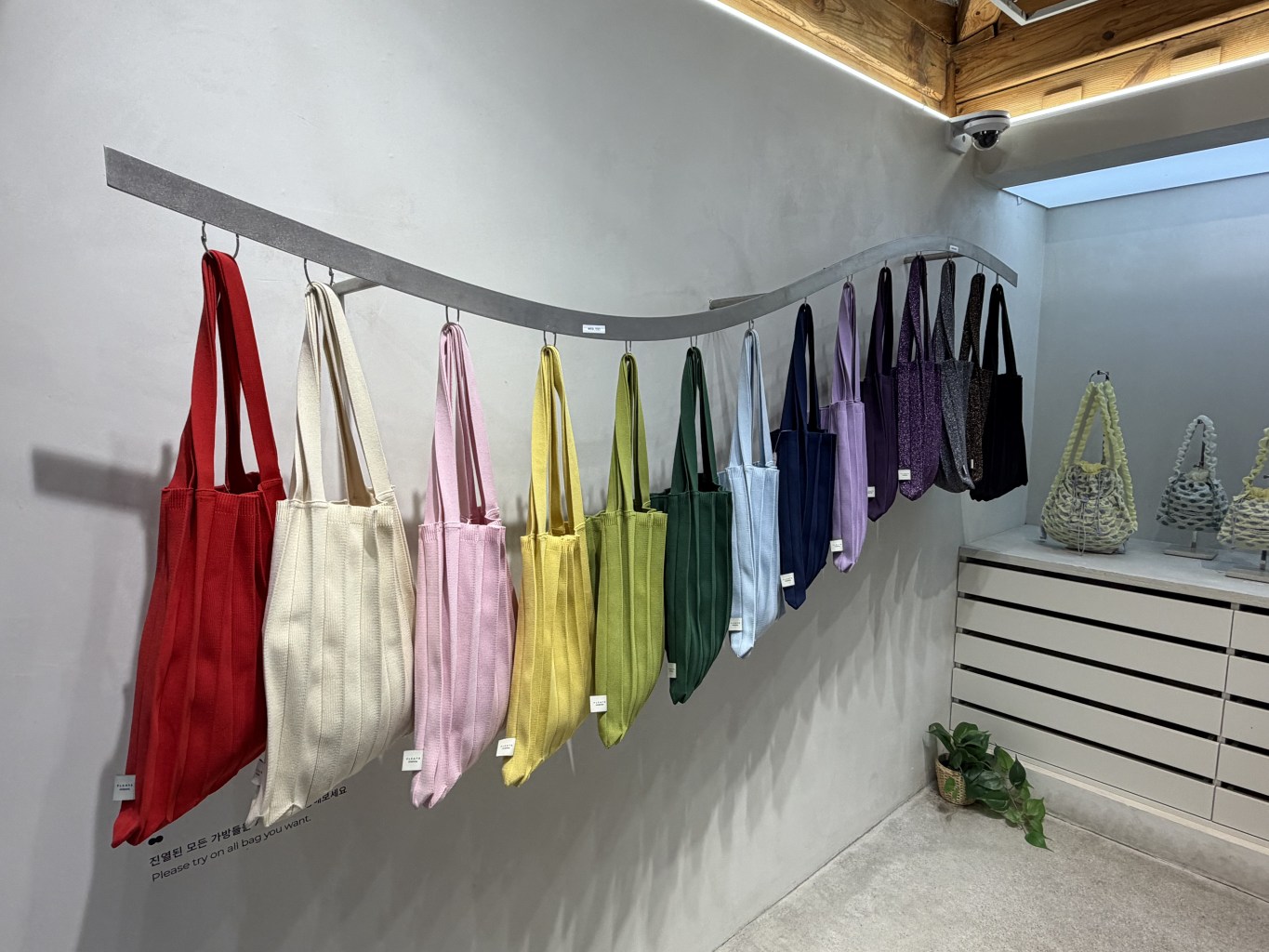
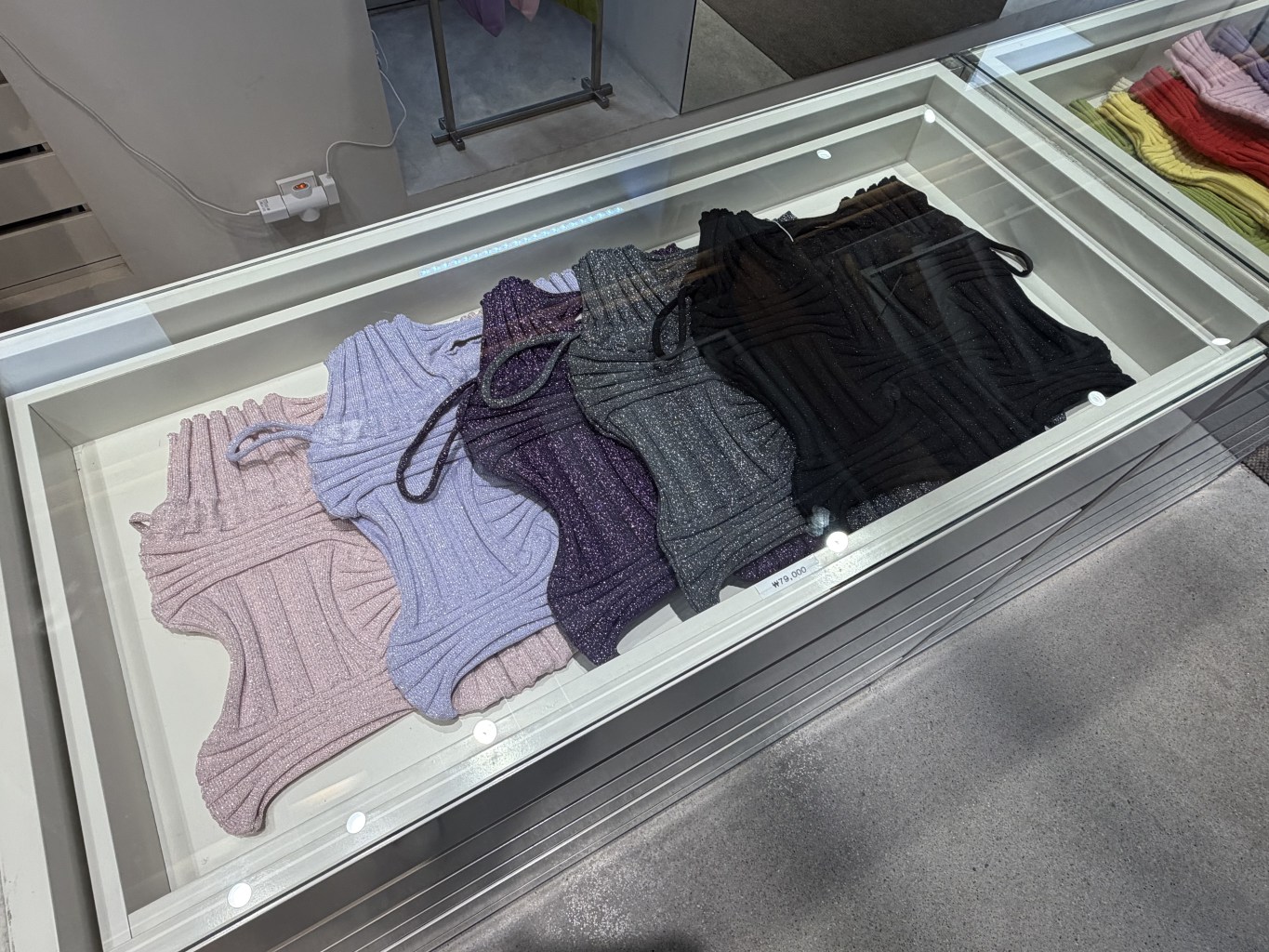
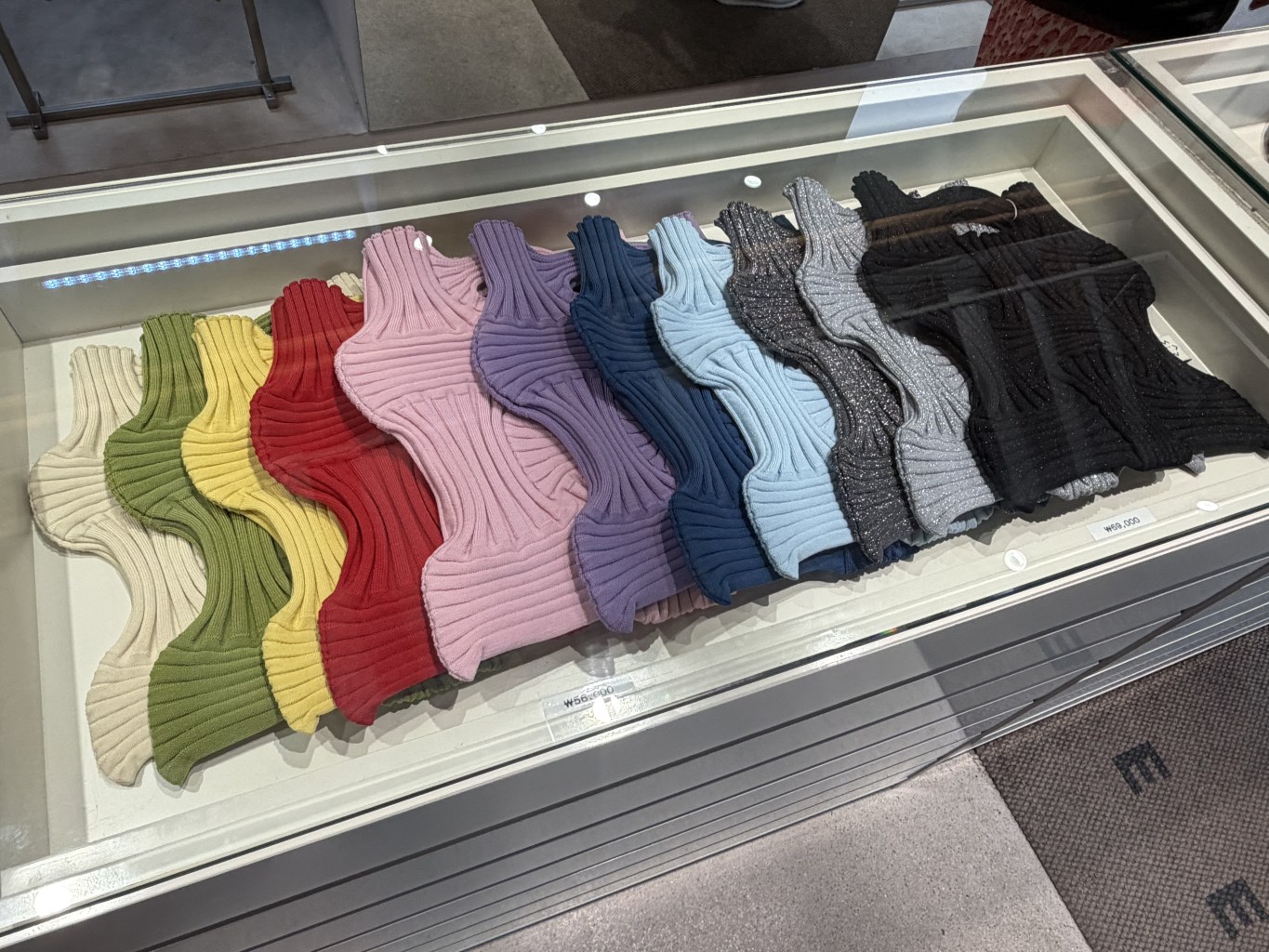
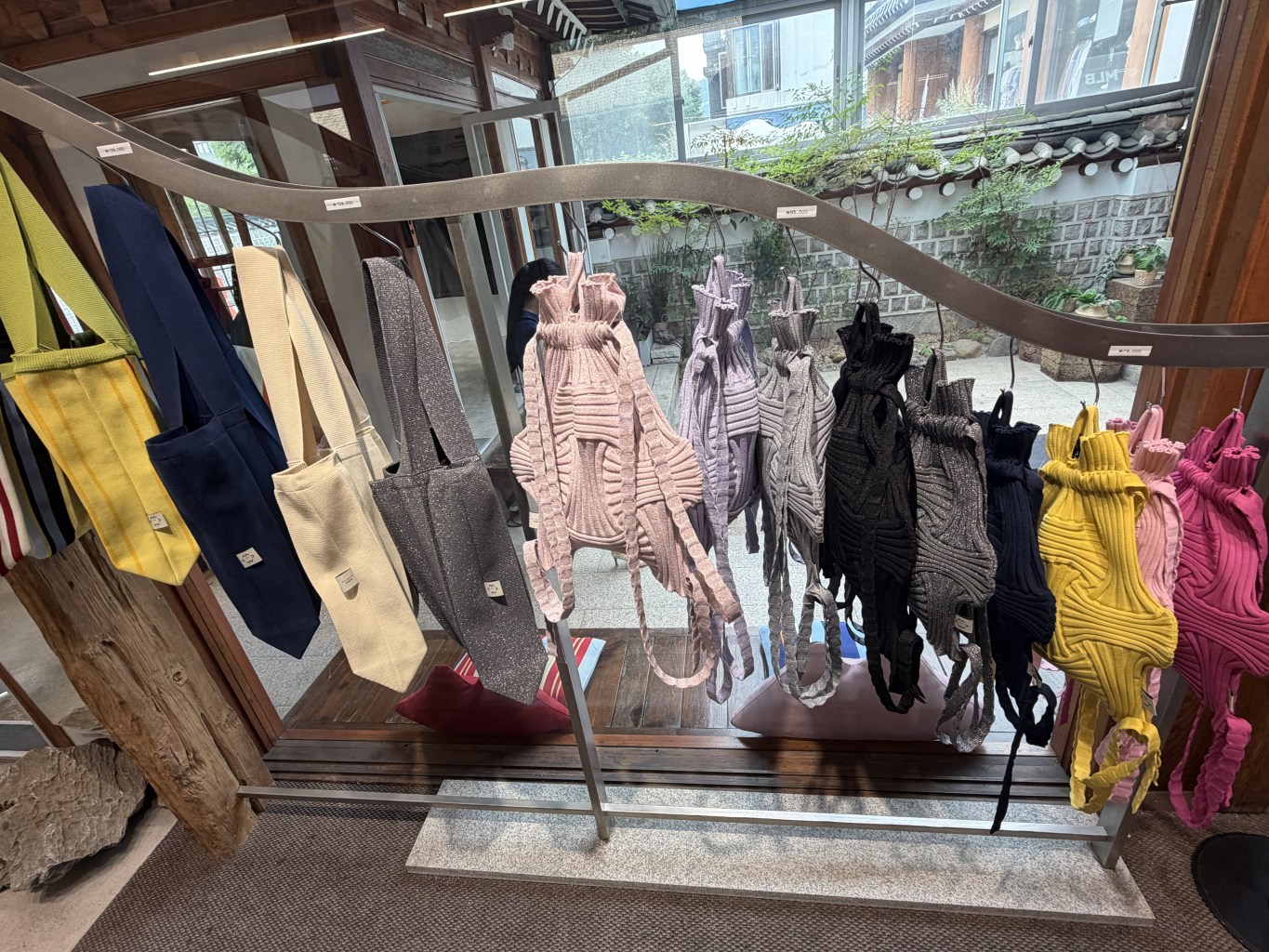

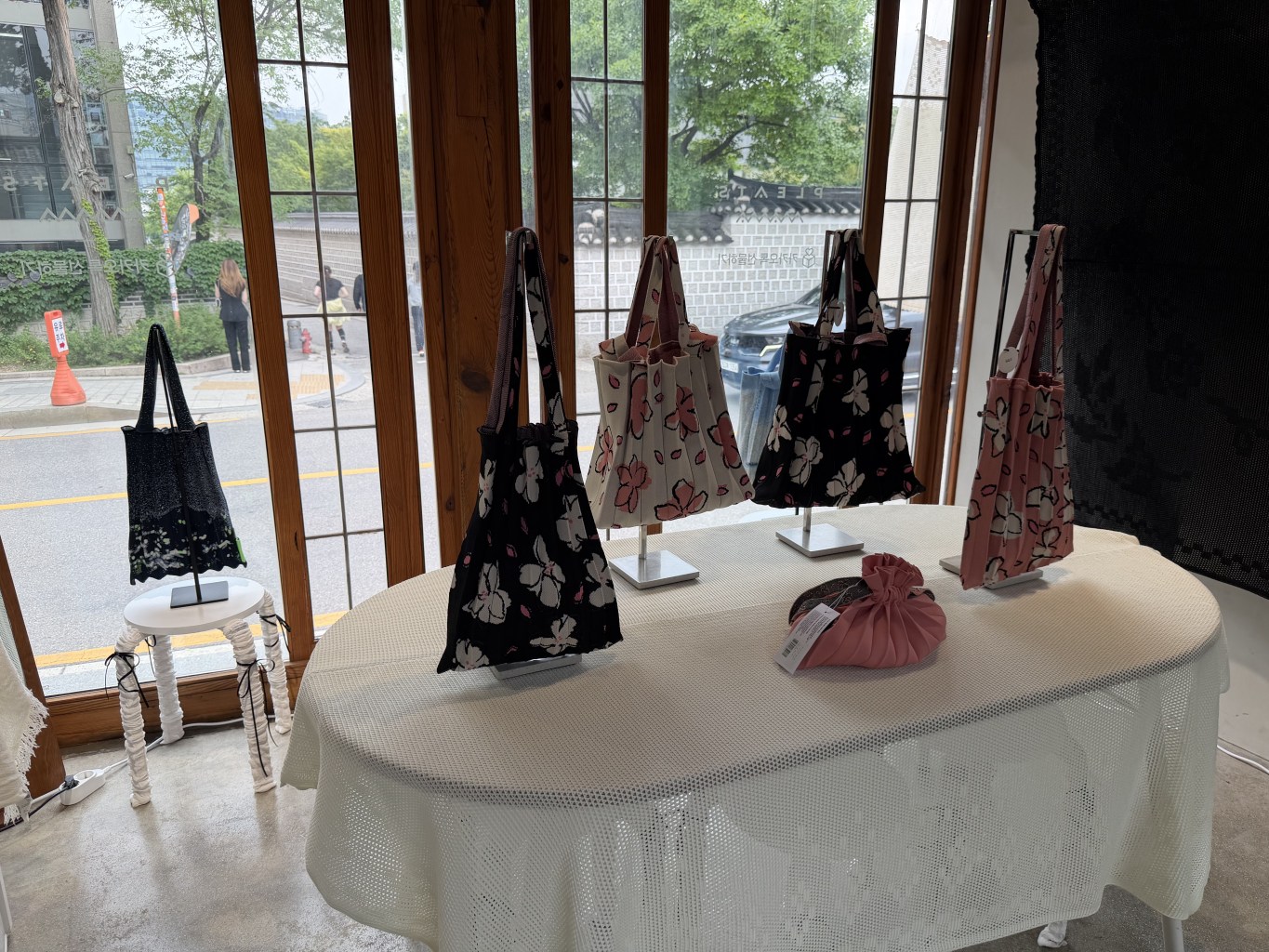
Since launching in 2018, the company has built its identity around giving new life to discarded materials. What began with recycled PET bottles has gradually evolved into a broader circular material ecosystem incorporating marine plastic waste, discarded fishing nets, textile waste, recycled containers, and plant-based materials.
Rather than focusing on a single sustainability initiative, PLEATSMAMA continues to explore new material solutions while maintaining a strong emphasis on design, functionality, and everyday usability. Its signature pleated bags have become a recognisable example of how recycled materials can be transformed into products that are both practical and visually distinctive.

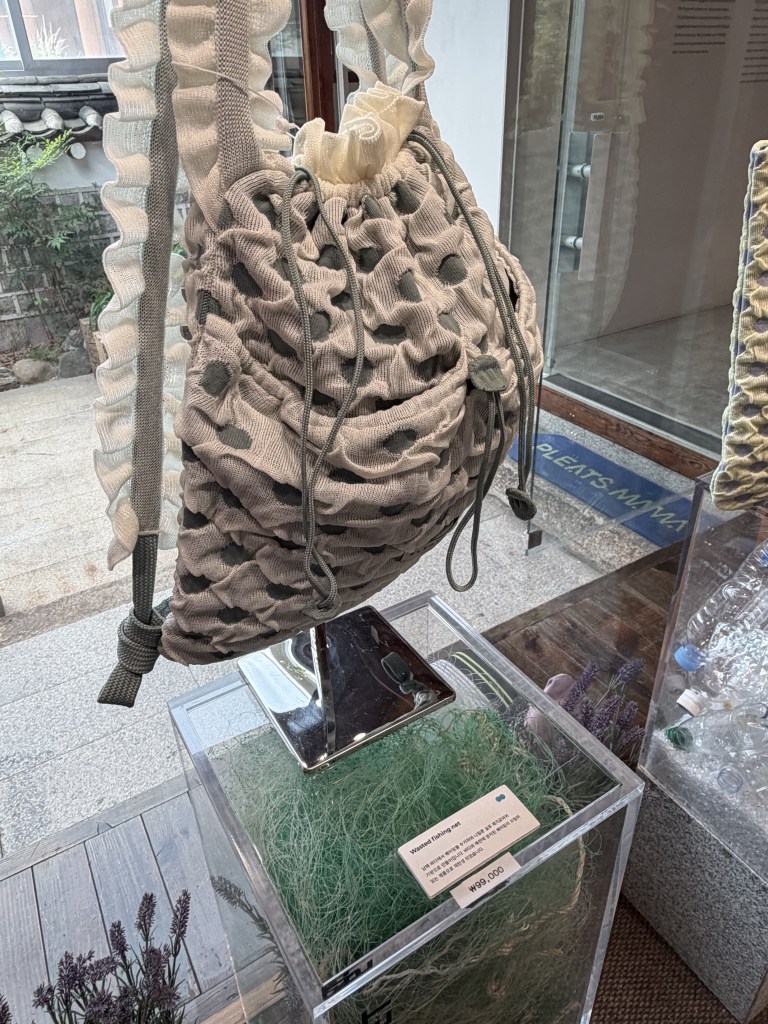
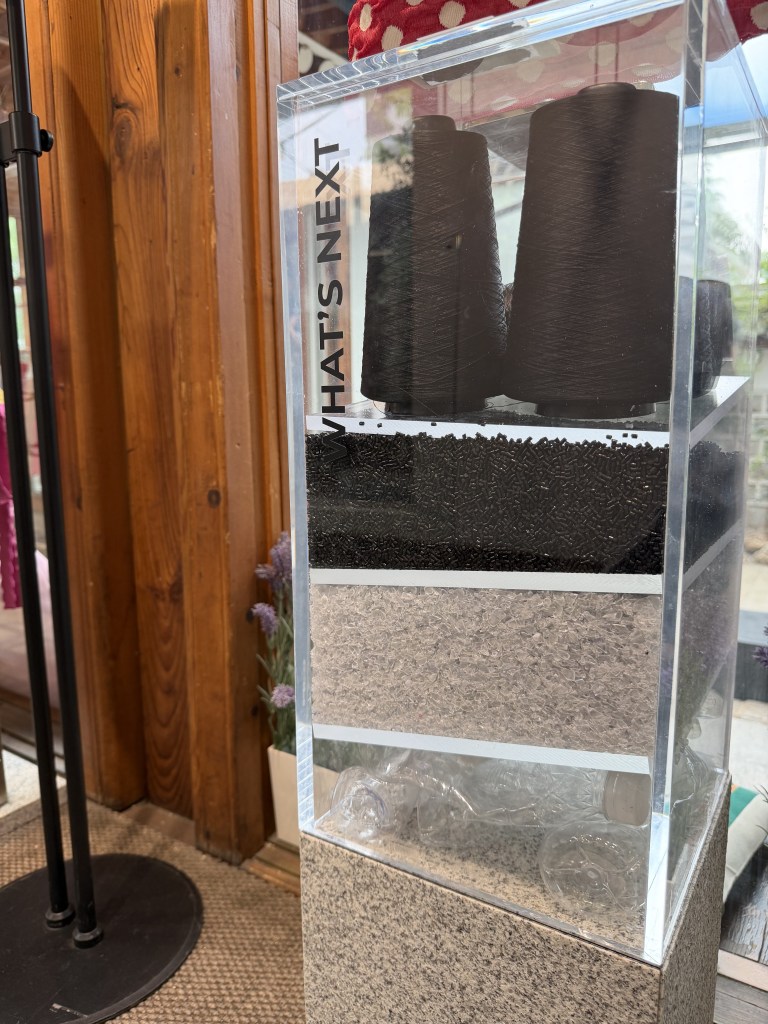

Like several other South Korean brands, PLEATSMAMA approaches sustainability not simply as a material choice but as part of a wider lifestyle philosophy — one that seeks to make environmental responsibility more accessible through everyday products.
The Surprising Return of Physical Retail
However, materials were only one part of the story. The second pattern that stood out during my time in Seoul was the continued importance of physical retail.
In many markets, particularly among smaller sustainable brands, e-commerce has become the dominant strategy. Maintaining physical stores is expensive, and digital channels offer significantly lower barriers to entry. Yet brands such as PLEATSMAMA continue investing in brick-and-mortar locations. The company operates multiple boutiques in Seoul while remaining highly active at international trade fairs and pop-up events, including regular appearances in Tokyo.
Curious about this approach, I reached out to Bekky Hong from PLEATSMAMA’s Global Sales Team, whom I originally met during TRANOÏ Tokyo. She explained:
“Offline spaces remain very important to us. While online channels are an essential part of our business, we believe our products are best experienced in person. Many customers are surprised by the texture, lightness, flexibility, and details of our bags when they first see them.
Since knitted bags are still relatively uncommon compared to traditional leather bags, we feel it is important for customers to have the opportunity to touch and experience the products firsthand. Our physical spaces allow us to communicate these qualities much more effectively and create a deeper connection with our customers.”
Her observation touches on a wider conversation currently taking place within sustainable fashion.
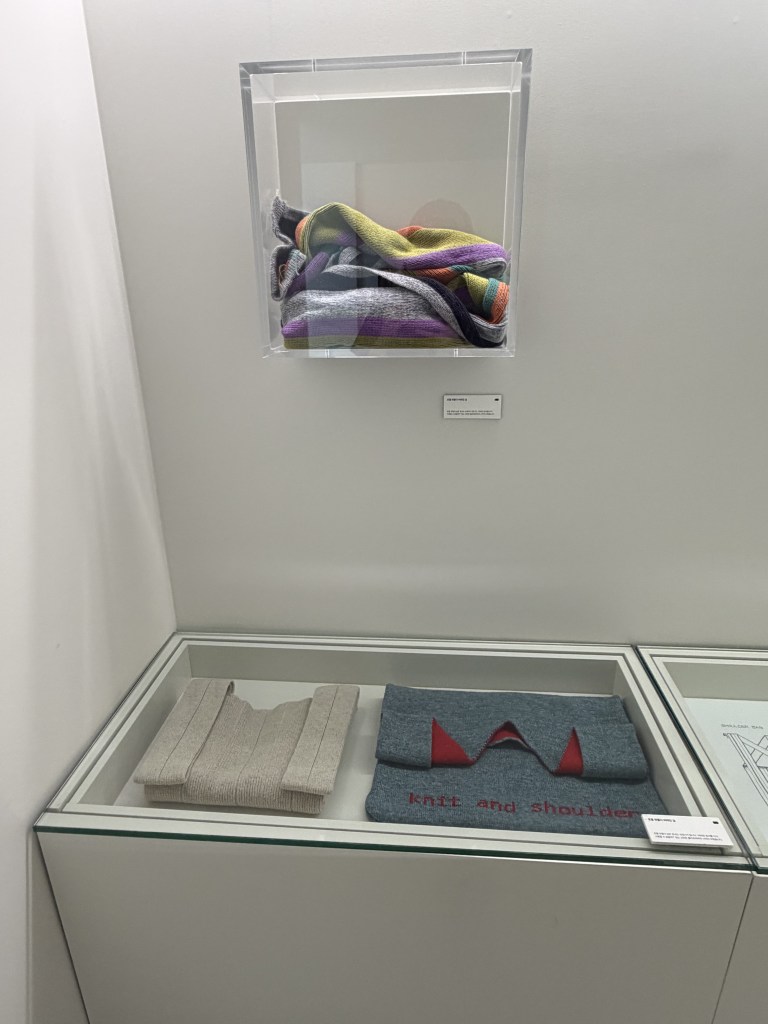
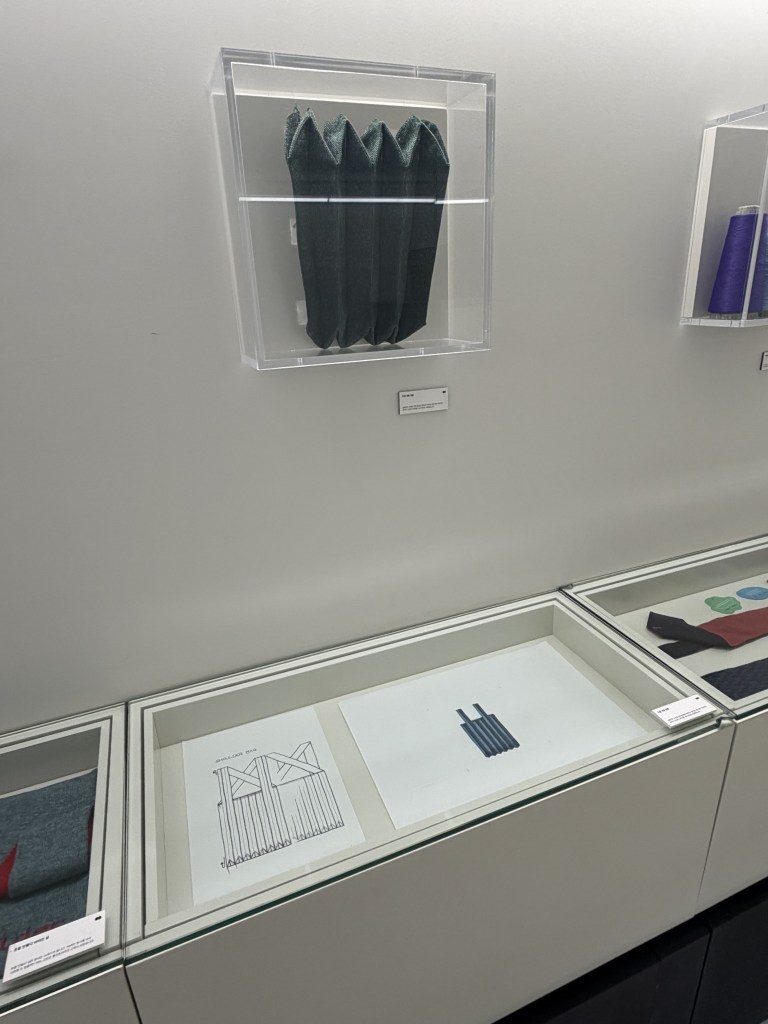
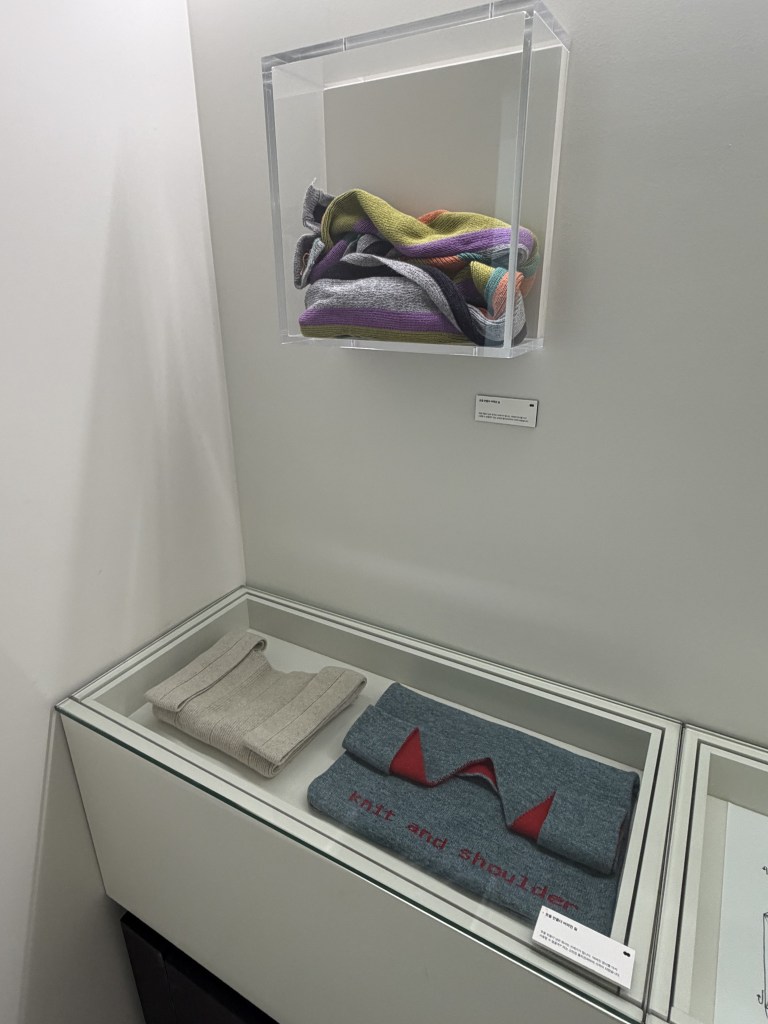

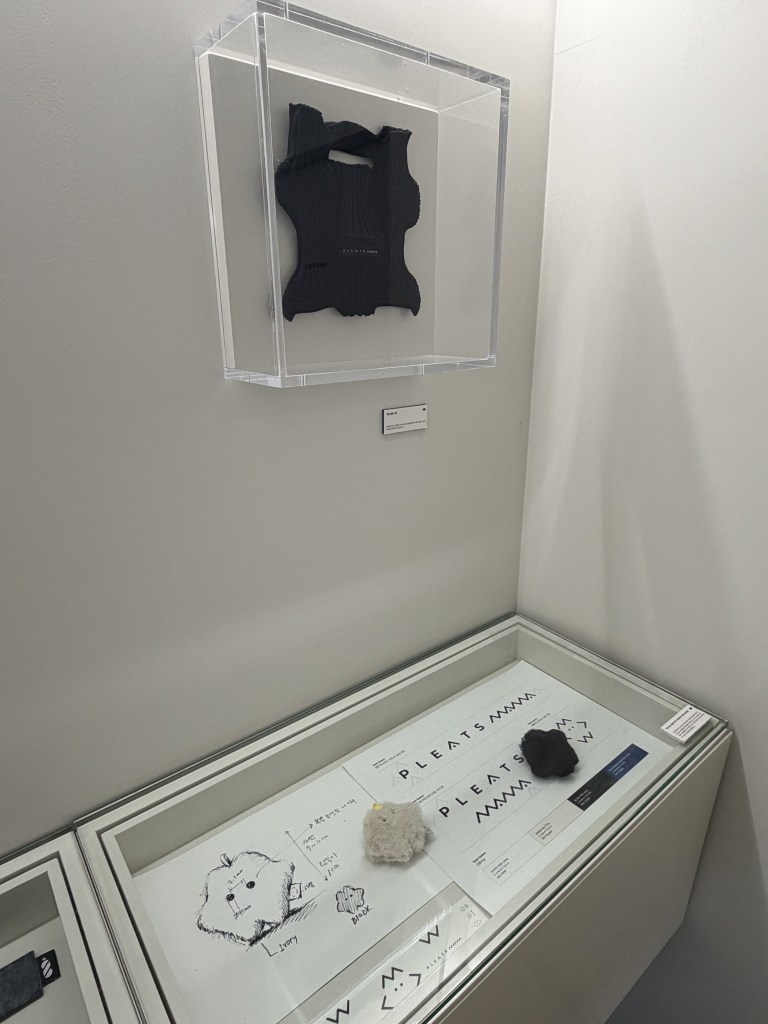
As new materials enter the market — whether recycled textiles, plant-based alternatives, mycelium, or next-generation biomaterials — consumers are often encountering them for the first time. Unlike conventional materials, these innovations frequently require explanation and, perhaps more importantly, direct experience.
This topic emerged repeatedly during our recent discussions on next-generation materials: sensory experience matters. Consumers want to touch, compare, and understand unfamiliar materials before making purchasing decisions. In this context, physical retail begins to look less like a relic of the past and more like an important discovery and educational tool.
Vegan and Sustainable Fashion in South Korea
Looking at the vegan brands currently featured in the Vegan Fashion Repository Directory, another interesting pattern emerges.
Of the five fully vegan South Korean brands listed, four have built their identities around circular, recycled, or lower-impact materials. While Zero Percent has not been added to the directory due to the company’s references to recycled leather on its website, the broader trend remains evident.
Brands such as A Meaningful Life and RÊVEDESOONI represent a newer generation of independent labels that place environmental responsibility at the centre of their business models. Although much smaller in scale and primarily focused on online retail, both brands emphasise conscious production, responsible material sourcing, and a slower approach to fashion consumption.
Another notable example is Vegan Tiger, a brand we also had the opportunity to meet during TRANOÏ Tokyo. Founded by designer Yang Yoon-a, Vegan Tiger has become one of South Korea’s most internationally recognised vegan fashion brands.
Beyond its bold and colourful designs, the company frequently incorporates themes connected to nature, biodiversity, and animal protection. The jellyfish, one of the brand’s recurring symbols, serves as a reminder of the fragility of marine ecosystems and the impact human activity has on ocean life.
Like PLEATSMAMA, Vegan Tiger has maintained a strong presence beyond online retail through international trade fairs, exhibitions, and pop-up events, helping introduce Korean vegan fashion to audiences outside the country.
Beyond Products



Perhaps the most interesting takeaway from this journey was that sustainability in South Korea increasingly appears to be moving beyond individual products.
Whether through PLEATSMAMA’s material innovation, Zero Percent’s upcycling initiatives, Vegan Tiger’s environmental messaging, or the smaller independent labels working with responsible materials, a shared philosophy seems to emerge: sustainability is viewed as a long-term system rather than a single product feature.
At the same time, these brands challenge another assumption often associated with sustainable fashion — that the future is exclusively digital. For years, the growth of online retail has created a certain distance between consumers and products. Materials are evaluated through screens. Textures are imagined rather than experienced. Purchasing decisions are often made without ever touching an item.
Yet as fashion enters a new era defined by recycled materials, circular systems, and next-generation alternatives, physical interaction may once again become increasingly important.
Consumers want to understand what a bag made from recycled fishing nets feels like. They want to compare cork with conventional leather. They want to experience innovative materials firsthand.
South Korea’s sustainable fashion brands appear to understand this well.
From PLEATSMAMA’s recycled knit bags and Zero Percent’s upcycled materials to Vegan Tiger’s ocean-inspired activism, a clear pattern emerges: sustainability is not only about reducing environmental impact. It is also about creating new relationships between materials, products, and people.
On World Oceans Day, that message feels particularly relevant. The future of sustainable fashion may not be found solely in new materials or new technologies. It may also lie in helping consumers experience those innovations for themselves — and in doing so, become active participants in a more circular future.
Author

Discover more from Vegan Fashion Repository
Subscribe to get the latest posts sent to your email.