
In our previous article, The Vegan Problem: Why Vegan Fashion Brands Are Closing — or Quietly Abandoning Vegan Materials, we identified the lack of trust in vegan materials as one of the structural challenges facing vegan fashion brands today. That problem deserves a closer look.
For years, “vegan leather” has been treated as a catch-all term for almost anything that looks like leather but does not come from an animal. This has created both opportunity and confusion. On one hand, the category has made animal-free fashion more visible and commercially viable. On the other, it grouped very different materials under one label — from fossil fuel-based PU and PVC to next-generation bio-based alternatives.
This question also builds on our recent panel discussion, Where Are We Now? Market Opportunities for Bio-based Alternatives to Fur, Leather and Wool, co-hosted with Fashion Revolution Polska during Fashion Revolution Week 2026. The conversation brought together material innovators, brands, designers, researchers and advocates to examine the practical realities of scaling next-generation materials, as well as the structural and perceptual shifts required for wider industry adoption. One of the clearest conclusions was that the most persistent barriers to adoption are no longer only technological, but also perceptual and structural.
As a result, consumers often do not know what they are actually buying.
This matters because trust is one of the most important currencies in ethical fashion. If consumers associate vegan materials with plastic, poor durability, greenwashing, and low quality, even the most innovative material developers and genuinely transparent vegan brands are forced to work against a damaged public perception.
Below, we break down why consumers still struggle to trust vegan materials — and why the problem is not simply a matter of education, but rather one of data, marketing, consumer culture, and the fashion industry’s deeply ingrained attachment to animal-derived luxury.
1. “Vegan” is still understood as “plastic”
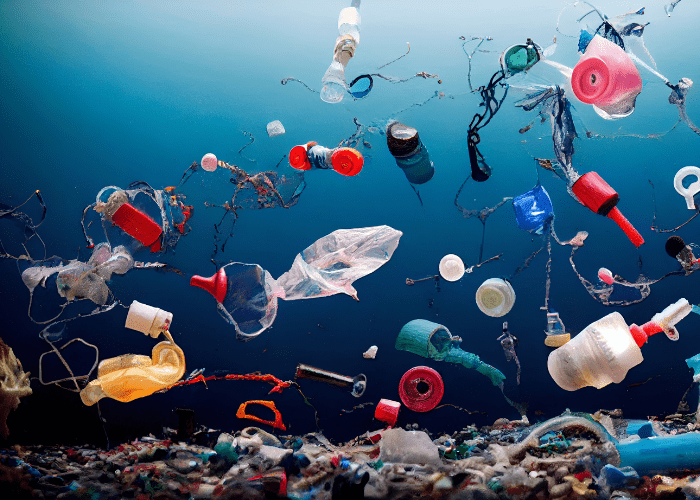
The biggest perception problem remains the simplest one: brands say “vegan leather” — consumers think “plastic.”
And there is a reason for that. For decades, the most common leather alternatives were synthetic materials, especially polyurethane (PU) and polyvinyl chloride (PVC), usually applied as coatings over a textile base. While these materials offered an animal-free alternative to leather, they also came with well-documented environmental issues, including fossil fuel dependence, limited biodegradability, and virtually no end-of-life solutions. [1]
This perception is also shaped by the wider material landscape. According to Textile Exchange’s Materials Market Report 2025, synthetic fibres accounted for 69% of global fibre production in 2024. Polyester alone represented 59% of total global fibre output. In other words, consumers are surrounded by plastic-based fashion materials, which makes it easier for them to assume that every vegan alternative belongs to the same category. [2]
The problem is that consumer perception has not evolved at the same pace as material innovation. Today, vegan materials are made from a wide range of raw materials: petroleum-based synthetics, recycled synthetics, plant-based composites, mycelium-based materials, microbial cellulose, natural rubber-based formulas, and emerging plastic-free or lower-plastic alternatives. However, for many consumers, all of these remain visually and linguistically collapsed into one category: “fake leather.”
This creates an unfair but very real communication problem. A low-cost PVC handbag and a next-generation bio-based material developed from agricultural waste may both be described as vegan leather, even though their composition, performance, price, sustainability profile, and development process are completely different.
When the language is too broad, trust becomes too fragile.
2. Consumers are confused about what “vegan leather” actually means
This confusion is not only anecdotal. A 2024 peer-reviewed study on consumer perceptions of vegan leather found that many respondents struggled to distinguish between different definitions of the term. More than half of participants defined vegan leather as leather made from plant materials, while 40% understood it more broadly as including all alternative leathers, including faux and synthetic options. Notably, 57.6% of participants showed confusion when asked to distinguish between different definitions of vegan leather. [3]
This finding is extremely important for the vegan fashion industry.
It shows that the problem is not simply that consumers “do not know enough.” The problem is that the category itself has not been clearly defined in the public imagination. The term “vegan leather” can be used to describe a product that is animal-free but petroleum-based. It can also be used to describe a bio-based material that still includes synthetic stabilizers. Finally, it can also be used to describe a recycled PU material, a cactus-based composite, a grape waste-coated textile, or a plastic-free next-generation material.
Technically, all of these may be vegan. But from material science as well as a consumer trust perspective, they do not communicate the same thing.
This is why transparency around composition matters so much. A product should not simply say “vegan leather.” It should clearly state whether the material is PU, PVC, recycled PU, bio-based PU, partially bio-based, plastic-free, coated textile, natural rubber-based, plant-derived, mycelium-derived, or another specific formulation.
Without this clarity, “vegan leather” risks becoming both too vague and too easy to dismiss.
3. Greenwashing has damaged the whole category

Another reason consumers distrust vegan materials is that sustainability marketing has become increasingly difficult to believe.
The European Commission has repeatedly highlighted the problem of unreliable environmental claims. According to its Green Claims overview, 53% of green claims give vague, misleading, or unfounded information; 40% have no supporting evidence; and half of all green labels offer weak or non-existent verification. [4]
This wider greenwashing problem affects vegan fashion directly. When a product is marketed as “eco,” “plant-based,” “sustainable,” “conscious,” or “natural” without clear data, consumers become skeptical — often for good reason. In the case of vegan leather alternatives, the problem becomes even more complicated because some materials are animal-free but still derived from fossil fuel, while others are bio-based but not fully biodegradable, and many sit somewhere in between.
A vegan claim tells us one thing: that the material is not derived from animals. It does not automatically tell us whether the product is low-impact, durable, recyclable, biodegradable, fairly produced, or free from harmful chemistry.
This distinction is obvious to material specialists, but not always clear to consumers.
When brands blur vegan, sustainable, bio-based, cruelty-free, recyclable, plastic-free, and biodegradable into one emotional marketing language, they weaken trust in the entire category.
4. Durability concerns are not imaginary — but they are often overgeneralised
Consumers also distrust vegan materials because of durability concerns. Some have owned faux leather products that peeled, cracked, or degraded quickly. Others have seen cheap fast fashion items marketed as vegan leather but made from low-quality synthetic coatings. These experiences shape expectations.
The issue is that these concerns are both real and outdated.
They are real because not all leather alternatives perform equally well. A 2026 review of bio-based and sustainable leather alternatives notes that while plant-based, microbial cellulose, and mycelium-based materials show strong potential, challenges remain around mechanical strength, water resistance, long-term durability, process standardisation, and material consistency. [1]
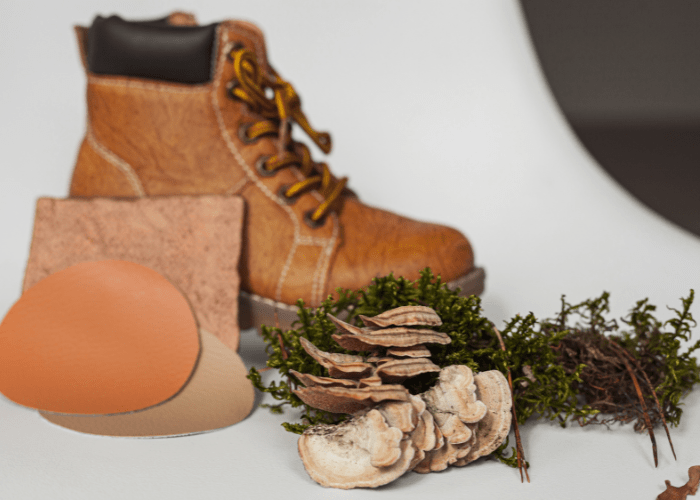
At the same time, these concerns are outdated when they are applied to the entire category. Some next-generation materials are now being engineered specifically for performance, abrasion resistance, flexibility, and scalability. Some commercial bio-based alternatives already perform well in specific applications such as bags, footwear, accessories, interiors, or upholstery.
The mistake is assuming that one poor-quality PU product represents all vegan materials. Consumers are better educated about animal leather. They understand the difference between bonded leather, chrome-tanned leather, vegetable-tanned leather, luxury calfskin, exotic skins, and low-grade leather scraps. But vegan materials are rarely granted the same nuance.
If one vegan material fails, the whole category is blamed.
5. There is still a lack of standardisation and independent testing

For consumers to trust vegan materials, claims need to be verifiable.
This is where the industry still has work to do. Material developers may provide performance data, lifecycle assessments, internal testing, or technical specifications, but there is still no universally understood consumer-facing standard for what makes a vegan leather alternative durable, low-impact, bio-based, biodegradable, circular, or plastic-free.
The need for more standardisation is not limited to consumer marketing. The 2026 review on bio-based leather alternatives highlights the need for standardisation in production processes, physical testing, and international regulatory frameworks to ensure material consistency. [1]
Similarly, Fashion for Good and Boston Consulting Group’s 2025 report on scaling next-generation materials notes that next-gen material adoption is still hindered by financial, technical, and operational obstacles. The report also states that many brands remain unprepared for a material transition and lack guidance on how to drive adoption. [5]
This lack of clarity has consequences. Without recognised testing frameworks and clear public communication, consumers are left to rely on brand claims, influencer opinions, or personal experience. That makes the entire category vulnerable to misinformation, exaggeration, and backlash.
In other words, vegan materials do not just need innovation. They need evidence, verification, and benchmarks.
6. The “natural = sustainable” narrative is difficult to challenge

Another major obstacle is the dominance of the “natural equals sustainable” narrative.
Consumers often perceive natural fibres as more sustainable than synthetic ones. A study of Norwegian consumers found that the majority preferred natural fibres over synthetic materials, even though this preference did not necessarily align with some material sustainability comparison tools or with the complexity of lifecycle impacts. The same study also found that consumer knowledge about fibres and sustainability was low, suggesting that material perception is often shaped by broad assumptions rather than detailed understanding. [6]
Animal-derived materials such as wool, cashmere, silk, and leather benefit from being perceived as “natural,” “traditional,” “heritage,” or “biodegradable.” Vegan materials, especially when associated with synthetics, are often positioned as artificial, processed, lower quality, or environmentally suspicious.
However, “natural” does not automatically mean ethical, low-impact, cruelty-free, or sustainable.
The production of animal-derived materials involves land use, methane emissions, biodiversity impacts, water pollution, tanning chemicals, labor concerns, animal welfare issues, and traceability challenges. At the same time, the production of synthetic and bio-based alternatives presents its own challenges, including dependence on fossil fuels, microplastic concerns, end-of-life limitations, and scalability barriers. [1]
The point is not that one category is automatically perfect and the other automatically harmful. The point is that sustainability cannot be simply determined by whether a material is natural, or not.
7. Leather carries emotional, cultural, and sensory power

Consumer distrust of vegan materials is not only rational. It is also emotional.
Leather has millennia of cultural associations with durability, luxury, craftsmanship, status, sensuality, and permanence. Today, it is used in fashion, furniture, automotive interiors, accessories, and luxury goods not only because of its durability, but also because of how it is perceived and the sensory experience it provides.
This sensory dimension matters. Research into tactile satisfaction in leather products has shown that perceived softness and other affective variables influence feelings of luxuriousness and satisfaction. [7] The 2024 vegan leather perception study also found that negative sentiment toward faux leather was largely driven by sensory qualities. [3]
This helps explain why technical innovation alone is not enough.
Even if a vegan material performs well, consumers may still compare it to the smell, touch, ageing, patina, weight, and cultural familiarity of animal leather. For some customers, leather is not just a material. It is a memory, a status symbol, a luxury code, or an inherited idea of quality.
This is one of the hardest barriers for vegan fashion to overcome. A vegan material cannot only be an alternative to animal leather. It must offer its own sensory and emotional appeal.
8. Luxury still shapes material hierarchy

The luxury industry has played a major role in making leather aspirational. Handbags, shoes, jackets, belts, wallets, car interiors, watch straps, and furniture have all reinforced the idea that leather belongs to the language of premium quality. Even when consumers object to animal cruelty or environmental damage, they may still pick animal leather because of it’s perceived value and status.
This creates a hierarchy in which animal leather is treated as the original and vegan materials as substitutes.
That hierarchy is now being challenged by material innovation, but it has not disappeared. For vegan materials to gain broader trust, they must move beyond defensive comparison and become desirable in their own right. That means better design, better storytelling, better testing, better tactile experience, and more precise language.
The goal should not be to endlessly imitate leather, but rather to create materials that consumers trust, understand, desire, and know how to care for.
9. Social media has made material debates more polarised

Finally, consumer distrust is amplified by social media.
Short-form content often rewards simple oppositions: natural vs synthetic, leather vs plastic, real vs fake, sustainable vs greenwashed. Nuance does not get viral. A single video showing a peeling faux leather jacket can reinforce the belief that all vegan materials are low quality. A single viral post about plastic pollution can turn into a rejection of all synthetic materials, regardless of use case, durability, or lifecycle context.
At the same time, some anti-vegan narratives are now tied to broader cultural trends that idealise animal-derived, “ancestral,” or “natural” products. In this environment, vegan materials are not only competing with leather. They are competing with nostalgia, luxury symbolism, anti-synthetic sentiment, and distrust of modern production systems.
This makes transparent communication even more important.
Bottomline
Consumers still do not trust vegan materials because the category has been too broadly defined, too inconsistently communicated, and too often associated with low-quality synthetic substitutes. This distrust is far from addressed.
However, the next generation of vegan materials is already more diverse than mainstream perception suggests. Some are bio-based, some are partially bio-based, some are recycled, some are plastic-free, and some are being developed with significantly improved performance and scalability. The challenge now is to communicate these distinctions clearly, honestly, and without overpromising.
For vegan fashion to move forward, brands must stop relying on “vegan leather” as a vague marketing shortcut. They need to explain what their materials are made from, how they perform, what their limitations are, how they should be cared for, and what evidence supports their claims.
The vegan fashion industry cannot afford to operate on vague claims. It needs specificity, evidence, and authority. Trust will not be built by calling every alternative “sustainable,” but rather through a commitment to transparency, independent testing, material literacy, and ultimately, better design.
Footnotes
- Ewa Oleksińska-Merida, Michał Puchalski and Lucyna Herczyńska, “Bio-Based and Sustainable Alternatives to Conventional and Synthetic Leather,” Materials, 19(6), 1198, 2026. (mdpi.com)
- Textile Exchange, Materials Market Report 2025, 2025. (textileexchange.org)
- Minji Kim, Rubi Lee and Shinjung Yoo, “A Study on Consumer Perceptions and Preferences for Vegan Leather,” Journal of the Korean Society of Clothing and Textiles, 48(6), 1039–1055, 2024. (khu.elsevierpure.com)
- European Commission, “Green Claims,” 2023. (environment.ec.europa.eu)
- Boston Consulting Group and Fashion for Good, Scaling Next-Gen Materials in Fashion: An Executive Guide, 2025. (bcg.com)
- Ann Sigrid Sigaard and Kirsi Laitala, “Natural and Sustainable? Consumers’ Textile Fiber Preferences,” Fibers, 11(2), 12, 2023. (mdpi.com)
- Wonjoon Kim, “A Study on the Subjective Feeling Affecting Tactile Satisfaction of Leather in Automobile: A Structural Equation Modeling Approach,” International Journal of Industrial Ergonomics, 84, 103167, 2021. (sciencedirect.com)
Author

Discover more from Vegan Fashion Repository
Subscribe to get the latest posts sent to your email.