
In the quest to reduce fashion’s impact on the planet, people and animals, circularity has emerged as the promise of systemic change. It requires efforts that extend far beyond a company’s air-conditioned headquarters to encompass the entire supply chain, with a strong focus on raw material sourcing and end-of-life treatment, and, last but not least, regular engagement and commitment from people in all their decision-making capacities – consumers, creatives and producers, advocates and educators, and policymakers – often wearing more than one of these hats at the same time.
Just the thought of such complexity is enough to intimidate any brand wondering where to begin.This is why the second annual Responsible Fashion Business conference by Fashion Revolution Polska was dedicated to performing an open surgery on the current opportunities and challenges facing responsible fashion businesses in Poland. ‘I believe these conversations are facilitating the shift – and will ultimately translate into business decisions,’ says Ewelina Antonowicz, CEO of Fashion Revolution Polska. Across eight hours, problems were discussed, solutions analysed, and ideas emerged across five key areas: creating local circularity communities; educating stakeholders; scaling innovation through data and science, including preparing for the implementation of mandatory Digital Product Passports (DPPs); scaling a business while staying true to one’s ethical values; and, last but definitely not least, making the case for genuine accessibility.
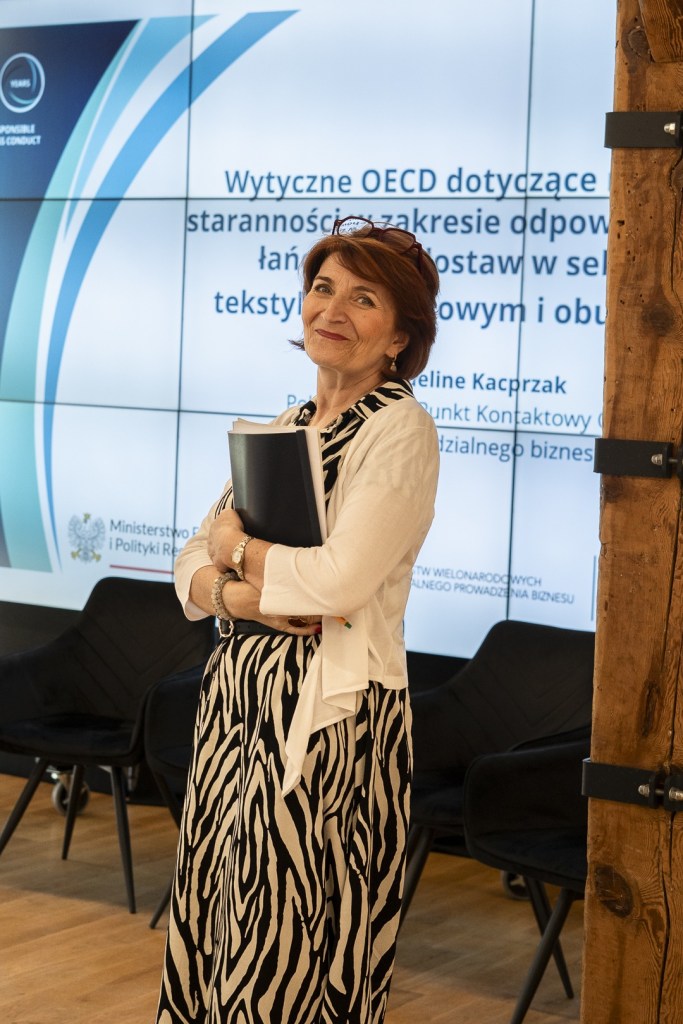
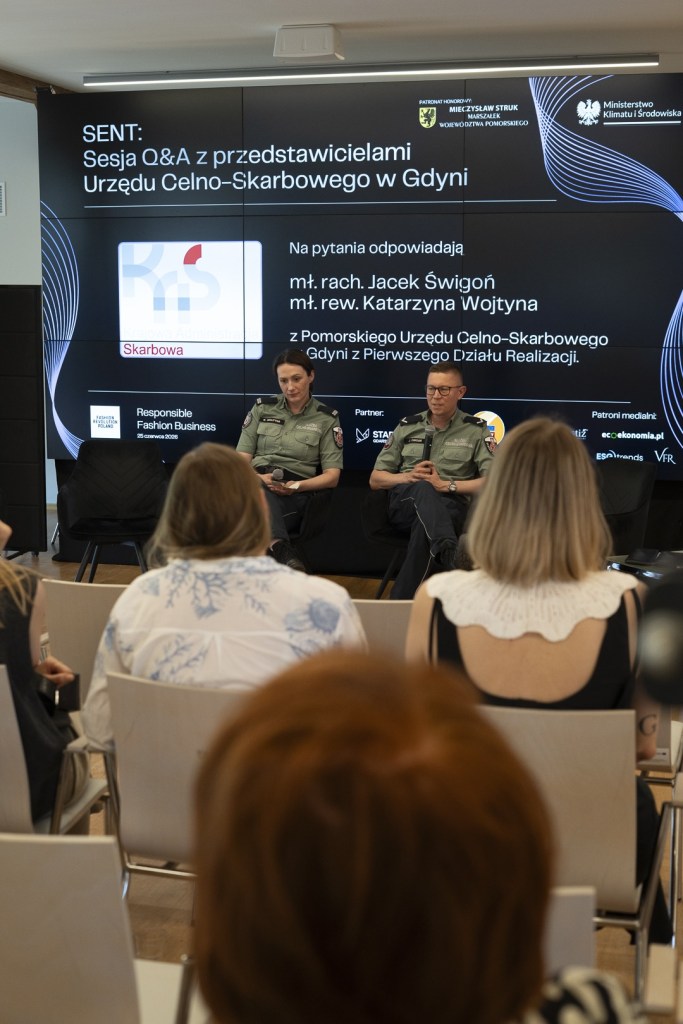
The programme also featured a Q&A session with officers from the Customs and Tax Office, who answered the most pressing questions about the new mandatory transit reporting requirements, as well as a bite-sized introduction to the basic principles of the OECD framework delivered by Dr Jacqueline Kasprzak.
Creating local circularity communities
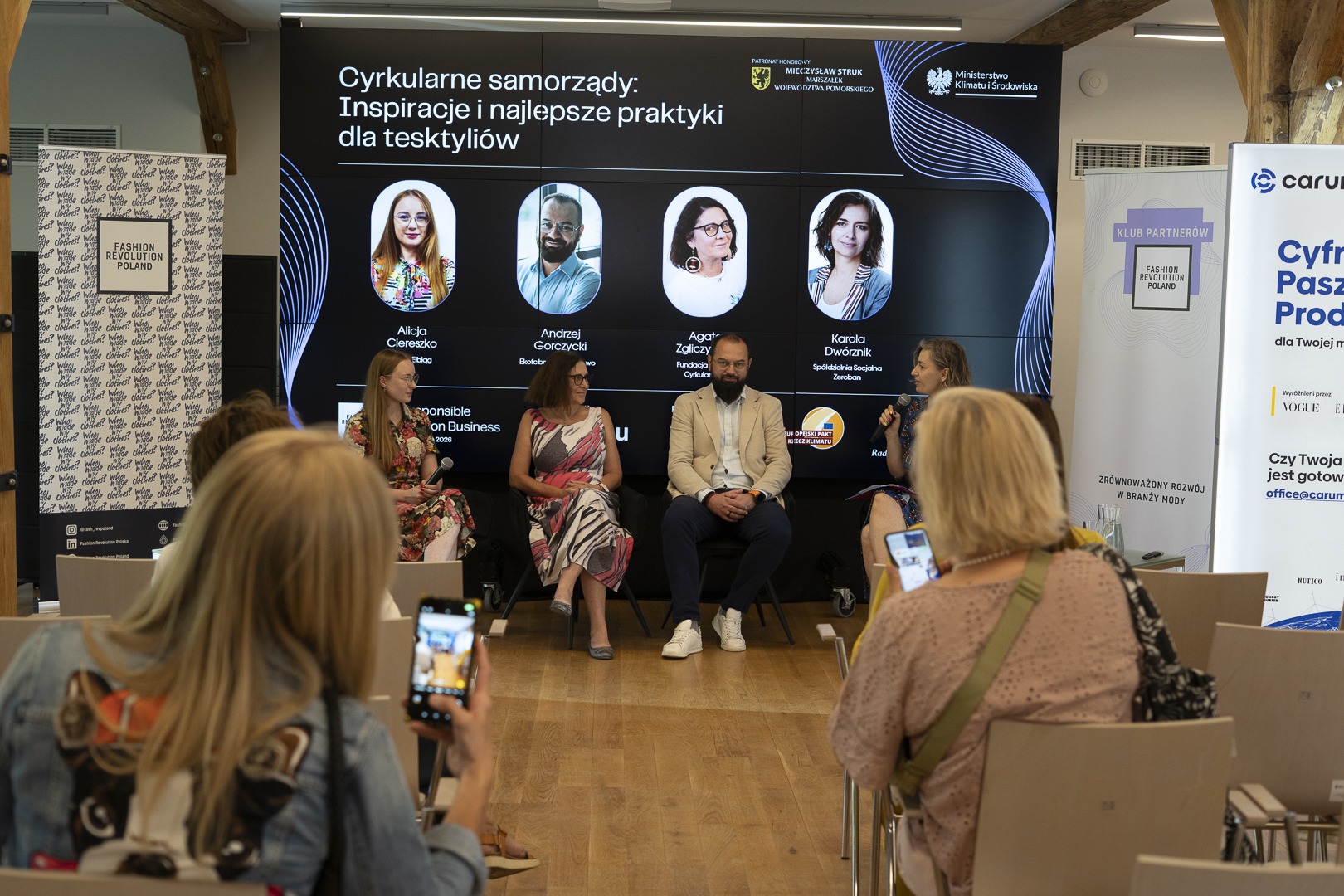
In Wejherowo, a town of approximately 40,000 people located around 30 km from the Baltic coast, the 17th edition of Galeria Wejherowskie Klamoty – a local circular fair – took place on 27 June 2026, just two days after the conference. This is not a one-off initiative, but a long-running format that has become embedded in the local calendar. Organised by Ekofabryka Wejherowo, which collects unwanted items, repairs them and offers them for sale, with all proceeds donated to local charities, the 17th edition marked a significant milestone: it brought the initiative’s total donations to more than PLN 300,000. It is a prime example of how circular infrastructure becomes sustained practice rather than isolated action. ‘It’s about showing people that, at a time when buying something new is easier than mending what you already own, you can still choose to do things differently,’ says Andrzej Gorczycki, CEO of Ekofabryka Wejherowo.
It is these kinds of initiatives that turn circular fashion from a far-fetched slogan into a community-building practice.
‘Libraries and cultural centres have enormous potential to strengthen local communities,’ says Agata Zgliczyńska, Co-Founder and President of The Circular Fashion Foundation, pointing to initiatives such as Make-A-Thek. These not only empower local communities but also help build collaborative networks between different regions across Europe.
From fairs to libraries and educational events, organising a community-focused circular initiative is all about – apart from securing funding – bringing together people who are willing to go the extra mile, whether by stepping outside their comfort zone or simply giving up their evenings and weekends to contribute. The support of local government can also make or break initiatives like these.

In Poland, the local authorities of Łódź, Wejherowo and Elbląg have long been recognised for their active support of circularity initiatives extending well beyond fashion. In Elbląg, for example, the pioneering Responsible Fashion Map (Mapa Mody Odpowiedzialnej) – exactly what it sounds like: a city-endorsed map of local circular fashion brands, repair workshops and mending services, developed in collaboration with Fashion Revolution Polska – is now live and already serving both local residents and curious visitors.
‘If we want to get someone involved – whether an individual, an organisation or a government body – we need to make sure they can see the value of getting involved,’ says Zgliczyńska. Then, once everything is in place, comes the second part – spreading the word. ‘We need to show people that buying less and choosing second-hand is actually cool – so much so that it has become a trend in its own right, and many professionals now make a living from it. It’s not a fad; it’s an attractive alternative to buying new,’ she adds.
‘The biggest challenge is keeping the conversation going – educating people and raising awareness so that repairing, reusing and consuming more responsibly become part of everyday life,’ says Gorczycki.
If, despite the coordinated events and public infrastructure, it all still sounds rather grassroots, that is because, at its core, it is.
Educating stakeholders
‘It all comes down to education and grassroots movements,’ says Karola Dwórznik of Spółdzielnia Socjalna Zeroban. While the generations raised in the 20th century are generally familiar with a needle and thread – and some even with sewing machines, making their expertise especially valuable in initiatives like these – it is not just about teaching practical skills to today’s young people. ‘Kids are now so overexposed to everything, and that’s exhausting. We should help them focus their attention,’ says Natalia Gwiazdowska of Państwowe Szkoły Budowlane, a sculptor and circular fashion educator.
There is, however, one area that clearly captures their imagination. ‘It’s not even garments themselves so much as biomaterials, the chemistry behind things, and all those “did you know…?” moments that young people are naturally drawn to. And that’s very telling,’ she adds.
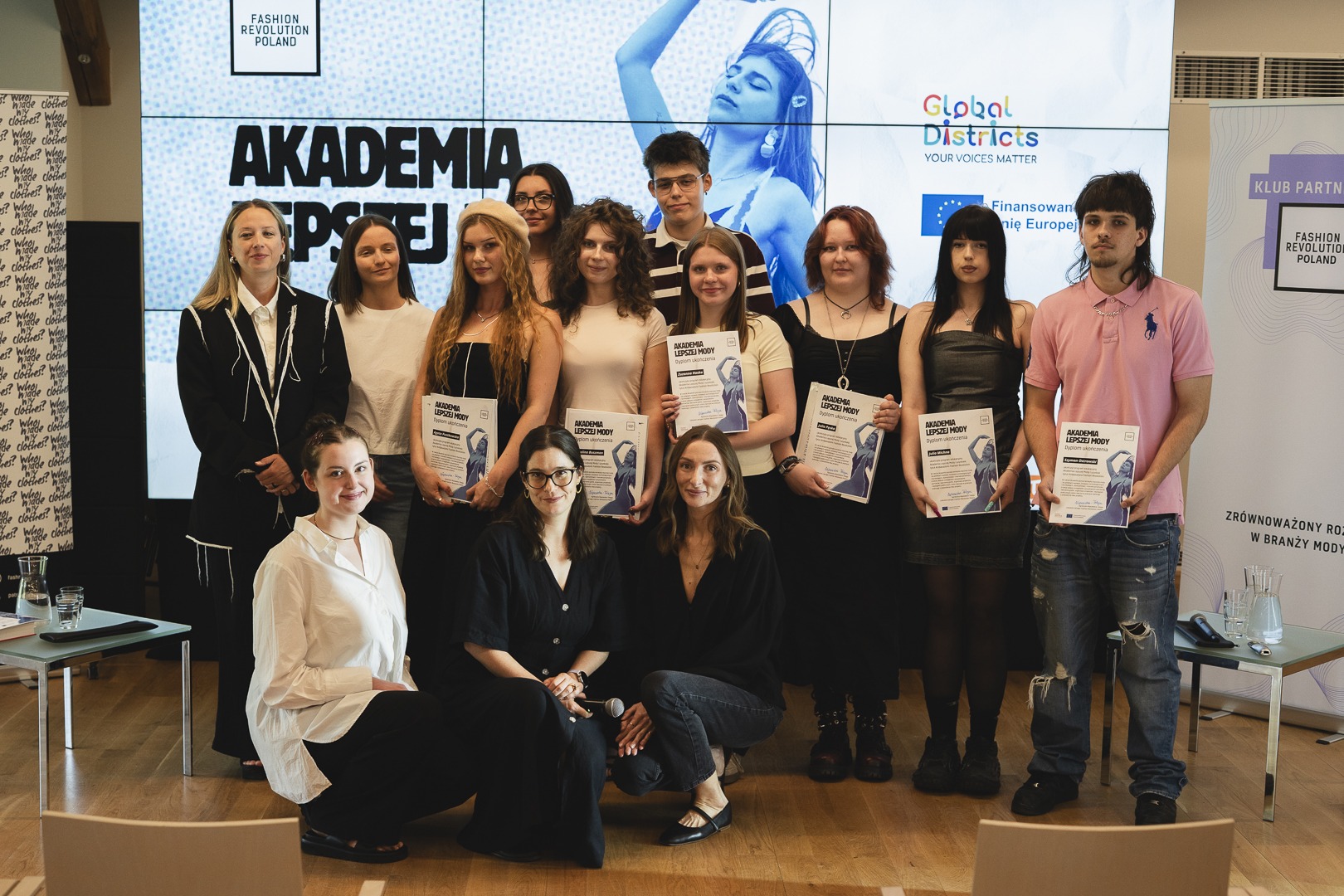


Fashion Revolution Polska, in collaboration with GLOBAL DISTRICTS, has been running the Academy of Better Fashion (Akademia Lepszej Mody) in schools across Kociewie and Tczew. The programme introduces mostly secondary school and university students to the principles of responsible fashion – from materials to production processes – while mentoring them in developing their own community initiatives, including clothing swaps (Mateusz Filaber and Agata Pustkowska) and educational workshops (Karolina Pushman and Zuzanna Haska). A special mention goes to Mateusz Filaber for bringing genuinely professional practices into his clothing swap, including the use of swapping tokens and a well-organised customer experience.
Among the points that every panellist agreed on was that, for education to be effective, it has to become a regular, long-term initiative rather than a series of one-off campaigns. ‘It’s vital not only to educate users, but also the educators, who will carry the torch long after individual initiatives or organisations have disappeared,’ says Zgliczyńska.
Education should also extend beyond mending and upcycling. ‘We need to educate consumers to expect producers to do the right thing when it comes to processes and data,’ says Maciej Bułkowski, CEO of Caruma.
“The role of academics goes beyond teaching and research. Our mission should also include active engagement in social and economic initiatives” says Professor Anna Białk-Bielińska, Head of the Department of Environmental Analysisat the Faculty of Chemistry at the University of Gdańsk.
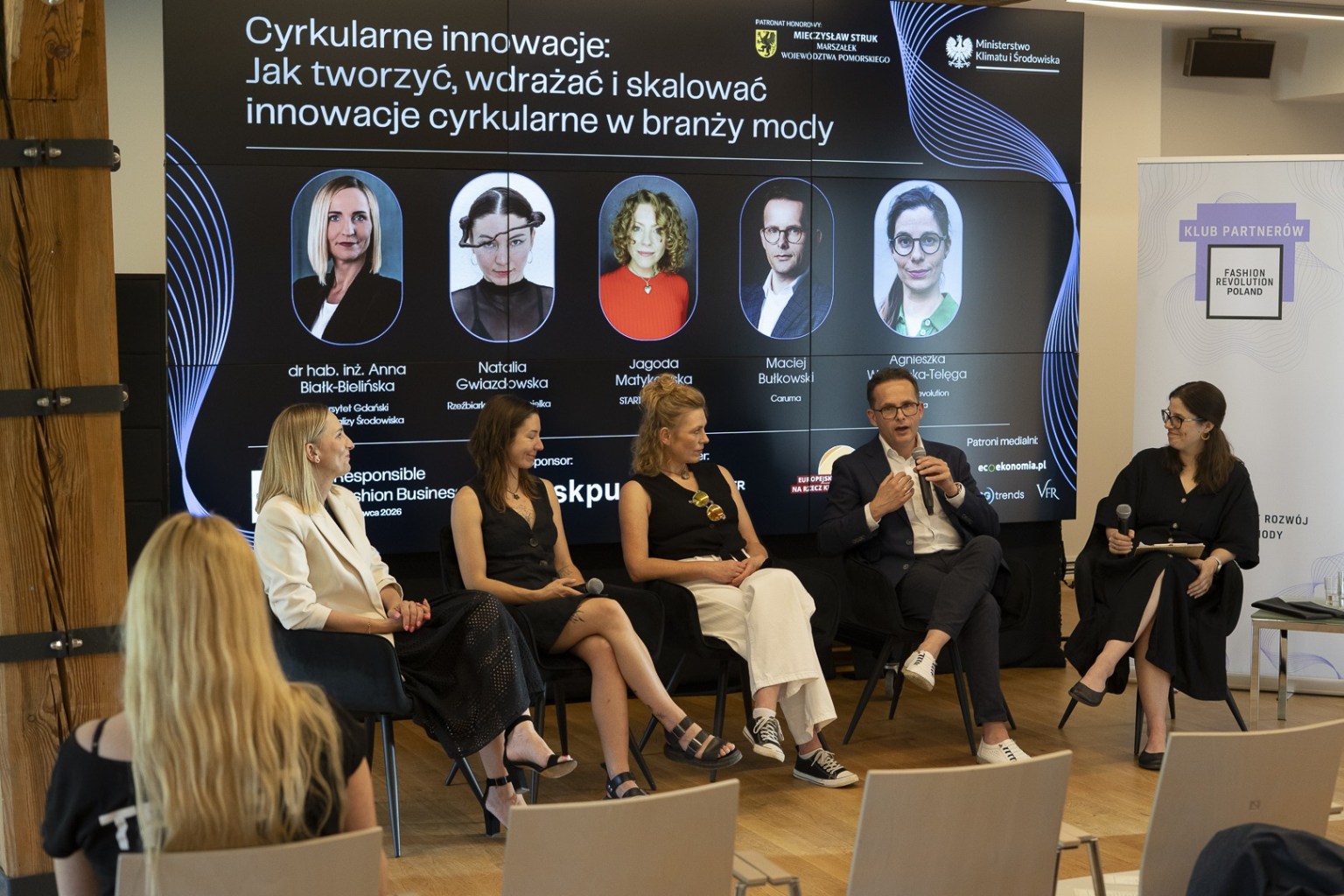
Scaling innovation: the role of data and science in enabling circularity
Over the past few years, scientific research has fundamentally reshaped the direction in which fashion is moving. Collaboration between scientists and fashion businesses has become an increasingly common practice. Poland already offers two compelling examples of what this collaboration can look like in practice: Nutico and MycoRenew, both co-founded by academics with established research careers.
Nutico was developed within Bio2Materials by a team of co-founders: Professor Artur Bartkowiak, a polymer and cellulose scientist at the Faculty of Food Sciences and Fisheries at the West Pomeranian University of Technology in Szczecin; Aleksandra Kantor; and Katarzyna Szpicmacher.
MycoRenew was founded by Tomasz Mierzwa and Professor Katarzyna Turnau, ranked among the world’s top 2 per cent of scientists according to Stanford University’s analysis. Turnau is head of the Institute of Environmental Sciences at the Faculty of Biology at Jagiellonian University. Her research focuses on mycology, plant–microorganism interactions, environmental protection and phytoremediation.
The outcomes speak for themselves. Nutico is successfully scaling a polyurethane-free leather alternative made from chocolate husks, without using water in the manufacturing process. Meanwhile, MycoRenew has developed a technology capable of transforming textile waste into reusable resources within days or weeks, rather than leaving it to sit in landfill for decades, centuries or even millennia, depending on the fibre composition and chemical treatments involved.
For both companies, the biggest barrier is neither research and development nor scaling – both have already demonstrated that these are achievable. ‘The market is ready for these innovations,’ says Marta Gos, Creative Director and Marketing & Sales Lead at Nutico. The greatest challenge, she explains, is visibility and perception: cutting through the marketing noise while responding to vastly different public expectations. Tomasz Mierzwa has experienced the same spectrum of reactions, from the enthusiasm of people inspired by Netflix’s Fantastic Fungi to the fears of audiences whose frame of reference is The Last of Us.


Then comes the inevitable question of performance – and that is where data becomes indispensable. Both Nutico and MycoRenew are research-driven companies with extensive scientific evidence capable of addressing even the most detailed technical questions. But what happens when the data need to be gathered outside the laboratory—from supply chains that were never designed to collect, let alone integrate, this kind of information?
As straightforward as collecting data may sound, the current discussions surrounding ESPR and Digital Product Passports (DPPs) demonstrate that preparing for these requirements is anything but straightforward.
‘Data is always a problem,’ says Bułkowski. ‘Firstly, there is currently very little trust between the participants in this ecosystem. Secondly, there is barely any data to begin with.’
No detailed guidelines have yet been established specifying exactly which data will become mandatory or how businesses should obtain it. At the same time, recent reports exposing inaccurate and misleading fibre composition labels have only intensified the debate. ‘We have a serious problem with trusting what is written on clothing labels,’ says Agnieszka Wąsowska-Telęga of Fashion Revolution Polska.
‘Producers should be required to disclose certain information – including fibre composition and the chemicals used in textile production. And the only way to make that happen is through legislation,’ says Białk-Bielińska.
Apart from the obvious reluctance to share commercially sensitive information – what Bułkowski describes as a ‘grey area of transparency’ – some data also constitute legitimate trade secrets.
Even so, ‘There is no closed loop without data sharing,’ he argues.
At the heart of the discussion lies the Digital Product Passport. ‘Let’s not think of the DPP simply as another mandatory regulation. It is a tool for building relationships with users,’ says Bułkowski.
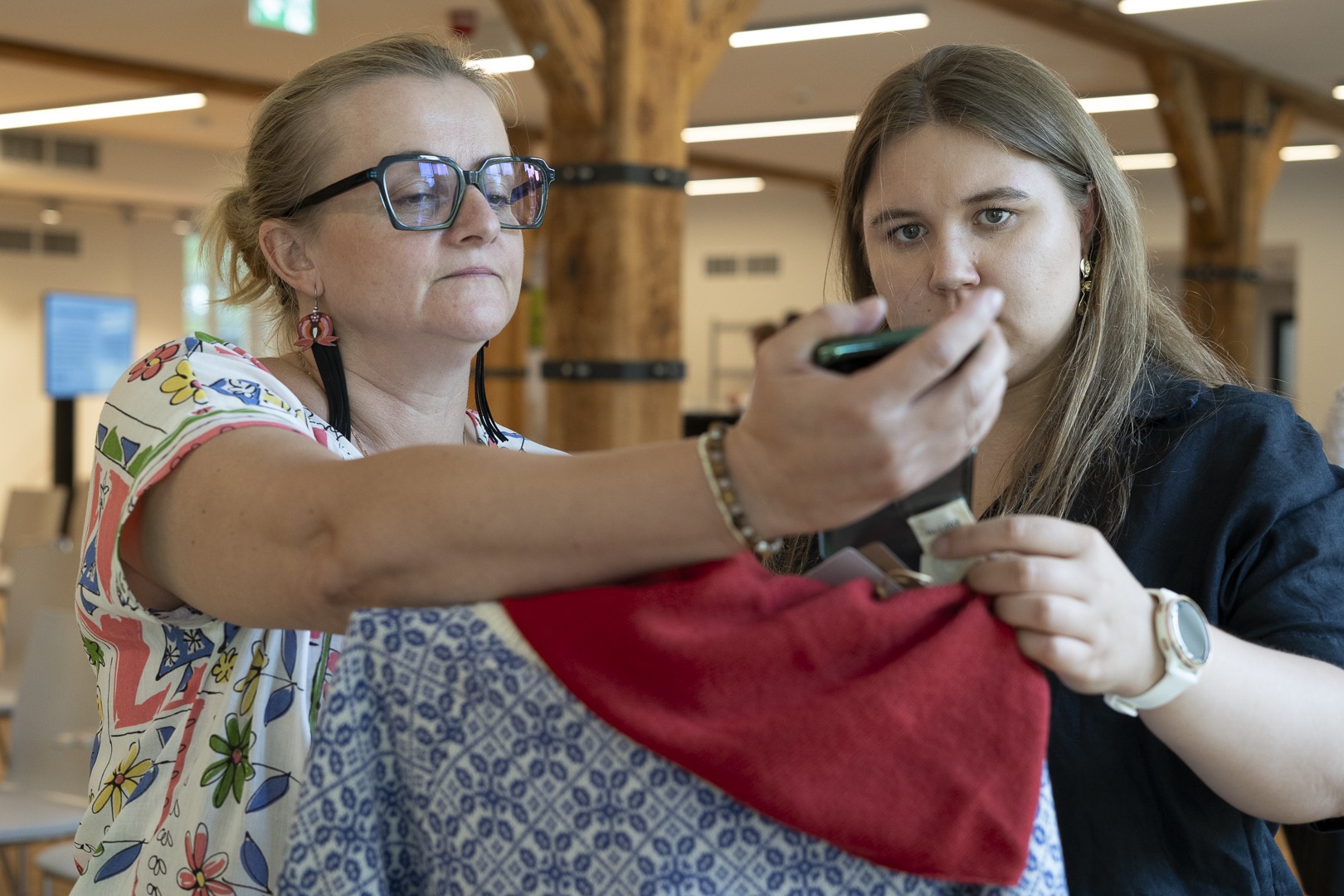

‘We see the DPP as a tool for delivering transparency, which for us means maintaining a relationship with the customer and providing support long after the original purchase has taken place,’ adds Katarzyna Twardowska, co-founder of Kopyto, the only Polish brand to have obtained the RWS certification.
With product information becoming permanently available throughout a product’s lifetime, every manufacturer will inevitably be held accountable across the entire life cycle of its products. ‘This represents a fundamental change to company processes and the way businesses operate. Senior management must understand that this transformation is coming if companies want to remain competitive and, hopefully, stand out in the market,’ says Bułkowski.
The ultimate goal is to bring organisations and individuals together into a functioning ecosystem, built from components that remained deliberately fragmented for decades. ‘We are still at the beginning of this journey, learning from one another as we go. As we work with fashion brands to develop and implement Digital Product Passports, we are constantly learning more about how they produce and operate,’ says Bułkowski.
In Poland, ecosystems of this kind are already beginning to emerge. One example is Gdańsk Bay Tech, a Pomeranian initiative facilitated by Jagoda Matykowska from Inkubator Starter. One particularly interesting observation is that, in 2026, a well-prepared start-up is no longer looking for funding alone. It is equally looking for know-how, collaboration opportunities and access to strong professional networks.
Business, values and authenticity
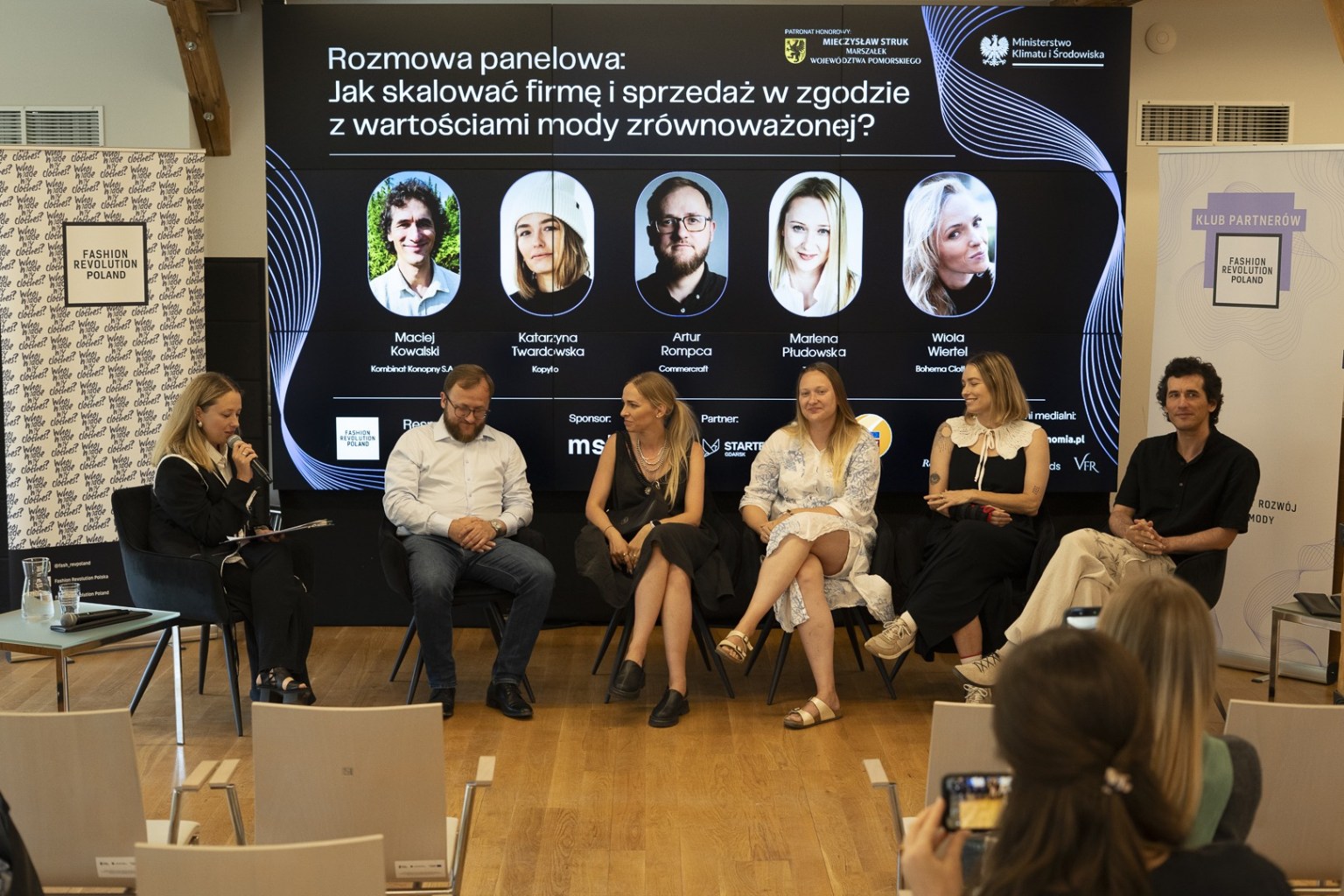
In fact, partnering and collaborating with people who share your values is one of the key ways of staying true to those values in business. For Kopyto, this means carefully selecting partners. ‘RWS certification, while comprehensive, does not cover the way the fibre is processed. That’s why we have a close relationship with a particular spinning mill in Italy which, on top of being RWS-certified, also shares our values when it comes to reducing resource use and using the safest dyeing components,’ says Twardowska. ‘At the end of the day, we just want to be able to look ourselves in the mirror and say we’ve done the best we could with the knowledge we had. Fashion doesn’t need more new things. What we need are new solutions and better alternatives,’ she adds.
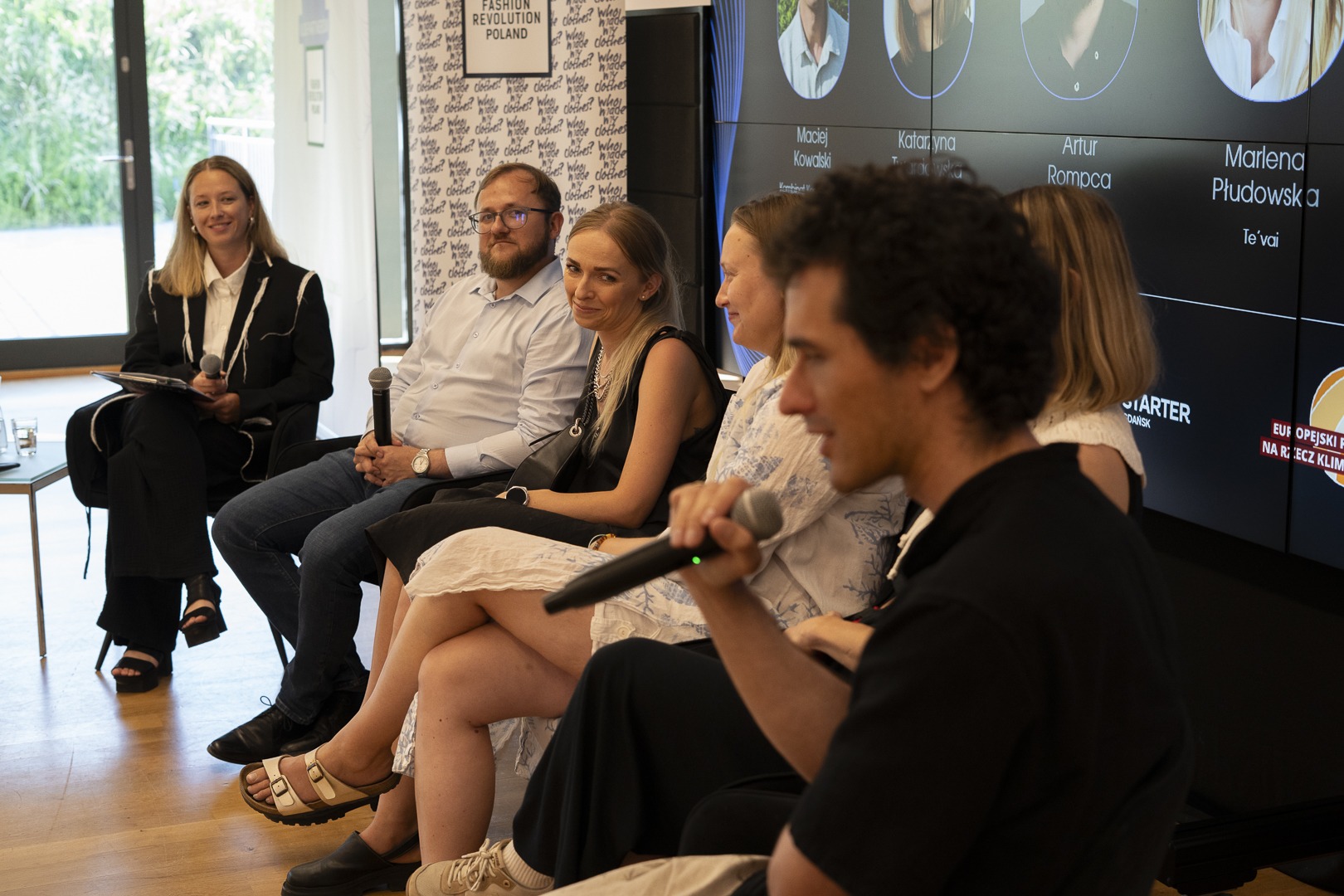
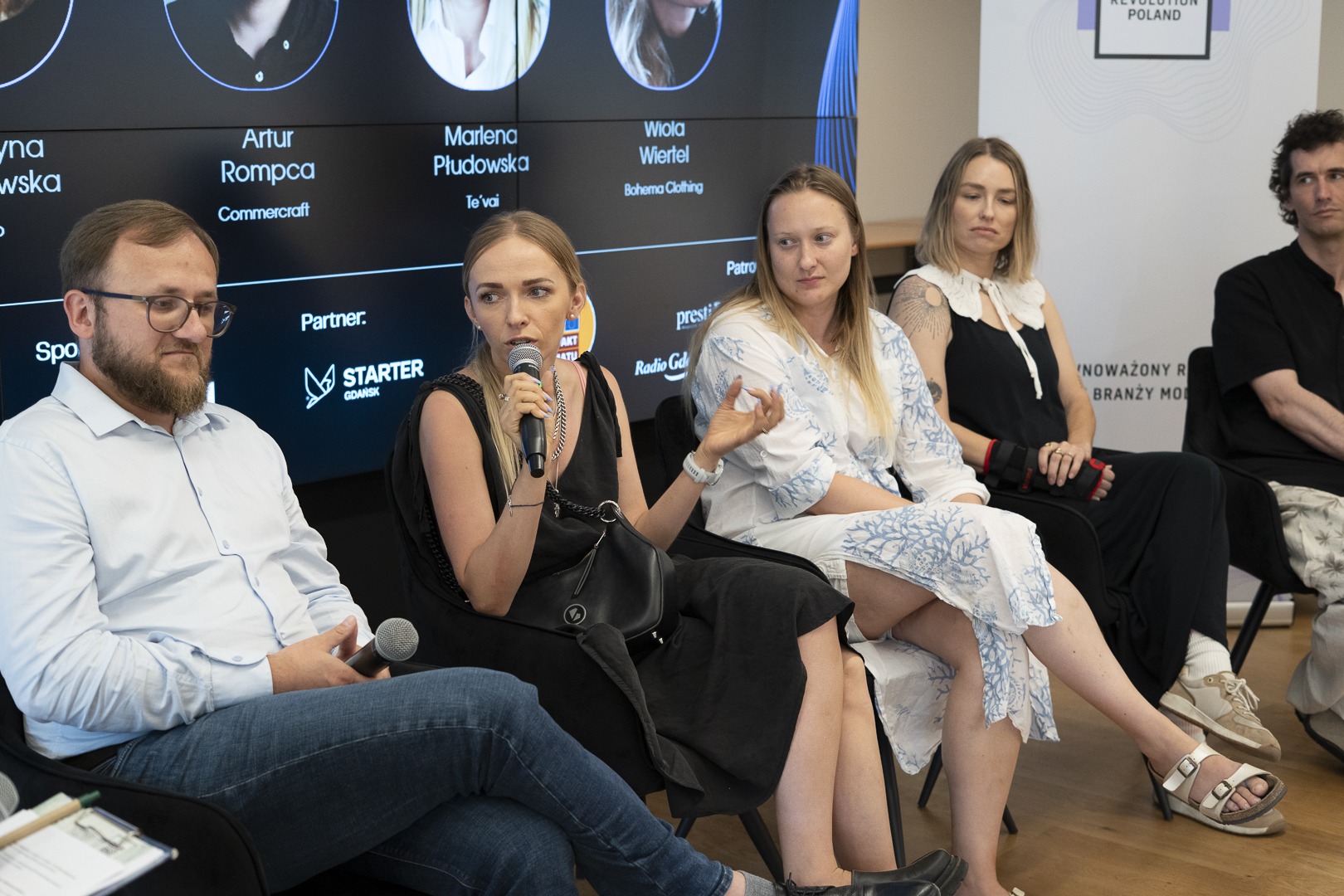
For Wiola Wiertel, co-founder and CMO of Bohema Clothing, it was very much a family effort – a quest, back in 2018, to do something unprecedented at the time: creating designer shoes made from neither animal leather nor PU/PVC alternatives. “Back then, we had no one to ask how to make shoes out of pineapple or cactus leather. My father-in-law had to learn everything from scratch because working with these materials required a completely different approach. There were challenges, from finding the right angle at which to cut the material so that it would drape and hold its shape while minimising waste, to choosing the right adhesives and temperatures,”says Wiertel.
“Now, he is an expert in plant-based leather alternatives and shares this knowledge with the other artisanal workshops we collaborate with.”
Staying true to your values is always a delicate balancing act. In fact, authenticity – alongside sustainability – may be one of the most overused, if not outright abused, words in the fashion industry’s vocabulary, to the point where many brands now avoid using it altogether. ‘Authenticity is about doing something consistently and doing it well,’ says Maciej Kowalski, founder and CEO of Kombinat Konopny.
In 2026, Kowalski successfully took the company public, with more than 2,500 crowdfunding investors placing their trust in his vision: running a hemp farm in Gronowo Górne near Elbląg and processing the fibre into textiles, alongside a range of other legal hemp-based products, including oils not intended for cooking.
‘The true value of a business is not what it’s worth on paper, but the trust consumers place in it,’ says Marlena Płudowska, founder of Te’vai. ‘I’m a water person, and naming my brand te’vai – “water” in Tahitian – immediately signals that what we do is about much more than a piece of clothing.’
These success stories inevitably raise the elephant in the room. Are they simply exceptions to the rule? Is it really possible to build a successful business while remaining true to your values?
The short answer is yes. The longer answer is rather more nuanced.
‘What sustainability really means is building a business that can sustain itself without doing the wrong things. Actually, the worse your competition behaves, the easier it becomes to stand out for the right reasons. You just have to be decent and honest,’ says Kowalski.
The less glamorous reality is that most businesses built around doing the right thing begin as side hustles or passion projects. During the early years, founders often juggle full-time jobs alongside their businesses – which, ironically, is anything but sustainable for their own work–life balance. The real turning point comes when the business finally takes off or secures enough funding to do so.
‘Getting funding is an obligation, not an achievement,’ says Kowalski.
To scale Kombinat Konopny, he initially pitched to traditional investors. ‘Men in suits,’ as he describes them. It did not work out. ‘I don’t believe in projecting the future with spreadsheets. If you’re driving a car with two pairs of hands on the steering wheel just to reach a projected destination, it’s only a matter of time before the bank becomes the third pair.’
Instead, he turned to crowdfunding.
‘When I launched the crowdfunding campaign, I actually published a list of all the reasons why you shouldn’t invest in Kombinat Konopny,’ says Kowalski. ‘I was very clear that investment wouldn’t come with a say in how the company was run, that I would retain full control over decision-making, that I couldn’t guarantee any return, and that it would be one hell of a ride – including all the challenges that come with growing hemp, which is still a controversial plant and tends to attract attention from certain government offices. If, after reading all that, someone still wanted to invest, then that was exactly the kind of investor I wanted.’
‘The investment landscape is so crowded with pseudo-innovations that raising capital has become a real challenge, one that requires you to think outside the box,’ says Płudowska, who, interestingly, worked in finance before pivoting to saving coral reefs one garment at a time. ‘And the kind of business we run isn’t for everyone, so your idea has to make business sense.’
‘It is possible to build a business around your values, as long as those values are aligned with a long-term strategy,’ says Artur Rompca, founder of Commercraft, a D2C e-commerce agency.
Long term is the key phrase here. Kopyto is celebrating its tenth anniversary. Bohema Clothing has now been operating for eight years. The second ingredient, alongside staying true to your values, is finding the right customer.
Once you have the right customer, you no longer compete on price alone.
‘I once offered a friend a friends-and-family discount, but she insisted on paying full price because she knew part of the money would support our coral reef conservation work. That was the moment I realised people wanted to be part of it, and we decided to introduce a no-discount policy,’ says Płudowska.
“We couldn’t compete with fast fashion on price even if we wanted to – and we don’t – because that would inevitably mean compromising on quality. Our focus is on quality and ensuring that our designs can be worn for years. We are committed to paying fair wages, choosing high-quality local components made from the best certified materials, and creating premium products built to last,” adds Wiertel.
‘It’s not about making something cheap, but rather making it affordable,’ says Twardowska. ‘From the very beginning, you need to be absolutely clear about who your customer is. Most brands simply don’t have the budget to compete for Google search traffic, so you need to find your niche and build trust, not just visibility.’
Making the case for accessibility
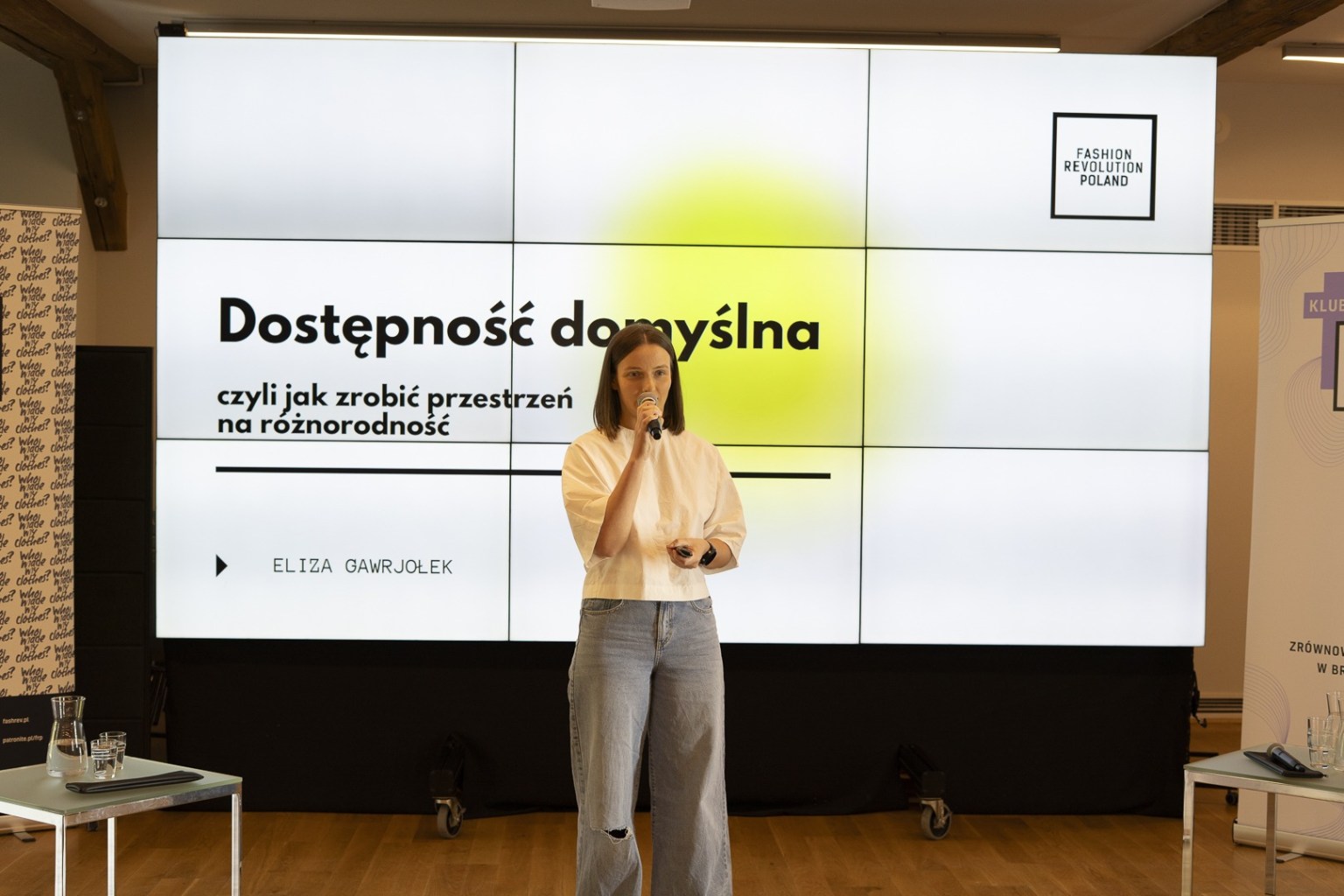
There is another niche that has yet to enter the mainstream: designing fashion for people for whom conventional clothing presents a technical barrier rather than a means of self-expression.
“There is no such thing as an ‘average user’,” says Eliza Gawrjołek, curator of the LUKA exhibition on accessible fashion at Gdynia Design Days. “Human bodies constantly change. It can be ageing, pregnancy, temporary injuries or permanent disabilities. You cannot talk about circularity without recognising all the different changes people go through during their lives.”
“Disability is not merely a medical issue,” she adds. “It often emerges from a mismatch between people and the environments, products and systems designed around them.”
The goal is not always to create specialist clothing, but to rethink how fashion can better respond to changing bodies and diverse experiences within a circular system through alterations, repairs, modularity and adaptation. Sometimes that simply means changing a fastening or adding a zip. Sometimes it requires much more substantial modifications.
“Accessibility is not a product feature; it is the outcome of good design,” says Gawrjołek. “We learn the most by observing how people adapt the world around them, because the world was never designed with them in mind.”
Sometimes, meaningful change begins simply by listening to one person. That was the experience of USZYTE, a local Gdańsk brand, which decided to adapt one of its signature sweatshirts after listening to the needs of a single customer. “Instead of asking, ‘How do we adapt the product?’, we should be asking, ‘Who might still struggle to use it?'” says Gawrjołek.
…


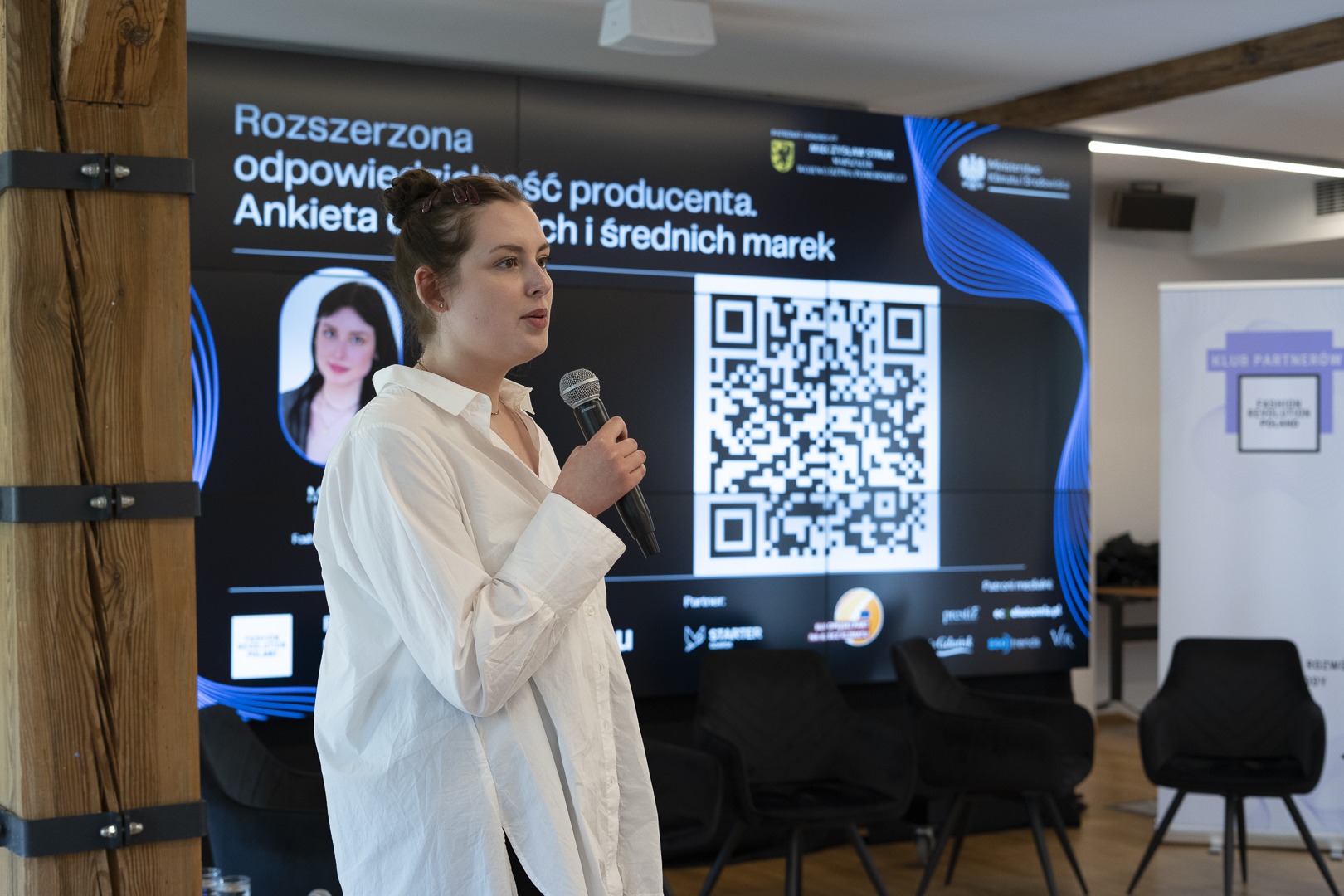
One thing that often becomes clear in discussions around sustainable fashion is that the industry is still falling short in making accessibility and the reduction of fashion’s impact a truly shared concern. Yet it could hardly be more urgent.
As I was writing this article in the last days of June 2026, Europe was entering its seventh consecutive day of an extreme heatwave, with temperatures reaching 39°C in the shade for four days in a row. Every year brings new record-breaking temperatures and longer periods of drought. Just as wars over oil shaped much of the past decades, access to water is increasingly becoming a source of geopolitical conflict1. Meanwhile, Arctic sea ice is projected to disappear during summer by 20302, further accelerating warming as less solar radiation is reflected back into space.
Even a brief overview of the current climate crisis would require an article of its own. For now, the question is more immediate, and perhaps more difficult: how do we begin translating awareness into something that actually limits the damage.
Fashion has rightfully earned its reputation as one of the world’s most resource-intensive and competitive industries. This is why we, at Vegan Fashion Repository, cannot help but emphasise how refreshing it is, every single time we step into a room full of professionals who are genuinely committed to sharing their know-how and experience. To say that collaboration is the most powerful leverage is one thing; to witness those professional relationships begin and flourish is quite another. And that, perhaps, is the clearest proof that change is already happening.
***
Further reading:
- https://apnews.com/article/pakistan-wars-india-water-weaponization-indus-1f8c5fff1fccdfec03192811e80ea6b7 ↩︎
- https://www.arcticwwf.org/our-priorities/last-ice-area/ ↩︎
Author

Discover more from Vegan Fashion Repository
Subscribe to get the latest posts sent to your email.