
After over a year of running Vegan Fashion Repository, and many more observing vegan fashion brands come and go, rebrand and de-brand, we have decided to launch a new investigative series, The Vegan Problem, examining transparency, ethics, and accountability in vegan fashion.
Updating and verifying the Vegan Fashion Repository Directory regularly—every month—has raised disturbing questions, not only about individual brands but also about how the very term “vegan” is defined, communicated, and enforced across the fashion industry.
In other words, we are about to break down some highly questionable patterns of veganwashing. By shedding light on our observations of frequent issues, challenges, and structural weaknesses within the ethical fashion sector, we aim not to undermine progress, but to protect it by pointing out what brands and consumers should watch for in the pursuit of better production and consumption practices. Alongside critical analysis, The Vegan Problem series will explore possible solutions, paths forward, and reasons for cautious optimism for the future of vegan and ethical fashion.
When brands quietly quit being vegan
Since 2014, Veganuary has become an exciting opportunity to promote cruelty-free living. Vegan brands amplify their messaging, multiply their campaigning efforts, and consumers are given an extra push to actively seek vegan alternatives in what they eat, wear, and surround themselves with every day.
However, it has increasingly become apparent that contradictions often surface. Similar to greenwashing, veganwashing thrives in grey areas where definitions are vague, certifications are misunderstood or abused, and marketing moves faster than accountability.
During our latest directory updates, we noticed a disturbing pattern: a growing number of originally vegan brands have either stopped referring to themselves as ‘vegan’ or continue to do so publicly—on social media, in branding, or through certifications—while quietly introducing animal-derived materials into their collections.
In many cases, this shift is not clearly communicated. Consumers often discover it only when they reach a specific product page and check the materials section, frequently hidden behind a dropdown. There, they learn that a jacket, shoe, or, most commonly, a bag contains real leather—mostly recycled or certified.
Needless to say, no vegan would ever consider any real leather—recycled or certified—as an ethical material. At Vegan Fashion Repository, we ensure transparency and document these changes publicly in our Directory Updates, allowing readers to verify them independently.
The “almost vegan” materials — and why we created a Vegetarian Brands Directory
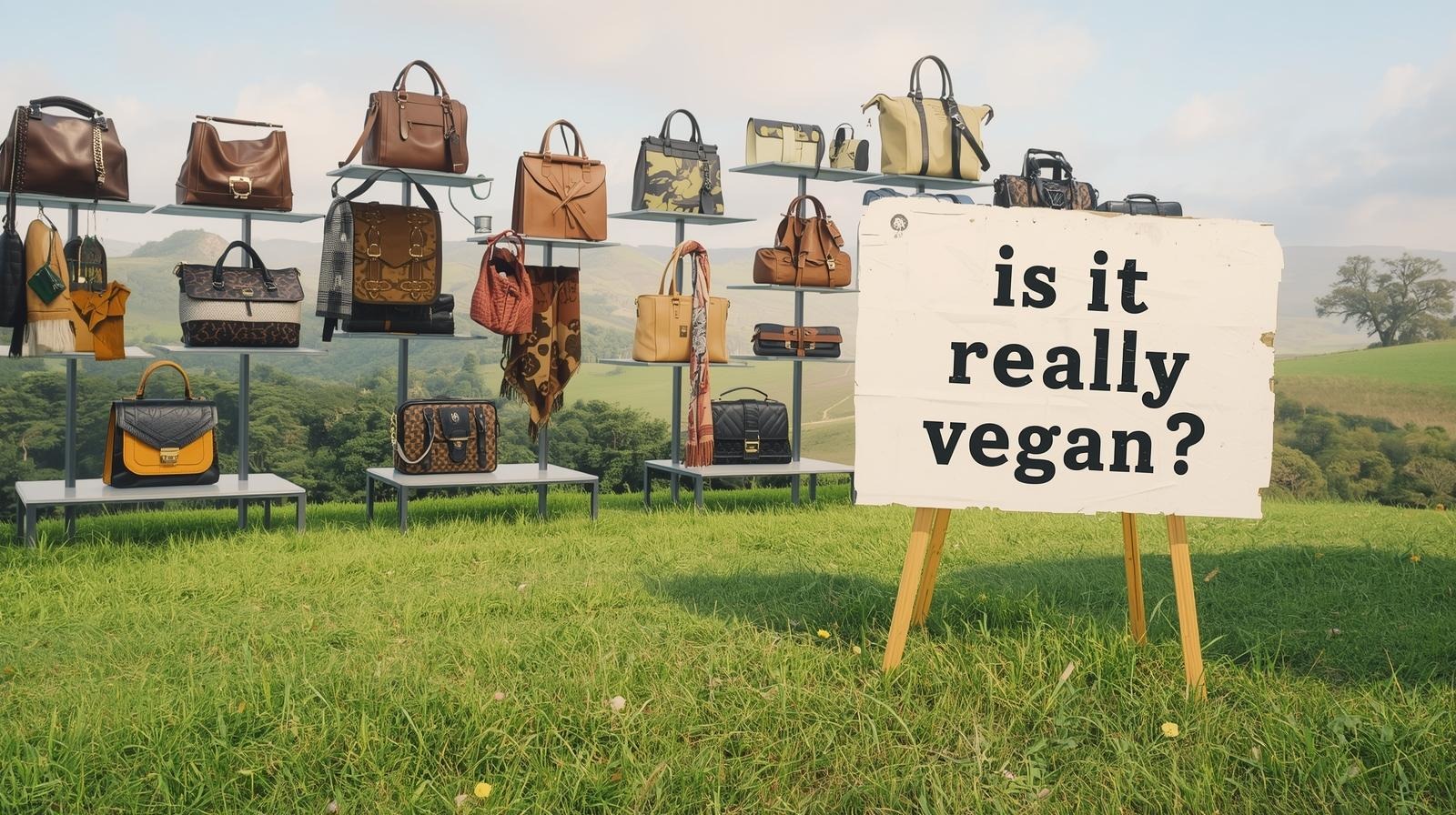
A particularly common pattern we observed in 2024–2025 was the increased use of recycled or certified wool (cashmere, alpaca, yak wool, and mohair) and silk (often referred to as ‘responsibly source’) in brands that were either originally labelling themselves as vegan or had made significant contributions to ethical and sustainable business practices.
Technically, however, neither wool nor silk is vegan, as both are sourced from animals.
After extensive internal discussion, we decided to create a separate Vegetarian Brands Directory. This directory recognises brands making genuine efforts towards circularity, innovation, and improved sourcing—while maintaining clear boundaries for consumers who expect vegan fashion—and therefore what we feature at Vegan Fashion Repository—to definitely mean no animal-derived materials, full stop.
The Vegan Fashion Repository itself—including all editorial content and other directories—remains strictly vegan-only.
The Vegetarian Brands Directory exists to support conscious consumers choosing wool and silk responsibly, while celebrating brands improving ethics, transparency, traceability, and accountability. Our ultimate goal, however, remains unchanged: a fully vegan, exploitation-free fashion system.
Criteria for inclusion in the Vegetarian Brands Directory
Vegetarian brands can apply to be included if they meet the following criteria:
- They use no leather—recycled leather is included in this restriction. This is non-negotiable.
- They use only certified, organic, cruelty-free, and/or recycled wool (cashmere, alpaca, yak wool, mohair). For non-mulesed wool, an additional statement, or preferably proof/certification, is required.
- They use only Peace Silk (Ahimsa Silk) or recycled silk.
All information used to determine inclusion is based on brands’ published statements and direct email confirmations obtained through our outreach.
Without a clear distinction between vegan and vegetarian fashion, ethical communications risk falling into veganwashing—marketing a product as ‘vegan’ when it contains non-vegan materials.
A case that crossed the line
Among all cases reviewed, one stood out—both because a seemingly vegan brand introduced animal-derived materials and because of the way the situation was communicated.
This brand publicly marketed itself as vegan and displayed the PETA-Approved Vegan logo directly under products described as made from “genuine leather.” We reached out to the brand for clarification.
During a lengthy email exchange (summarised below without naming the brand or individuals), the following was confirmed:
When asked what “genuine leather” meant on products marketed as vegan, the brand replied:
“We have both Vegan and Genuine.”
Shortly after, they stated that the genuine leather bags were “going to a different site.”
Despite this, both the genuine leather products and the vegan logo remained displayed on the original website. Once we pointed this out, the brand replaced the word ‘genuine’ with ‘vegan leather’—without explanation. When we asked whether the input materials had changed, the brand responded:
- “There was an error and you pointed it out.”
- “The genuine leather was a version we were considering but did not mean to implement.”
In short, a brand using a PETA-Approved Vegan logo had both ‘vegan’ and ‘genuine’ leather bags publicly listed for purchase, with no clear explanation of consequence. We have since removed the brand from our Directory.
Certification systems: necessary—but imperfect
We also reached out to PETA for comment. They confirmed:
- Brands may certify individual products, collections, or their full range.
- A company can sell both vegan and non-vegan products simultaneously.
- The PETA-Approved Vegan logo may only appear on labels, tags, and webpages for vegan products.
- Certification requires a standardised process: questionnaire, signed statement of assurance, annual renewal, and spot checks with laboratories.
- Misuse of the logo prompts requests for removal, and authorisation may be revoked if brands do not comply.
Certification systems have created markers of trust for consumers seeking vegan products. However, when logos are misused to imply compliance across an entire range when only some products are certified, this also constitutes veganwashing. While not always deliberately deceptive or intended to capitalise on consumers seeking quick vegan purchases, such cases clearly highlight the structural gaps in how ‘vegan’ claims are regulated and communicated.
Why this matters – and what comes next
Veganwashing doesn’t just mislead consumers; it erodes trust in authentic vegan brands, many of which are already struggling. If left unaddressed, it threatens both the survival of those authentic vegan brands and the ability of consumers to make informed choices. Transparency must come before marketing convenience.
Throughout 2025, we witnessed a significant number of vegan fashion brands closing down due to rising costs, limited access to materials, economic pressure, scaling challenges, and a market that prioritises affordability and rapid availability over craftsmanship.
While we update the Vegan Fashion Directory monthly, we will continue monitoring developments and remain alert for any cases of veganwashing. Future pieces in this series will investigate the real, everyday challenges the vegan fashion sector faces and expose disturbing practices where necessary to protect consumer trust and maintain accountability.
Read more: Why Is It So Difficult for a Fashion Brand to Go Vegan
Author

Discover more from Vegan Fashion Repository
Subscribe to get the latest posts sent to your email.