


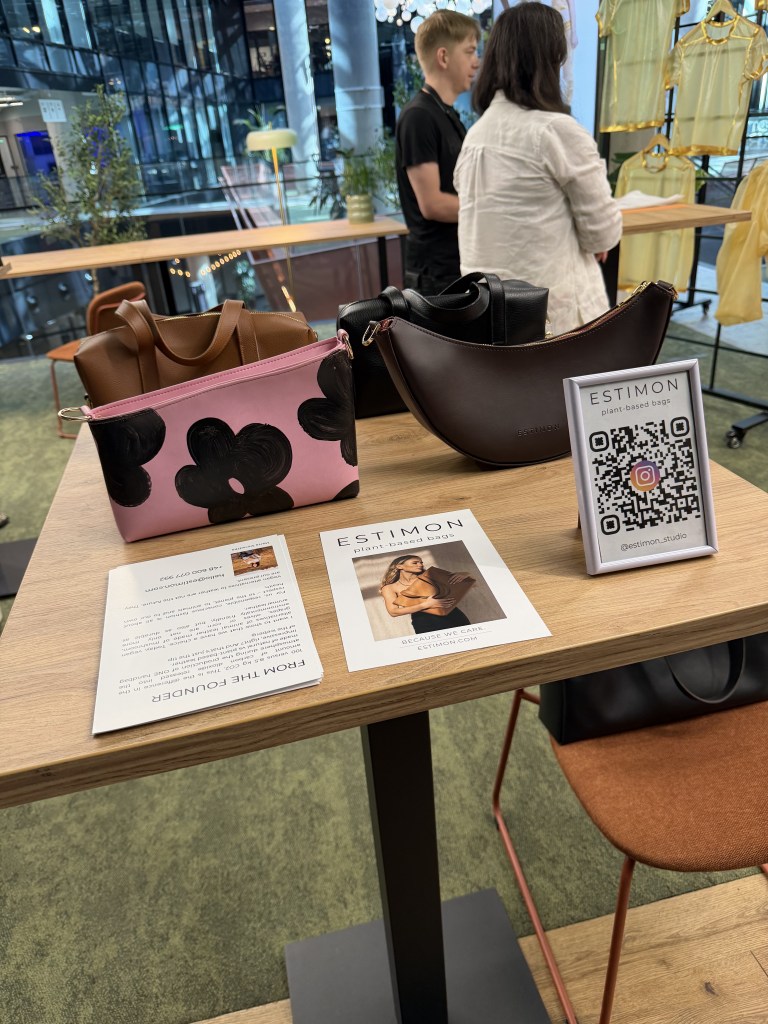
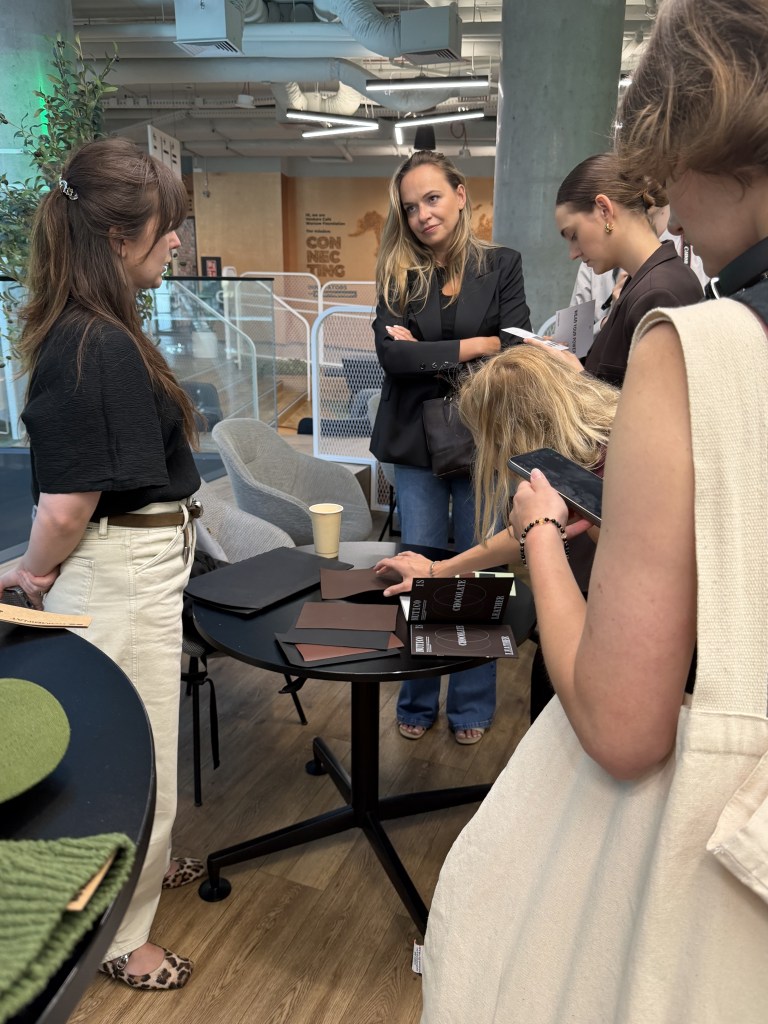
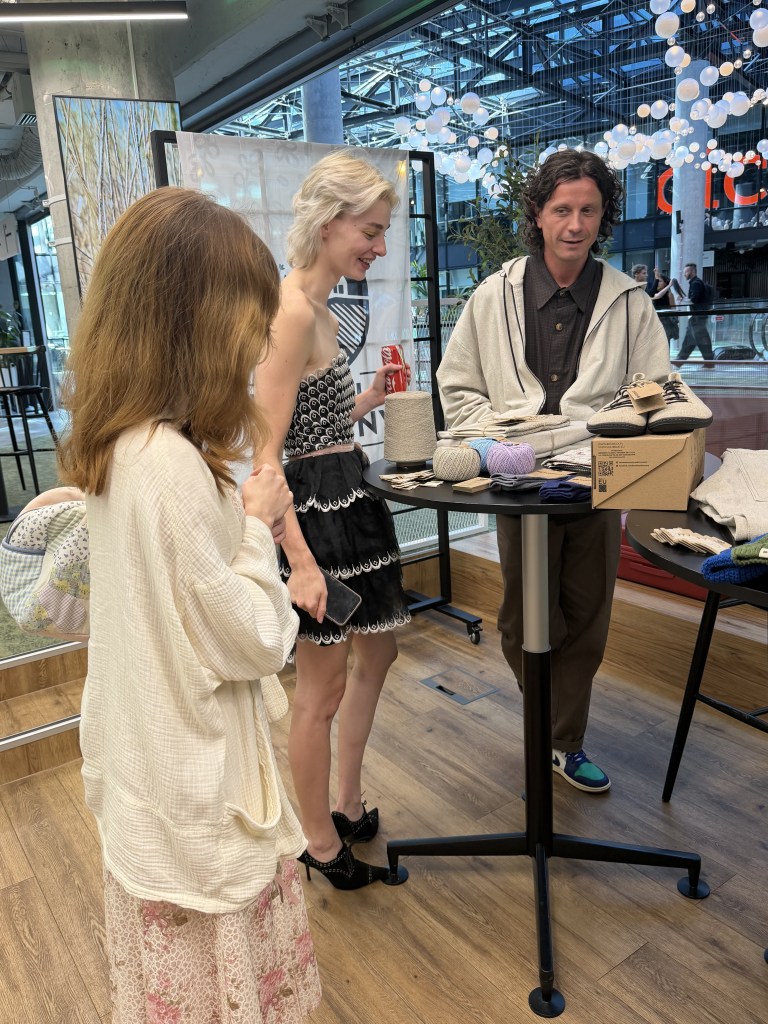
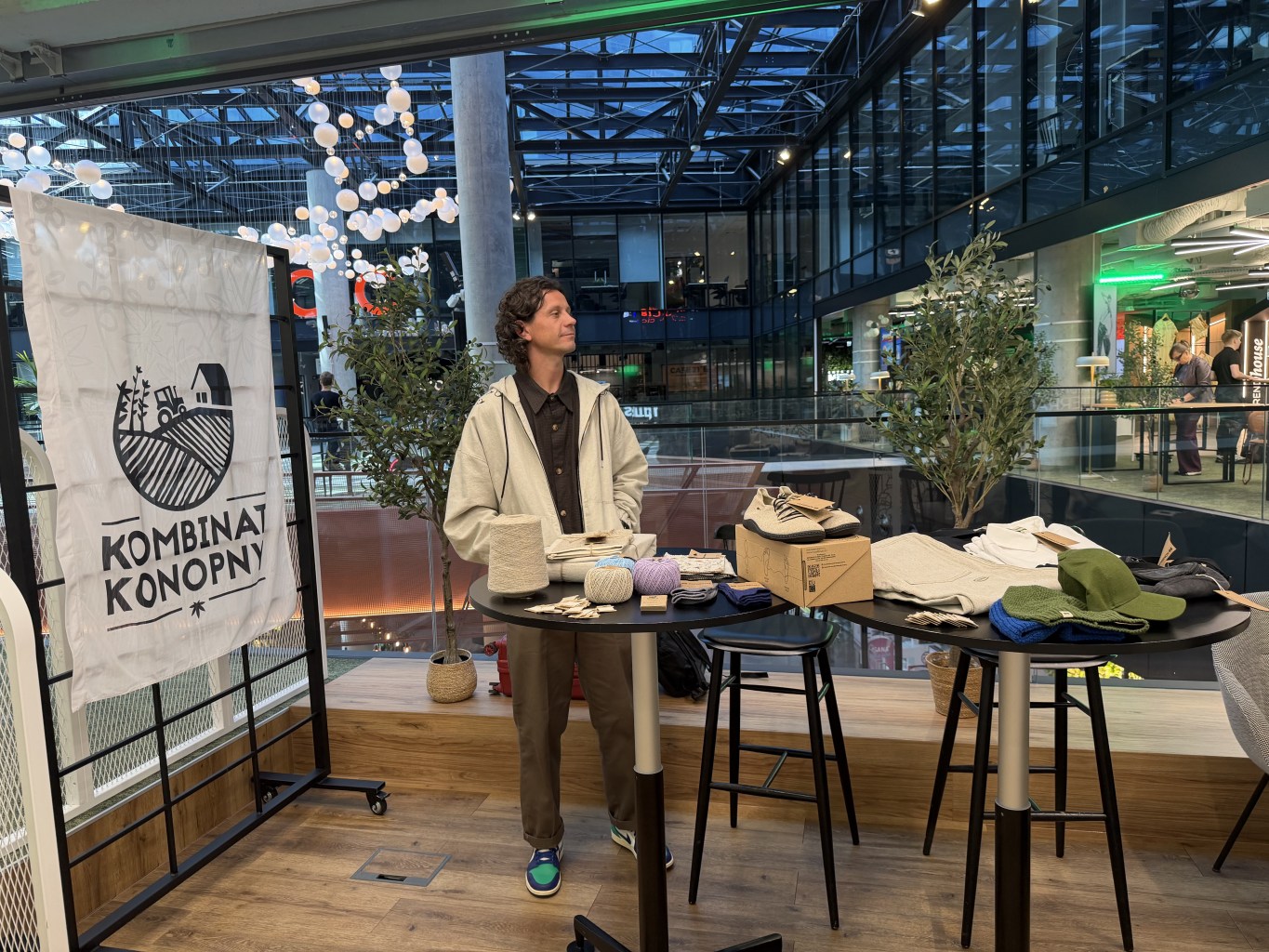
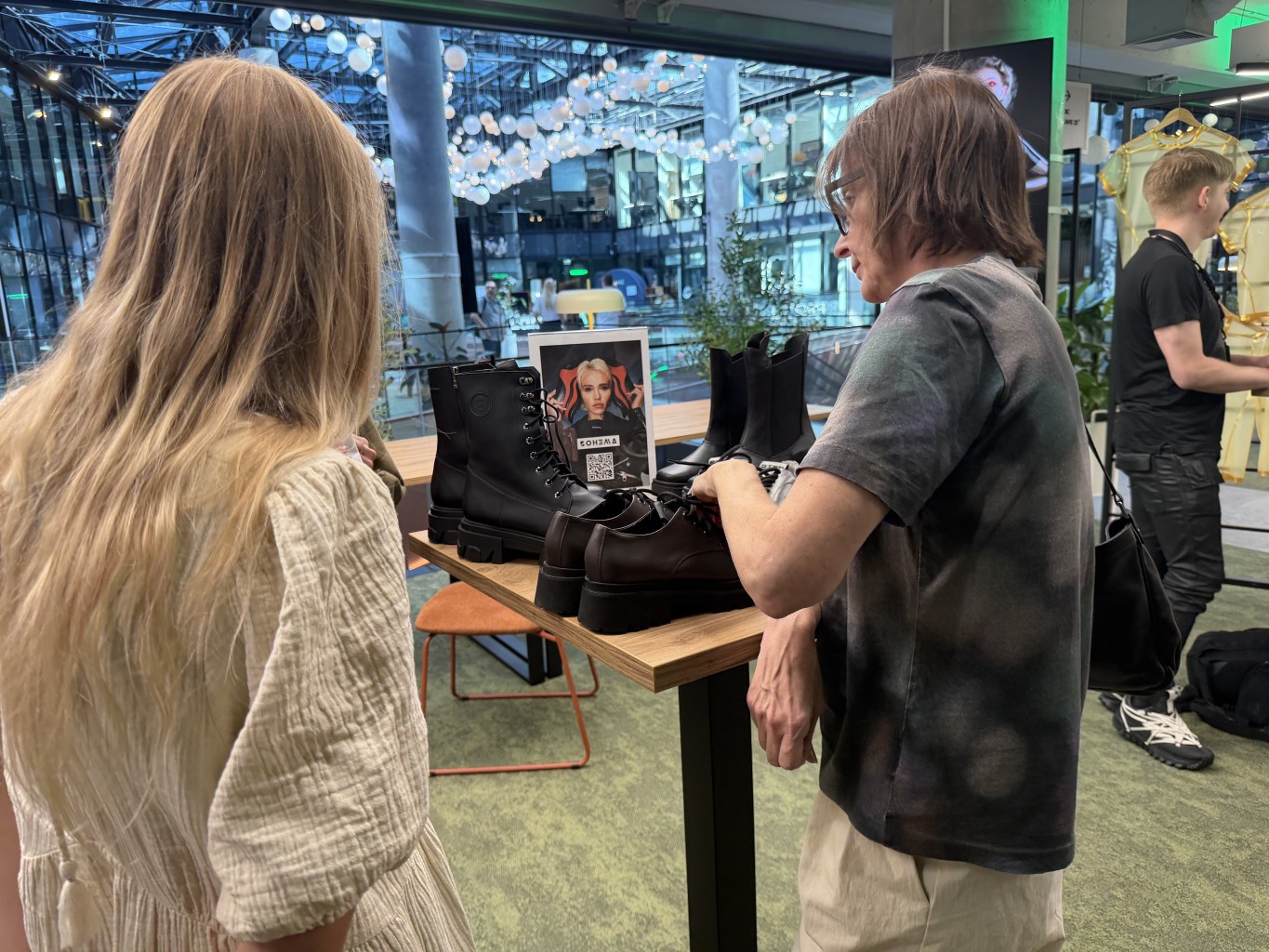
On 30 August 2026, we – Vegan Fashion Repository – hosted our first IRL event since launching in 2024: Open Day: Polish Material Innovations. The idea was born out of a strong desire to showcase Polish material innovations: two startups (Kombinat Konopny and Nutico™); brands that have been embracing material innovation since day one and growing in sync with it (BLUMI, Bohema Clothing and Estimon); as well as two brands doing something entirely different: creating lingerie from rose silk (S.Appeal) and sculpting natural latex into wearable pieces (Pawel Tumilowicz).
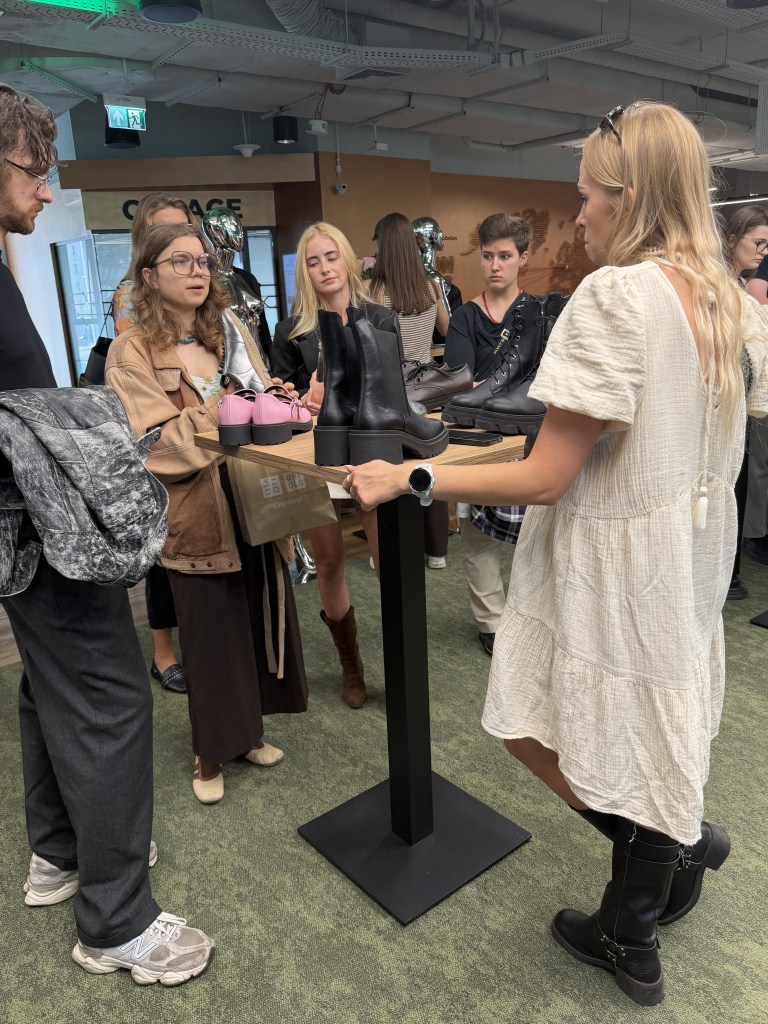
The goal? To bring together like-minded professionals from the local fashion industry and beyond, to mingle, network and exchange know-how. At each stand, materials and products were there for everyone to experience, meet the founders and storytellers, and ask any questions that might come to mind.
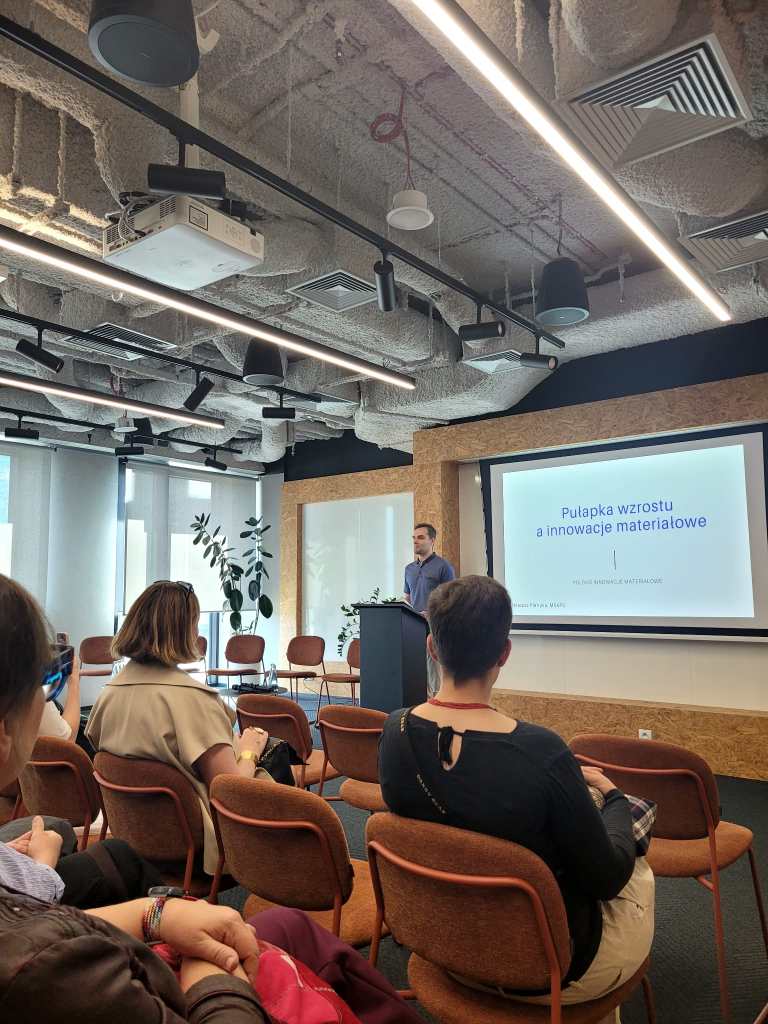
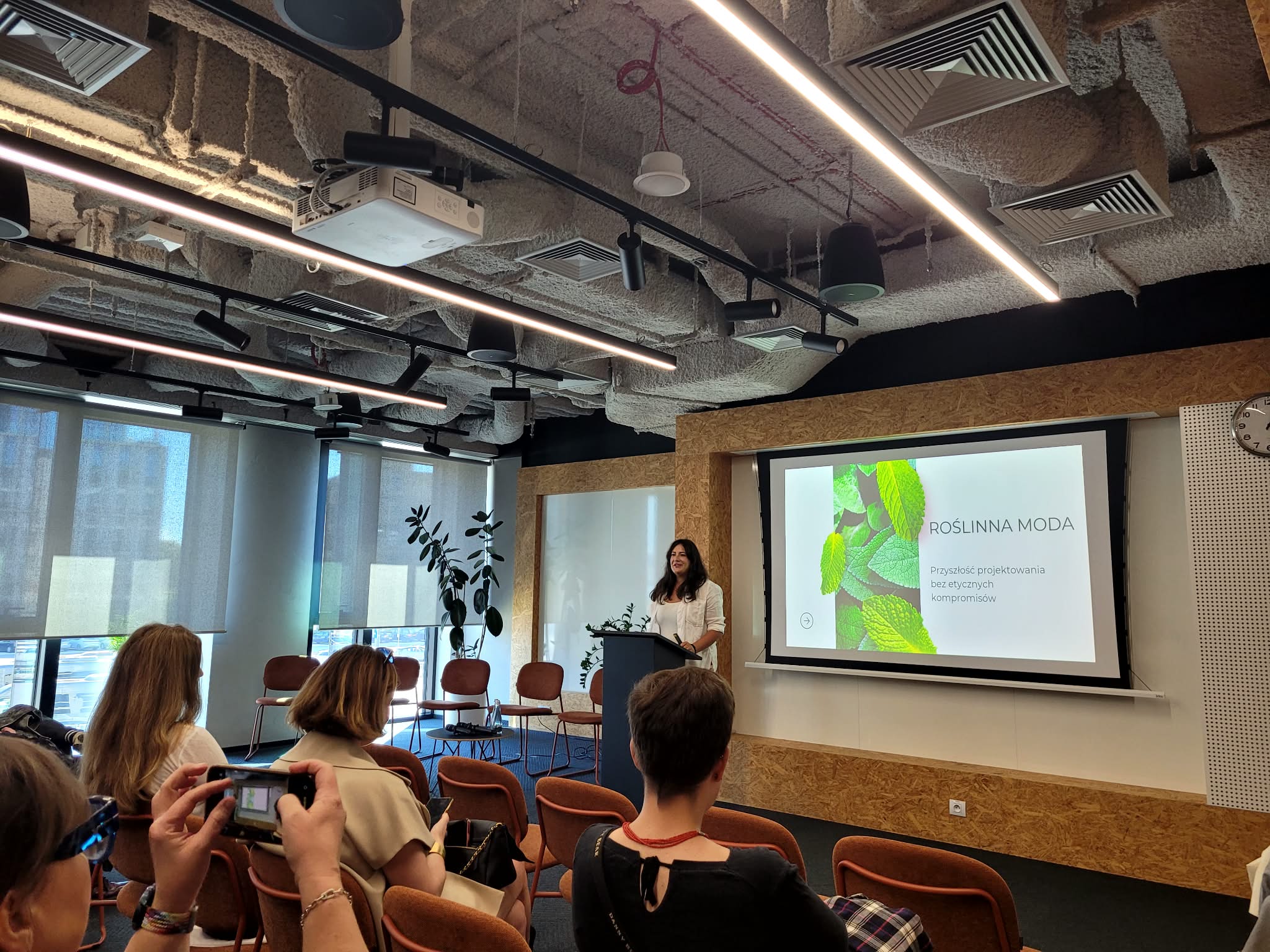
To make the best use of the time spent together, we also lined up a series of power speeches and a panel talk. Dr Mateusz Pietryka, sociologist and representative of the event’s main patron, International School of Costume and Fashion Design (MSKPU), opened with a speech about the ways the contemporary fashion industry perpetuates the cycle of overproduction and overconsumption – the loop of creating the feeling of never having enough and thus the constant need to do something about it, aka buying new stuff. Barbara Wybacz, Creative & PR Manager at Play Sustain’s Foundation, our special guest, spoke about the key tenets of innovation and circularity in the contemporary fashion industry. Marta Gos, Creative Director and Marketing & Sales Lead at Nutico™, talked everyone through the journey to Nutico™’s breakthrough formula. Maciej Plata, Head of Sales and Textile Specialist at Kombinat Konopny, took everyone on a visual journey to Gronowo Górne, where Kombinat’s production site is located. Last but definitely not least, Marta Sieradzka, founder of Estimon and MSKPU’s Material Science lecturer, spoke about why material innovations are no longer a fad, but rather a necessity in contemporary fashion.


The panel featured Dr Magdalena Płonka, designer, academic researcher, founder and headmaster of MSKPU, who first introduced CSR to the Polish fashion industry over two decades ago; Wioleta Wiertel, co-founder and CMO of Bohema Clothing – the first brand ever to produce shoes out of a cactus leather alternative; Marta Gos; and Maciej Płata. Together, we dug into the behind-the-scenes of their journeys – from, to say the least, unorthodox ideas to the challenge of balancing business growth with making a positive change.
The Nature of Innovations
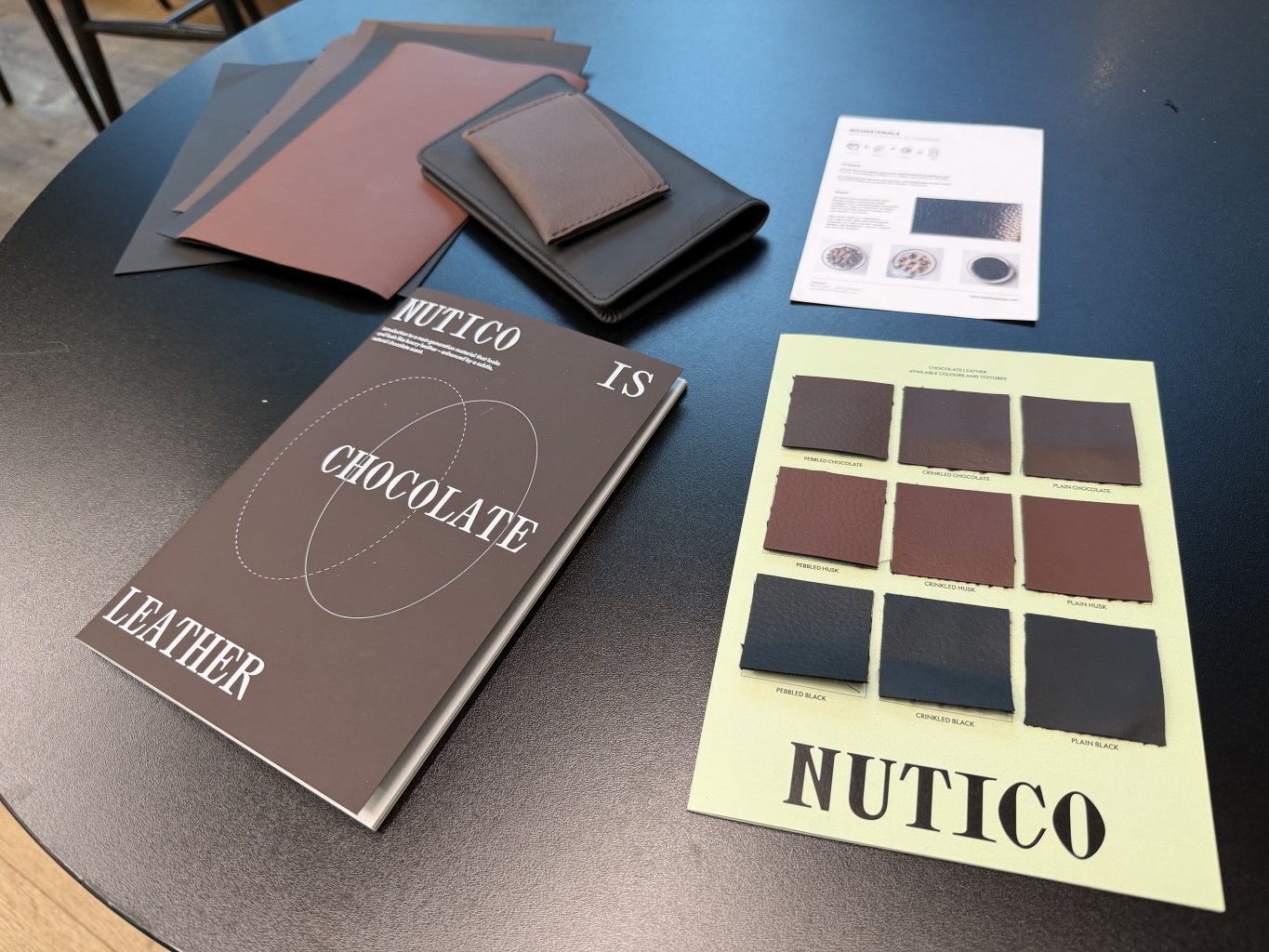
Pietryka considers the scaling challenge a positive thing. ‘There are no bad materials,’ he says. ‘Every material, when produced in reasonable quantities, is the right one. It’s overproduction that’s the problem.’ With overproduction, all materials, regardless of their unit impact, will end up being utterly unsustainable, as they’ll use up enormous amounts of resources, such as water or land. This is why the Nutico™ team spent five years on R&D, ultimately abandoning the first apple-based formula after discovering its limitations. That, however, led them to the current formula, made from cocoa husks and walnut shells, which requires neither PU nor PVC, nor a single drop of water. ‘The production itself is relatively straightforward and can be adapted to different regions wherever suitable waste streams are available,’ says Gos.

Production is already scaling, although the material is not yet aimed at the mass market. For now, they are focusing on the premium market, where the material is set to compete with high-quality animal leather on aesthetics, price and performance.
That being said, scaling is no universal objective. ‘Not all materials have to be scalable. Some create impact by reaching scale; others by starting conversations, challenging expectations and creating desire,’ says Vera Banaś, Creative Director and Material Innovation Designer who attended the event.
Most, however, start out as conversation starters and eventually become scalable solutions. MSKPU graduate Karol Leśnikowski presented his take on a kombucha leather alternative, one he made specifically for his graduation collection. ‘I already knew such a material existed, but for me it was a challenge to make one by myself and make it look and behave as much like leather as possible. If I can achieve this quality at home, then the challenge I’m setting for myself in the future is to achieve this high quality in labs, to find specialists who have this knowledge and can work with and scale these cellulose-based materials,’ says Leśnikowski.
As exciting as innovations are, they are, at heart, an anomaly, according to Wybacz. ‘Take living organisms in nature – they ought to fight every anomaly, as they disrupt the status quo. It’s not about the fight though, but rather about minimising the risk, as every anomaly is inherently a risk. And when push comes to shove, no one really fancies risks.’


And that creates resistance, which, as it turns out, is not a bad thing after all. ‘There’s no meaningful change without resistance,’ says Płonka, who knows a thing or two about it. When she introduced CSR and the ethical treatment of animals into the industry and MSKPU’s curriculum, she encoutered pushback from fellow professionals and some students alike. ‘They’d mock and ask me whether I was being paid by PETA or VIVA! It’s always an uphill battle when introducing animal rights, consumer rights or material innovations, but it also brings enormous satisfaction and happiness, because happiness comes from agency, from knowing that we can influence our surroundings.’
Other panellists soon followed with their own stories. ‘Kombinat is always going against the grain, and that annoys people. Most have said – and still say, as a matter of fact – that we won’t get there, it won’t work,’ says Plata.
‘There are no bad materials. Every material, when produced in reasonable quantities, is the right one. It’s overproduction that’s the problem.’
Dr Mateusz Pietryka
For Tumiłowicz, the pain of being ahead of his time proved real when he created his first draped gowns made from natural latex 10 years ago. ‘I chose latex because it was niche and thought mostly in terms of fetish and saw innovation potential in bringing it forward with unconventional yet wearable pieces.’ Creative hunger, a couple of solid fashion projects and a background in material engineering were supposed to push the idea further, but, as beautiful as those draped gowns turned out, there was simply no demand for them. ‘A latex client still wanted something body-hugging and would not have any creases on the outfit, draped or not,’ says Tumiłowicz. The business side failed painfully, and yet he refused to abandon the project. It is only now, as big brands such as Robert Wun, Loewe, Schiaparelli and Dior are showcasing latex pieces on the runway, that he has decided to return to the original idea and see how far he can take it. The business has been running continuously for more than 14 years, with its ups and downs: there were times when Tumiłowicz, working alone, had too many orders and had to refuse some, and others when there were none at all.


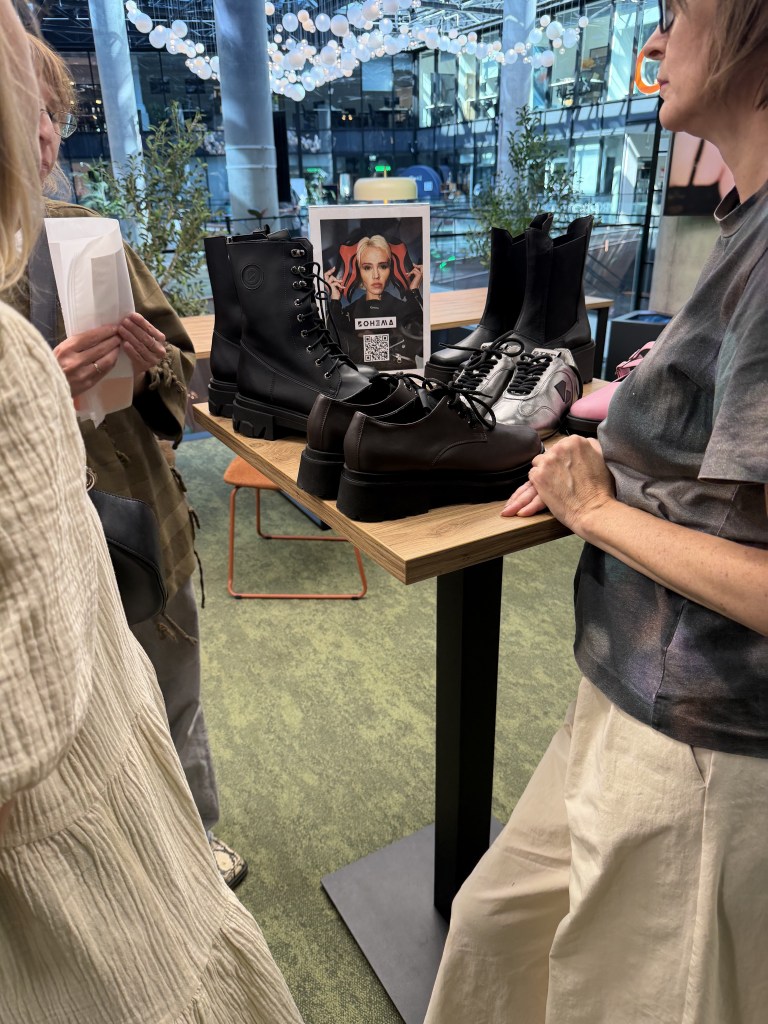
Wiertel recalls bringing samples of a cactus leather alternative to her father-in-law, a lifelong shoemaker who has made it all in shoes, from modifying lasts to shoes for feet with special needs. And even he took some persuasion – and lots of trial and error – as plant-based leather alternatives have a structure that is nothing like animal leather. ‘Amongst all the other experiments, we had to find the right way to cut it so that it wouldn’t rip when you take it off the last. If it holds then, it will hold up to wear,’ says Wiertel. Eight years into the trade, he is now the one who trains affiliated producers how to work with plant-based leather alternatives.
‘Innovation isn’t when we create something new. It’s when the market knows what to do with it and, in the long term, it brings what the market needs – profit. The producer knows that it’s worth producing, the brand that it’s worth doing, and the customer feels that they’re buying something that makes sense and brings them benefits,’ says Wybacz. ‘If environmental solutions are really going to change the industry, they have to become business solutions.’
The Core Problem
As ready to roll as some of the innovative alternatives are, systemic change won’t happen overnight. ‘We have to learn how to create products for which these new materials are genuinely the best choice, rather than simply swapping one material for another. You cannot replace a conventional material with a more innovative one and expect that alone to fix the system,’ says Banaś.
In other words, ‘we cannot “material-innovate” our way out of overconsumption,’ she adds.
However, what really drives overconsumption lies at the core of human nature. Pietryka drew on Guy Debord’s argument that when we buy things, we are not consuming goods, but rather the images of ourselves – and hence the insatiable hunger. The demand-side perspective is therefore, according to Pietryka, flawed in practice, as it already involves ‘an army’ of marketers paid to induce various desires.
‘I am always put off by fast fashion’s claims that they have democratised fashion because they’re providing the market with affordable – cheap – fashion. What they do, however, is enable further economic stratification in the whole system,’ says Wybacz.
Then comes the supply perspective, where open communication about how a product has been made, by whom and who is benefiting ultimately holds the promise of changing the rules of the game. ‘This is where material innovations come in, bearing the promise of responding to quite a few of today’s world challenges,’ says Pietryka.


Kateryna Antoshevska, founder of S.Appeal, spent two years sourcing the right material that would tick all the boxes – sustainability, innovation, luxury and storytelling – before landing on a silk alternative made from rose petal waste from the perfume and cosmetics industry. ‘I set out to find an alternative to silk which did not involve killing the worms, yet would still be pleasant and good for our skin, and has a contemporary feel,’ says Antoshevska.
Sieradzka lists the issues of the contemporary fashion industry that innovative, plant- and mycelium-based materials are already addressing. These range from waste management and the use of regenerative resources to improved durability, which can prolong product use through repairs, recycling and upcycling. ‘At Estimon, we carefully select corn, grape and apple leather as the most durable plant-based materials we’ve found so far and carry out extensive research and testing to ensure the material meets our quality standards before the bag enters the store,’ says Sieradzka.

She also points to technological developments such as using bacteria and fungi to dye or decompose fabrics. As a matter of fact, for plant- and mycelium-based materials to be considered genuinely innovative, they cannot rely on the toxic chemicals still prevalent in, for example, animal leather tanning.
‘We cannot “material-innovate” our way out of overconsumption.’
Vera Banaś
‘Plant-based leather alternatives are the future. They have a significantly lower environmental impact than animal leather or so-called “eco-leathers”. They’re also cruelty-free, which is essential to our brand’s DNA,’ say Milena Tobjasz and Irmina Góralczyk-Zawiślak, founders of BLUMI. ‘We believe we don’t have to compromise on anything – neither in design nor in functionality, and especially not in ethics. Each material we choose, we test extensively and only use those that really stand out for their durability.’


‘It’s not like we have to use animal leather or what – we already have lots of alternatives instead, with different price ranges, which are much safer for everyone and the environment in the long run,’ says Olivia Kozak, model and Vegan Fashion Repository event ambassador.
Data and research support this. Animal leather has a more than 70% greater environmental impact – 187.1 kg of CO₂e – than previously thought; the environmental impact of plant-based leather is more than 12 times lower than that of animal leather, at 14.9 kg CO₂e1. ‘The argument people often use that animal leather is natural leather is misguided. The chemicals used in tanning and, sometimes, finishing are toxic from the very start of the process,’ says Sieradzka. As WHO reports, around 90% of people working and living in slums around tanneries (mainly in the Hazaribagh area of Dhaka) die before the age of 50 due to drastic exposure to toxic chemicals without adequate protection2.
Education and material literacy
As Sieradzka points out, ‘Just a few years ago, innovations were seen as a novelty and a niche – that approach is changing, because innovation is now a necessity. There is growing awareness on the part of both buyers and creators, and last but definitely not least, there is legislation in the pipeline.’ But for innovation to move forward, material literacy is essential – ‘we have to treat materials holistically, as a system of interconnected vessels. Colour and texture, of course, but also their physical, chemical and functional properties – everything affects what happens to the material later on,’ says Sieradzka.
‘Genuine circularity starts right at the very beginning, with the idea and the choices made by the designer – everything that happens later is a consequence of that,’ says Wybacz.
And here comes education, all in white. ‘The role of schools is fundamental. Students enter the world with the knowledge we equip them with,’ says Płonka, adding that this also depends on how much agency those creatives will have once they enter a company, and how much boards and decision-makers will allow them to balance sustainability with the business growth agenda.


As part of its educational mission, MSKPU also published The Sustainable Textiles Handbook by Ewa Polkowska, edited by Płonka, which contains everything a designer, brand or individual needs to take a product from concept through production: from the names of sustainable clothing manufacturers and minimum order quantities to information on how to wash and care for the materials. Not to sound too commercial, but we’ve read it at Vegan Fashion Repository, and it’s a tool that will definitely improve material literacy among both professionals and everyday users.
‘We have to treat materials holistically, as a system of interconnected vessels. Colour and texture, of course, but also their physical, chemical and functional properties – everything affects what happens to the material later on.’
Marta Sieradzka
‘We have to remember that the materials we surround ourselves with affect our lives and our health. We need to shift the conversation from ‘What is this thing made of?’ to ‘How is it affecting us as humans?’ says Banaś. ‘As consumers, we should take the reins and influence what is being offered to us on the market,’ says Wybacz.
‘Change doesn’t happen overnight. It’s a process that requires alignment between all the parties involved – from systemic change and education to investment. Until then, we should make better use of what we already have, while finding meaningful ways to introduce innovation into the products we already use,’ says Banaś.
What’s next?
According to Pietryka, alongside customer sentiment towards a product and environmental concerns, plant-based materials that are inherently impossible to scale often involve local production with short supply chains – which in turn can mean better working conditions, as it becomes more of a community effort.
And local production is key. Nutico™ sources chocolate factory waste across Poland and produces the material in Germany. Tumiłowicz crafts every piece by hand in his atelier in Szczecin. For Antoshevska, who sews every item in Warsaw and Łódź, the next step is establishing a regular sewg facility in Lviv, Ukraine, where she comes from, as soon as the war is over. Bohema Clothing produces its shoes in Poland’s Podkarpackie region (yup, those Carpathian Mountains). Both Estimon and BLUMI also sew their bags in Poland, Estimon in Warsaw, and BLUMI in various small leatherwork workshops across Poland. ‘The workshops we choose do not produce mass-market quantities; they specialise in short, limited series, and this is how we avoid overproduction,’ say Tobjasz and Góralczyk-Zawiślak.
The team at Kombinat Konopny grow and harvest their hemp, then spin the bast fibres into yarn on site. The yarn is subsequently woven in close partnership with a facility in Pabianice. For further products such as clothing, accessories and bedding, they work exclusively with other Polish enterprises (with the exception of their cotton supply from Greece). Every stakeholder brings in local, heritage craftsmanship – it’s a constellation of them. ‘Our innovation thing is that instead of reinventing the wheel, we go back in history and fish out what we believe has most to offer,’ says Plata. And it works, at least for them. ‘Most brands struggle with too much inventory and not enough sales, while we cannot keep up with demand. It’s a nice kind of challenge, but also humbling, as we are more than aware of how much there is still to learn about and develop.’
‘We’re incredibly creative in Poland, but to move from creating an idea to actually creating an alternative to what fashion is today, we need to scale. However, let’s not think about scale as producing more, but rather as getting something onto the market and keeping it available,’ says Wybacz.


It all connects – people who are sensitive to the environment and to human suffering are also sensitive to animal suffering. It’s all part of this very broad empathy.’
Dr Magdalena Płonka
The change is already happening, though. As Pietryka points out, we’ve already managed to introduce safer working conditions, and the fur industry is coming to an end. ‘It’s so heartwarming. If someone told me 20 years ago that we’d see that day, I’d say they’d lost their marbles,’ says Płonka, adding: ‘We Poles have a lot more empathy than we might think. Poland has one of the best laws protecting animals in the world. It all connects – people who are sensitive to the environment and to human suffering are also sensitive to animal suffering. It’s all part of this very broad empathy,’ says Płonka.
What we set out to achieve – presenting the Polish contribution to the global material innovations landscape – evolved into a lively and supportive ecosystem. We saw people amazed by what was literally within their reach but which they hadn’t realised was there before, alongside businesses talking about joining forces and exploring opportunities for collaboration. And it carries.
**
Open Day: Polish Material Innovations organised by Vegan Fashion Repository
Main Patron: International School of Costume and Fashion Design (Międzynarodowa Szkoła Kostiumografii i Projektowania Ubioru — MSKPU)
Honorary Patron: Fashion Revolution Poland
Special Guest: The Play Sustain Foundation
Special thanks to: CIC Warsaw
- The Carbon Footprint of Leather: A Comprehensive Reassessment Using Global Livestock Data and Meta-Analysis’. ↩︎
- The main sources confirming these statistics are reports by the World Health Organization (WHO) and local organisations such as Society for Environment and Human Development (SEHD). Further reading:
https://www.theguardian.com/world/2017/mar/21/plight-of-child-workers-facing-cocktail-of-toxic-chemicals-exposed-by-report-bangladesh-tanneries
https://www.hrw.org/report/2012/10/09/toxic-tanneries/health-repercussions-bangladeshs-hazaribagh-leather ↩︎
Discover more from Vegan Fashion Repository
Subscribe to get the latest posts sent to your email.