
In this special November instalment of The Vegan Problem series, we turn our attention away from the problem itself and towards the opportunities the next generation of vegan materials offers to drive meaningful change in the industry, one bolt at a time.

There has been quite a lot of confusion around terms such as ‘vegan’, ‘bio-based’, ‘plant-based’, ‘next-gen’, ‘innovative’, ‘plastic-free’, ‘biodegradable’ and ‘sustainable’ (yes, we could spend another hour on that), particularly when they are used without further explanation. At Vegan Fashion Repository, we cannot help but roll our eyes every time ‘vegan’ is used as a synonym for ‘plastic’, ‘bio-based’ is equated with ‘biodegradable’, or ‘plant-based’ is presented as a definition of ‘plastic-free’.
Put simply, a material can be vegan and still be synthetic. Bio-based does not mean biodegradable, and neither plant-based nor biodegradable necessarily means plastic-free.
Then there is ‘next-gen’, short for next-generation: another fashionable, yet not entirely defined, term that seems to promise a solution to most of the fashion supply chain’s current problems – or, at the very least, something worth getting excited about. For a material to qualify as next-gen, its developers should be able to demonstrate, through data, a reduced environmental impact (including resource use) across its lifecycle. Where it is intended to replace an existing material, it should also demonstrate a lower impact than the conventional alternative while meeting relevant performance standards. Most are developed through rigorous research and development, often involving years of trial and error before the right formulation or process is established. And the work does not stop there: further improvements remain part of the process.
As a category, next-gen materials draw on a remarkably broad range of inputs. These include repurposed waste from the agricultural, food and beverage industries, materials developed through precision fermentation, and those grown from mycelium, to name some of the most prominent. Although predominantly vegan, next-gen materials can also incorporate animal-derived inputs, such as chitosan – a biopolymer extracted from chitin found in waste crustacean shells (TômTex) or engineered collagen-based material derived from fossilised T. rex remains (T-Rex Leather™). Developers also increasingly seek to minimise synthetic content, with some formulations achieving plastic-free status.
The next generation of vegan materials is therefore a much broader and more advanced category. Moving beyond the plastic-fantastic, vegan fashion material science – with the emphasis firmly on science – is entering a more sophisticated era. One increasingly rooted in data and research, with priorities extending beyond animal welfare to encompass environmental and human welfare, too.
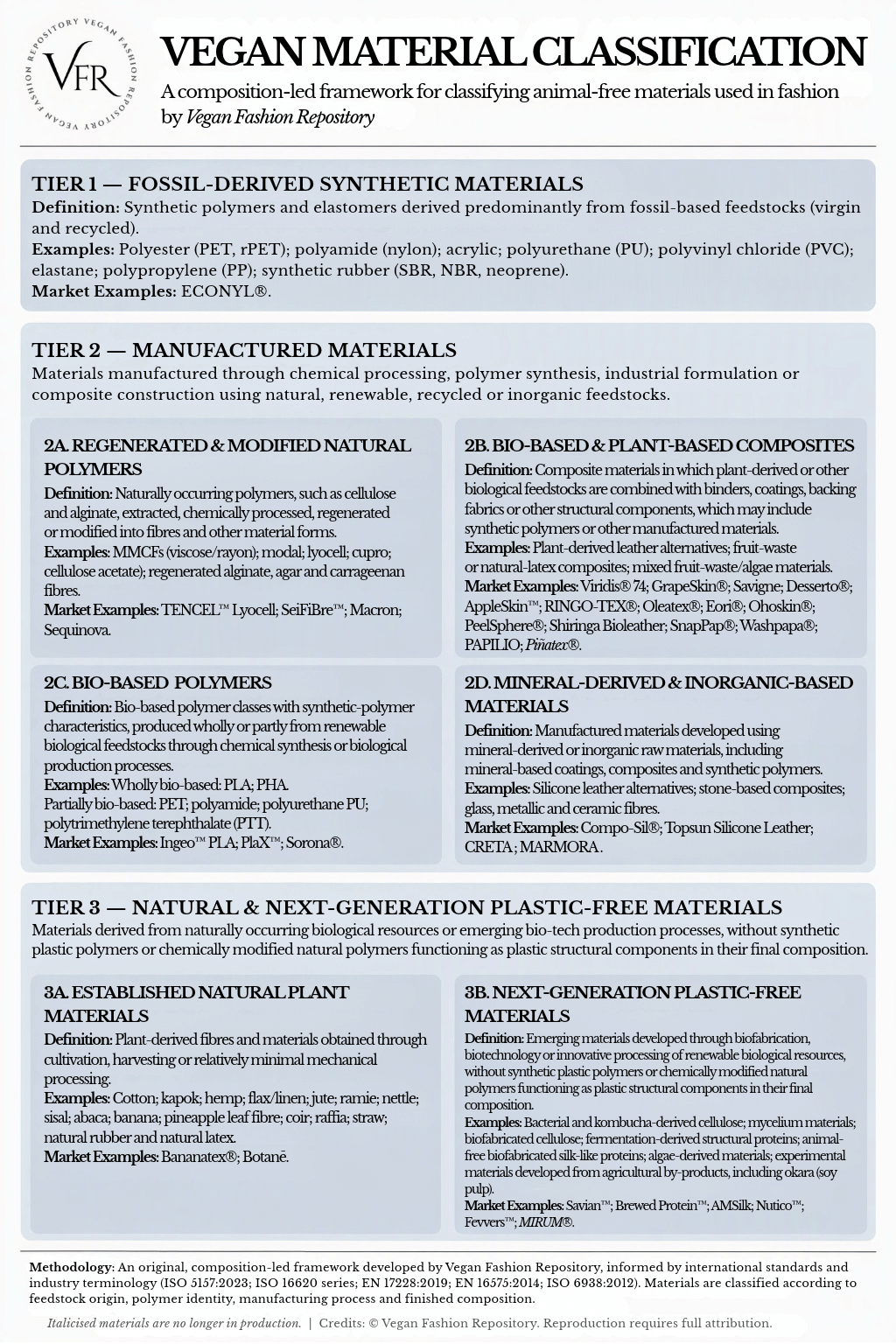
As we explore some of the most exciting next-gen materials that meet both vegan and lower-impact criteria, we would also like to introduce VFR’s own classification of materials used in fashion. This composition-led framework draws on international standards and industry terminology (ISO 5157:2023; ISO 16620 series; EN 17228:2019; EN 16575:2014; ISO 6938:2014). Materials are classified according to feedstock origin, polymer identity, manufacturing process and finished composition. We will use this framework to guide our material selection and research, updating it as the industry evolves.
TIER 1 — Fossil-derived synthetics
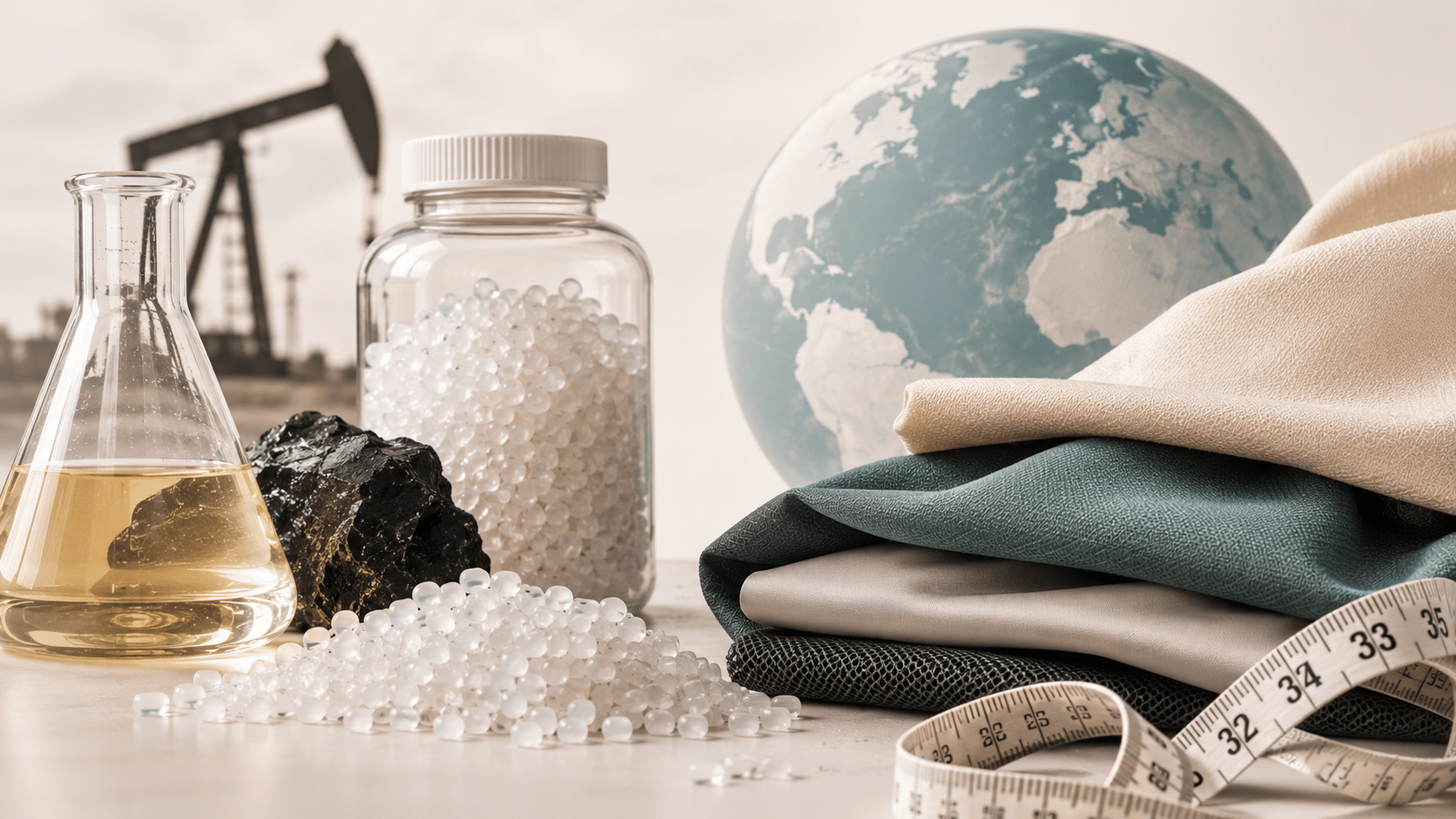
Bear with us: we need to start with Tier 1, if only to appreciate how far the industry has come. This tier covers synthetic polymers and elastomers derived predominantly from fossil-based feedstocks, whether virgin or recycled. These include polyester (PES) – yes, the lining in most jackets – polyethylene (PE), acrylic, nylon, elastane, polystyrene (PS), polyvinyl chloride (PVC) and polyurethane (PU) – yes, that vegan leather, too.
Synthetic textiles are a major contributor to global microplastic pollution, accounting for an estimated 35% of primary microplastics entering the world’s oceans1. Common synthetic fibres, including polyester (PET), polyamide (nylon), acrylic and spandex, are made from petroleum-based polymers. These are not readily broken down by microorganisms and are estimated to persist in landfills and natural environments for 200 to more than 500 years2. This is one reason why so much research is now focused on improving their recyclability and developing closed-loop systems – in other words, preserving as much material quality as possible through successive cycles, without the need for virgin inputs.
That said, while we hope it is clear that we are far from being plastics’ biggest fans and are committed to promoting vegan materials with as little synthetic content as possible – ideally none – it is worth remembering that early plastics were, at least in part, conceived as conservation or resource-saving solutions.
Early plant-derived and semi-synthetic plastics, such as celluloid, developed in 1869 by John Wesley Hyatt, were created specifically as substitutes for elephant ivory and tortoiseshell, helping to reduce the slaughter of wildlife3. Later developments, such as the plastic shopping bag patented in 1965 by Sten Gustaf Thulin, were originally designed to replace paper bags and reduce the need to cut down trees4. Alexander Parkes’ 1856 Parkesine and Leo Baekeland’s 1907 Bakelite – the first fully synthetic plastic – were also celebrated for offering durable, lightweight alternatives to scarce or expensive natural materials such as horn, wood and metal5.
That being said, few materials are inherently good or bad; much depends on how, and on what scale, they are produced and consumed. As Dr Mateusz Pietryka observed during our Open Day: Polish Material Innovators: ‘Every material, when produced in reasonable quantities, is the right one. It’s overproduction that’s the problem.’
TIER 2 — Manufactured materials
Tier 2 covers materials manufactured through chemical processing, polymer synthesis, industrial formulation or composite construction, using natural, renewable, recycled or inorganic feedstocks.
TIER 2A — Regenerated and modified natural polymers
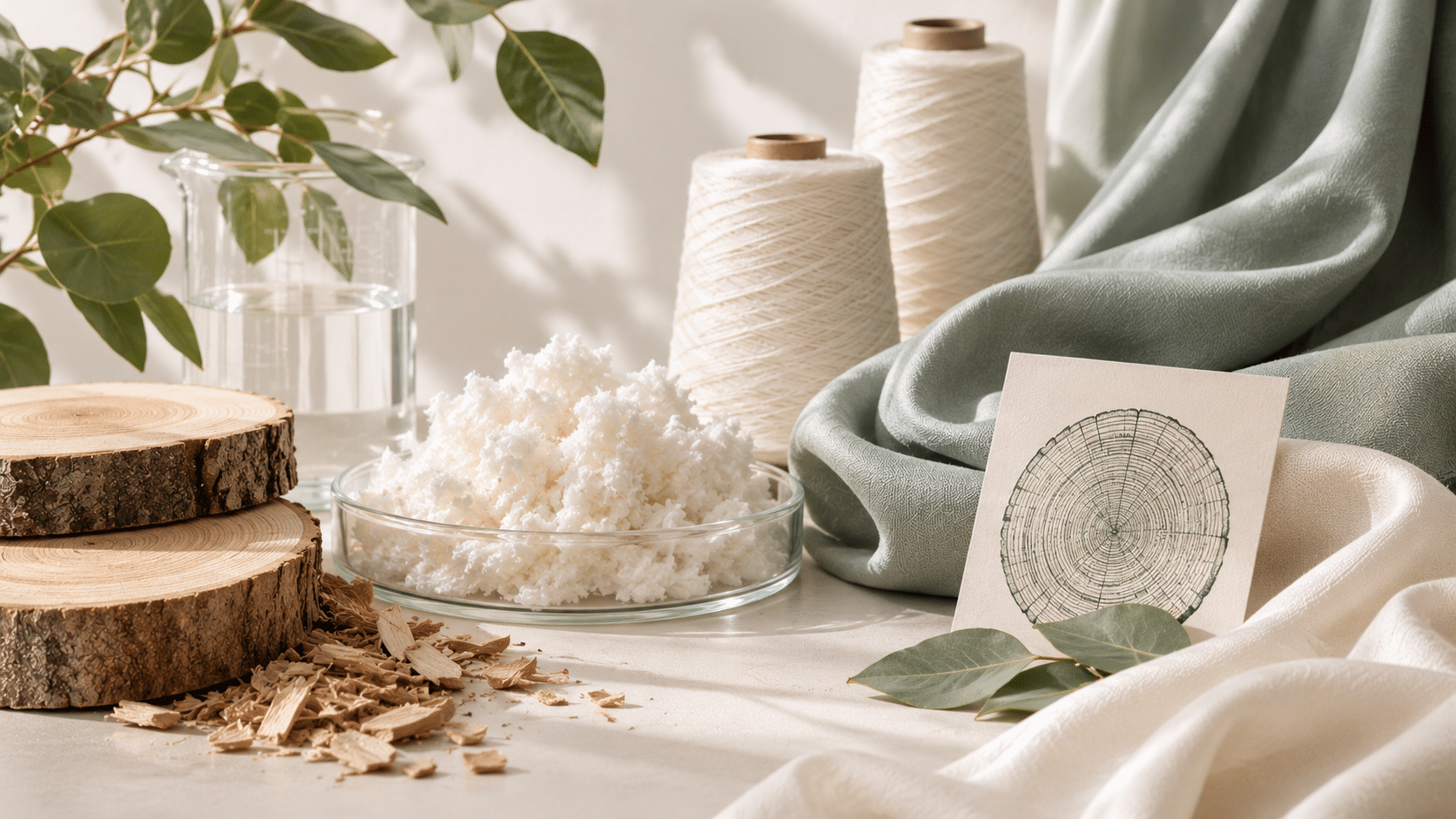
These materials are produced by chemically processing or regenerating naturally occurring polymers, primarily cellulose and alginate, into fibres or other material forms. Man-made cellulosic fibres (MMCFs) such as Lyocell, Modal and Viscose belong to this category. Typically, wood pulp from sources such as eucalyptus, beech and bamboo is chemically dissolved and extruded into smooth, breathable, semi-synthetic fibres. At their core, these materials are derived from wood or other plant-based cellulose, but their transformation into fibres requires substantial chemical processing. Critics point to the industrial processes involved and the risk of deforestation where wood pulp is not responsibly sourced. Supporters, meanwhile, value their performance: these fibres can offer a feel and drape comparable to silk and other natural fibres, without animal-derived inputs. Responsible sourcing, including FSC-certified supply chains, is therefore an important consideration.
While wood pulp remains the predominant feedstock in this category, innovation is also extending to regenerated fibres made from alginate, agar and carrageenan. In recent years, considerable research into next-generation fibres has focused on developing alternatives to silk. One example is rose viscose, made from rose petals and the bark of rose stems, using floral waste from the floriculture and perfumery industries.
Among the newer innovations is SeiFibre™, a seaweed-based textile fibre developed by ER Ocean Recherche. The company works with coastal collectors to harvest invasive algae species in regions including France, Portugal and the Mekong Delta, where their unchecked growth can disrupt local marine ecosystems. The algae, alongside other marine biomass, is then processed into staple fibres that can be spun into yarn and subsequently woven or knitted into fabrics. In this way, the production process aims not only to meet the growing demand for innovative textile fibres, but also to support the management of invasive species, capture blue carbon and help prevent microplastic pollution and toxic chemical runoff.
TIER 2B — Bio-based and plant-based composites
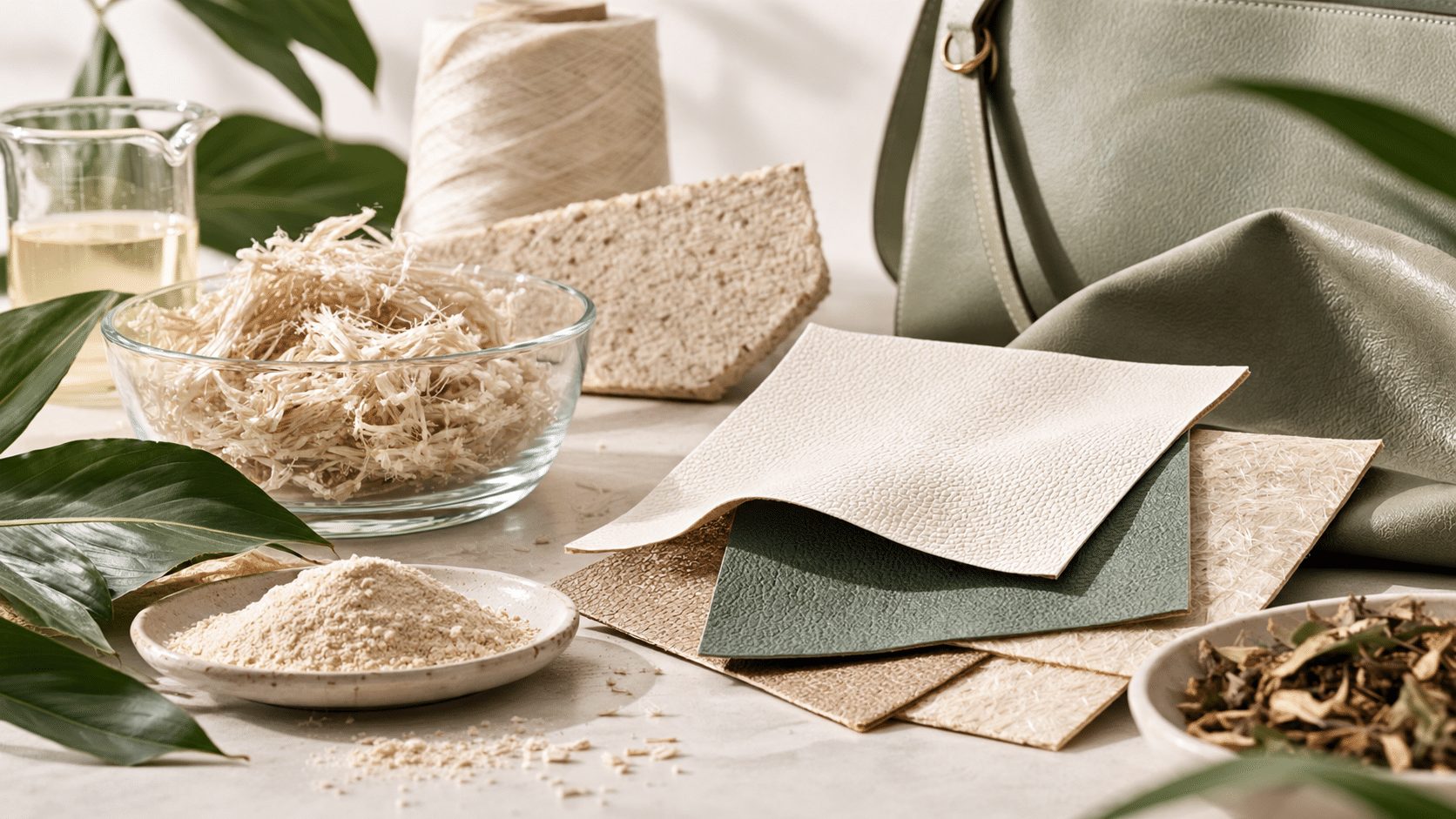
This category covers composite materials that combine biological feedstocks with binders, coatings, backing fabrics or other structural components. These may include synthetic polymers and are most commonly associated with, although not limited to, plant-based leather alternatives.
Many of these materials are constructed as layered composites – aka ‘sandwich’ materials. A textile backing, such as cotton, polyester or Tencel™, is combined with biomass derived from a selected plant or fruit and proprietary ingredients that help achieve the required stability and performance. Depending on the formulation, the resulting composite may be left as an open structure, or finished with an additional top layer, most commonly PU, bio-PU or water-based PU, or another synthetic polymer, to provide specific performance characteristics or visual effects.
The range of feedstocks is reminiscent of a fruit bazaar. We have corn (such as Viridis®), grapes (VEGEA® and Planet of the Grapes), cactus (Desserto®), apple (AppleSkin and Appcycle), olive (Oleatex®), eucalyptus (Eori™), mango (Aamati Green), orange (Ohoskin®), fruit waste combined with algae (Peelsphere®), and latex (Shiringa), among many others.
When assessing these materials, performance data sheets are essential, but so is the proportion of biomass relative to synthetic content. The sector is evolving rapidly. In pre-COVID plant-based leather alternatives (circa 2019–2020), synthetic polymers accounted for roughly 30% to 70% of material composition, depending on the plant-based feedstock. By 2026, many mainstream plant-based hybrids still contain around 20% to 60% synthetic binders and backing materials. However, a growing wave of bio-based polyurethane and plastic-free formulations has brought synthetic content down to 0%–25% in some next-gen materials.
ELEVATE by Uncaged Innovations is a pretty interesting development. This next-gen leather alternative is grain-based, using developed using the company’s proprietary BioFuze™ technology. The process uses structural proteins derived from grains, including wheat, soy, corn and rice, to recreate some of the structural characteristics of animal collagen. ELEVATE combines a grain-based core with a plant-based textile backing and a thin bio-based polyurethane topcoat, accounting for less than 1% of the material’s composition. According to Uncaged, the material contains over 95% bio-based ingredients and has received USDA BioPreferred certification.
Materials developed using fungi and fermentation are probably among the most closely watched innovations in the industry. HYDEFY™ is one example: a fungi-based vegan leather alternative (yes, the very same material that was used for Stella McCartney’s Ryder bag at the SS25 runway show). Its foundation is Fy™, a fermented fungal protein derived from a Yellowstone National Park microbe (Fusarium strain flavolapis). Dried mycelium is blended with nature-derived polymers sourced from fermented sugarcane waste rather than fossil fuels. Depending on the desired texture, the material can be finished with a protective topcoat using formulations such as silicone or bio-based polyurethane which, according to Hydefy, are entirely free of PFAS and toxic solvents.
Some innovations are not designed as alternatives to existing materials at all, but rather to establish entirely new categories. NUVI, a German developer based in Fernwald, Hesse, is leading the conversation with PAPILIO, a material made from butterfly pea flower petals that can be coloured, embossed and perforated to bespoke specifications.
TIER 2C — Bio-based synthetic polymers
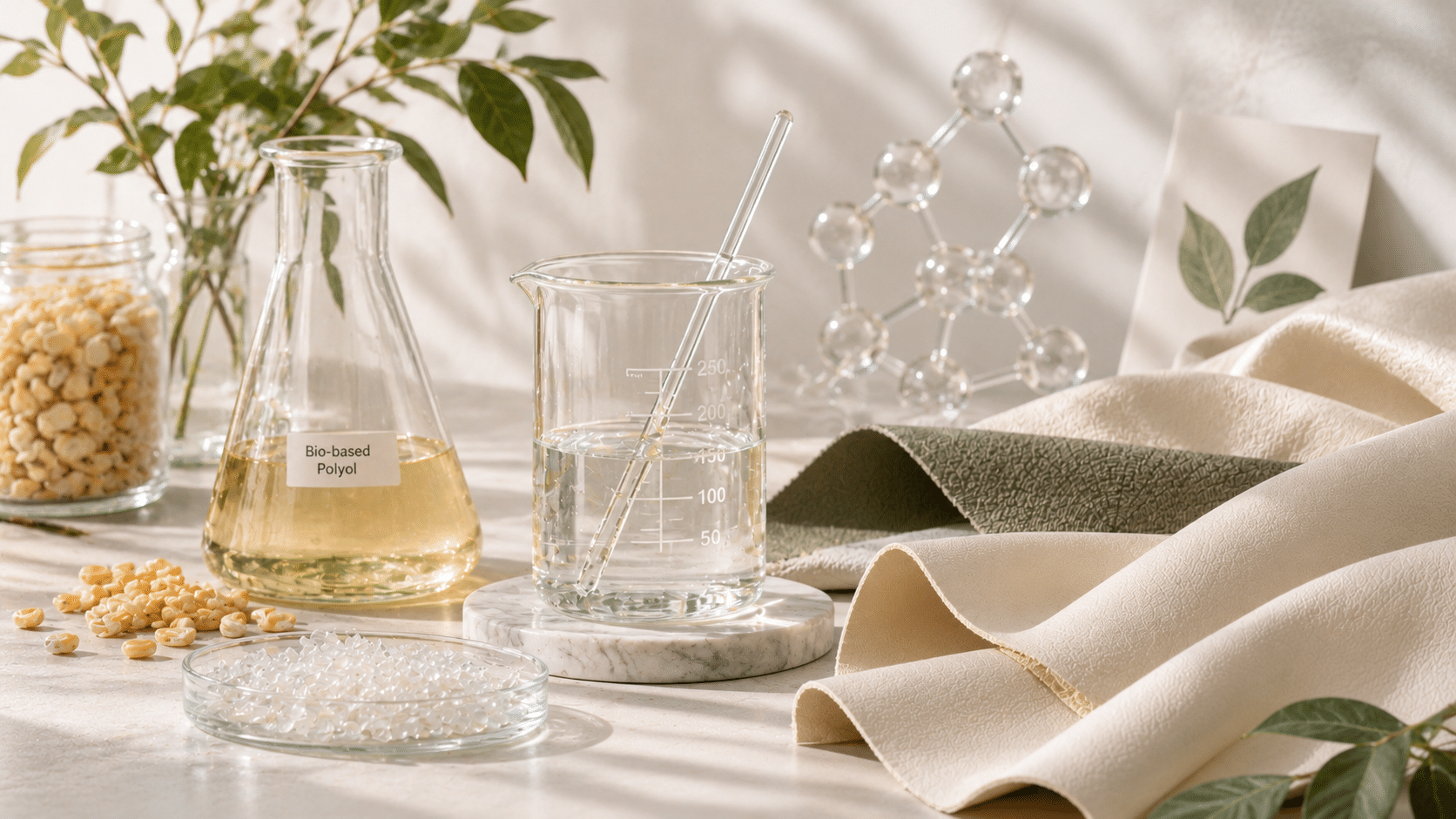
These are industrially synthesised polymers made wholly or partly from renewable biological feedstocks while retaining the characteristics of synthetic polymers. In essence, they represent a step towards developing synthetic materials with a potentially lower impact.
PLA (polylactic acid) and PHA (polyhydroxyalkanoates) are both thermoplastic bioplastics and can be entirely bio-based. Rather than relying on petroleum, PLA is typically produced from renewable resources such as fermented corn starch, sugarcane or cassava. PHA, meanwhile, is produced by bacteria through the fermentation of sugars, vegetable oils or organic waste.
Water-based and bio-based PU are also used by more advanced developers of plant-based leather alternatives, replacing conventional PU where it is required for chemical stability and performance properties such as tensile strength, tear resistance and abrasion resistance. Water-based PU uses water as its primary solvent instead of harsher organic solvents, such as dimethylformamide (DMF), potentially reducing volatile organic compound (VOC) emissions, unpleasant odours and exposure to harmful substances during production and application. Bio-based PU, meanwhile, contains a significant proportion of renewable biological feedstocks in its chemical building blocks – typically the polyols – rather than relying entirely on fossil fuels.
TIER 2D — Mineral-derived and inorganic materials
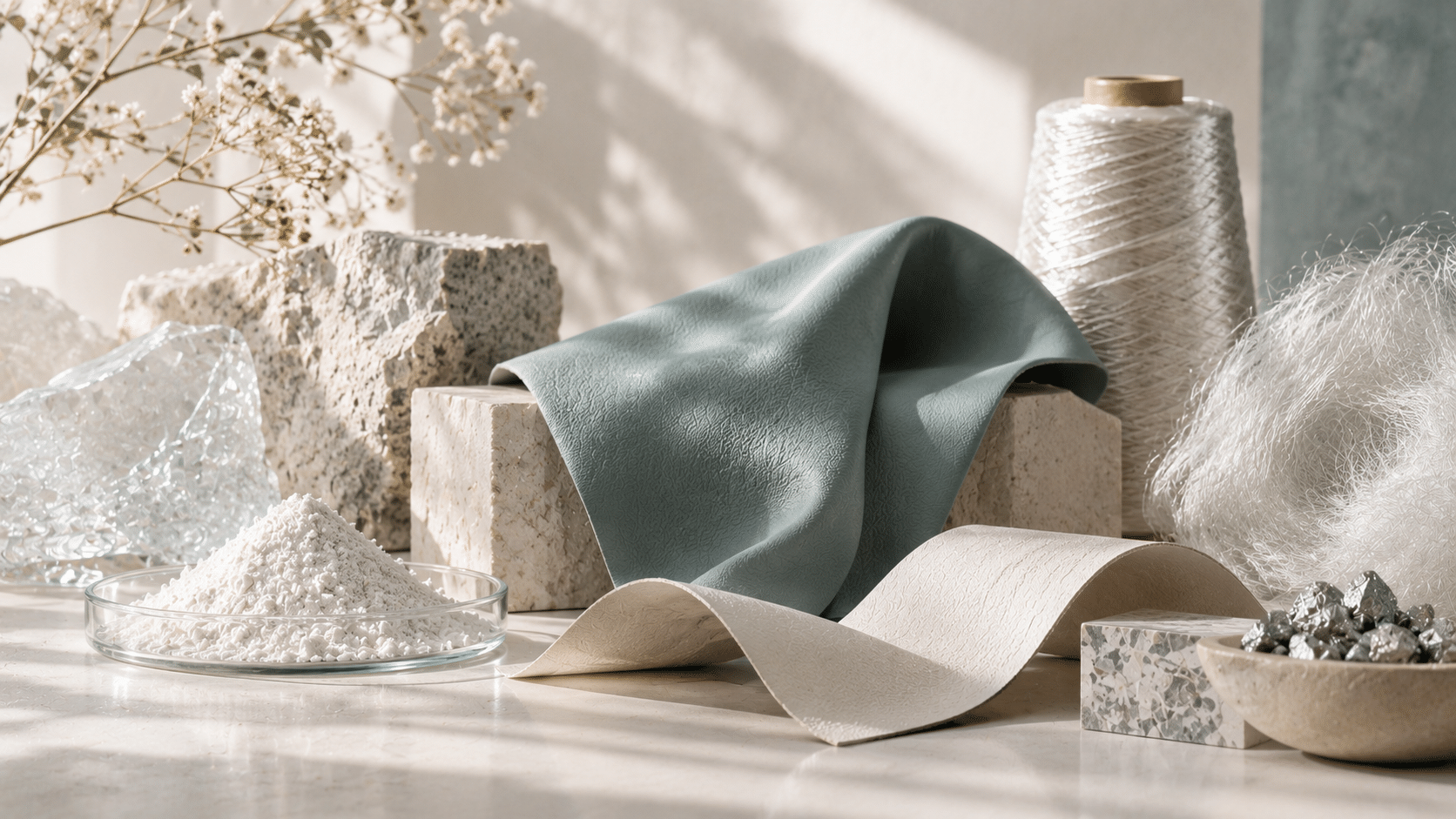
These manufactured materials use mineral-derived or inorganic raw materials, including mineral-based coatings, composites and synthetic polymers. In other words: rock, not plants.
The familiar silicone leather alternative technically belongs to this category. It is made by coating a textile backing with synthetic silicone rubber, which is derived from silica sand and hydrocarbons. Other examples include chalk-based materials such as CRETA and stone-based materials such as MARMORA, both developed by NUVI, as well as metallic fibres, ceramic materials and glass fibres – the latter making their way onto the runway as fur alternatives at Bottega Veneta’s AW26 show during Milan Fashion Week earlier this year.
TIER 3 — PLASTIC-FREE MATERIALS
The highest tier includes vegan materials that contain no plastic and is divided into two subcategories.
TIER 3A — Natural fibres

This is a familiar category, defined primarily by plant-based feedstocks. The range of natural fibres is extensive: cotton, kapok and milkweed (seed pods); hemp, linen, jute and ramie (stems); coir (fruit husks); latex (sap); vetiver and broomroot (roots); sisal, abaca and piña (leaves); and cork and tapa (bark).
However, natural does not automatically mean low-impact – one of the most persistent misconceptions in mainstream fashion rhetoric. Water availability, biodiversity, harvesting practices, geographical origin and processing methods all remain essential considerations when assessing the environmental footprint of plant-based materials. Plant-based fibres vary considerably in their resource requirements. Conventional cotton is generally among the most demanding, particularly in terms of water consumption, land use and agrochemicals. Ramie can also be resource-intensive, mainly because of the water, energy and chemicals required for degumming. Other fibres, including hemp, linen (flax), jute, abaca and sisal, generally require fewer agricultural inputs than conventional cotton. However, retting, fibre extraction, washing and drying can add to their environmental footprint, particularly where wastewater is poorly managed.
Another important distinction is between conventional crops and materials derived from by-products, perennial crops or naturally regenerating resources. By-products such as piña, coir and cotton linters, perennial crops such as hemp and abaca, and naturally regenerating resources such as cork and kapok can help reduce demand for agricultural land and inputs. However, none is inherently low-impact. Natural rubber latex presents a different set of challenges: although rubber trees are perennial, the expansion of plantations can contribute to deforestation and biodiversity loss.
Piña, made from pineapple leaves, and coir, derived from coconut husks, have the advantage of using agricultural by-products rather than dedicated fibre crops. Kapok, milkweed and cork also offer potential for relatively low-input production, particularly when sourced from existing perennial plants or responsibly managed ecosystems.
One particularly exciting development in this area is Botanè, a cashmere alternative made from plant fibres and designed to offer the softness and warmth associated with traditional cashmere.
TIER 3B — Technology-enabled materials

This is certainly one of our favourite categories: the very cutting edge of next-gen material development. Unlike the previous tiers, it is defined by production technology rather than feedstock origin, encompassing everything from nettle- and hemp-based fur and feather alternatives to precision-fermented wool, silk and leather alternatives, novel pigments and mycelium-based materials.
Until recently, MIRUM® by Natural Fiber Welding (NFW) was among the first names to come to mind in this category. This plastic-free, plant-based leather alternative, made from natural rubber, plant oils, waxes, minerals and natural pigments, found its way into collections by brands including Allbirds, Camper and Stella McCartney. However, following financial difficulties, NFW announced an orderly wind-down of its operations in September 2025, bringing MIRUM® production to a halt. The company secured new investment in January 2026 and is now focused on expanding the production of PLIANT™, a natural rubber compound developed for footwear outsoles, combining natural rubber with NFW’s patented plant-based curative in place of conventional synthetic curing agents. According to the company, PLIANT™ is 100% bio-based and contains no synthetic plastics or petrochemicals.
Over the past two years, several other innovations in this category have attracted particular attention – not least for making the leap from material laboratories to fashion runways.
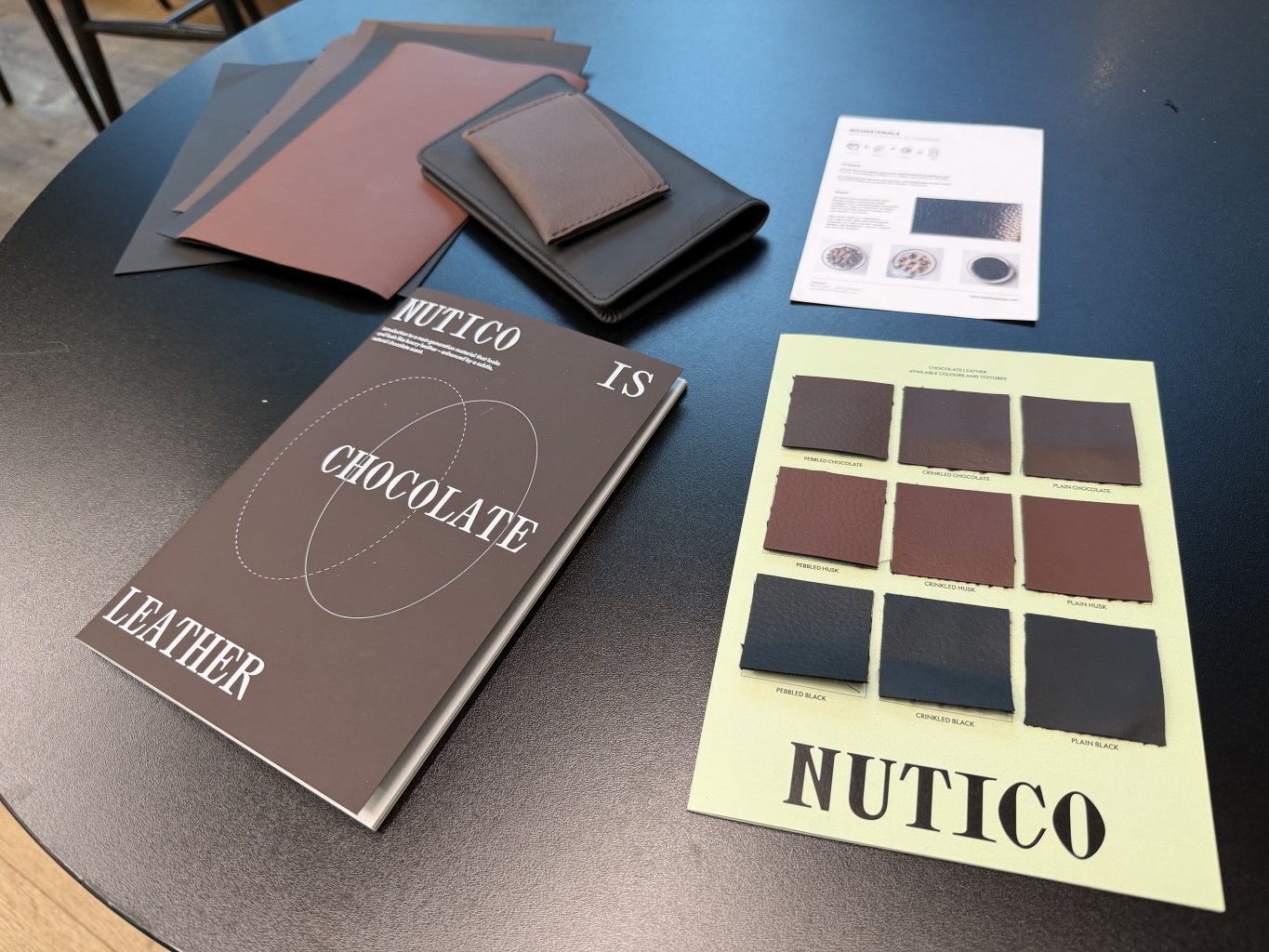
Nutico™ – the famous chocolate leather – a Polish bio-material developed by Bio2Materials from cocoa husks and walnut shells, contains no PU or PVC and requires no water in its production process. It made its runway debut at Marco Rambaldi’s SS27 show during Milan Fashion Week and has since featured in limited-edition collaborations with Surarquía and Pavel Brejcha.
Savian, a soft, fluffy alternative to fur, shearling, plush and teddy fabrics, is made from nettle, hemp and flax fibres. Having successfully scaled up, it now offers an extensive range of textures, from wolf, beaver, shearling and pony, alongside Cheetah, Bambi and Dalmatian patterns. Its growing list of fashion collaborators includes established names and emerging talents such as Louis Vuitton, GANNI, Stella McCartney, Collina Strada, Zoe Gustavia, Anna Whalen and Croquis.
Brewed Protein™, developed by Spiber through precision microbial fermentation, makes an entirely new class of engineered protein-based materials. Specially designed DNA sequences encoding target proteins are introduced into microorganisms, which are fed plant-derived sugars and produce proteins that can be extracted, purified and processed into fibres. As a result, the materials can emulate the sought-after qualities of cashmere, wool and silk. Brewed Protein™ has already featured in collections by me ISSEY MIYAKE, Sacai, Stella McCartney, Woolrich and Pangaia, among others.
AMSilk is also developing silk protein-based materials using genetically engineered microorganisms and precision fermentation. The proteins are produced from renewable feedstocks, which are then extracted, purified and wet-spun into fibres and yarns. AMSilk has already collaborated with Omega and Adidas, but perhaps the most memorable fashion moment came with Balenciaga’s SS26 collection, featuring a wrap blouse and dress, followed by an AMSilk-blend evening gown in the house’s 55th Couture Collection.
And let’s not forget feathers. Their production remains deeply troubling, yet alternatives are increasingly finding their way into mainstream fashion. Fevvers, a plumage alternative made entirely from plant-based fibres and other botanical elements, including stems, blades of grass and seed heads, is naturally dyed. Following its striking runway debut at Stella McCartney’s SS26 show, it has since appeared at Vivienne Westwood’s SS27 show in soft plumette and ostrich-like forms that retain both shape and drama.
Eyes on the prize

As different innovations serve different purposes, what began as a quest to create alternatives to animal leather, has evolved to encompass alternatives to other animal-derived fibres and materials, as well as entirely new functionalities. Examples include Airlite®, an air-purifying, antimicrobial coating featured on two Stella McCartney Falabella Tiny tote bags in the Winter 2024 collection, and Sequinova, a cellulose-based alternative to conventional plastic sequins, designed to biodegrade in freshwater within eight weeks without leaving toxic residues.
That said, amid all the excitement around innovation, the future of fashion – vegan or otherwise – depends on transparent claims, independent testing, better communication, stronger design and wider adoption by brands. Some next-gen materials are already commercially available and produced at scale; others remain at an early stage of development, while some still require more robust independent testing.
The shift has begun, albeit gradually, and hopefully steadily. According to the joint Fashion for Good and Boston Consulting Group report Scaling Next-Gen Materials, released in February 2025, next-gen materials could grow from around 1% of the fibre market today to 8% by 2030, equivalent to approximately 13 million tonnes. At the same time, the report highlights the financial, technical and operational barriers that continue to slow adoption. At Vegan Fashion Repository, we have covered many discussions around the challenges of scaling up and collaborating with designers to achieve stronger aesthetic input. One recurring concern is the uncertainty of market response, which makes investment a considerable risk – one that many businesses are, to put it mildly, reluctant to take.
However, as next-gen vegan materials continue to expand the material vocabulary of fashion, the incentive is shifting. The opportunity now lies in staying ahead of the curve by exploring new aesthetic qualities – an area in which fashion has always been the very first to set the pace.
***
Footnotes and further reading:
- https://unric.org/en/from-petroleum-to-pollution-the-cost-of-polyester/ ↩︎
- https://www.collectivefashionjustice.org/synthetics ↩︎
- https://plasticbank.com/blog/our-plastic-history-and-how-to-change-it/ ↩︎
- https://www.scientificamerican.com/article/how-plastics-went-from-a-sustainability-solution-to-an-environmental-crisis/ ↩︎
- https://www.bbc.com/news/business-41188462 ↩︎
Author

Discover more from Vegan Fashion Repository
Subscribe to get the latest posts sent to your email.